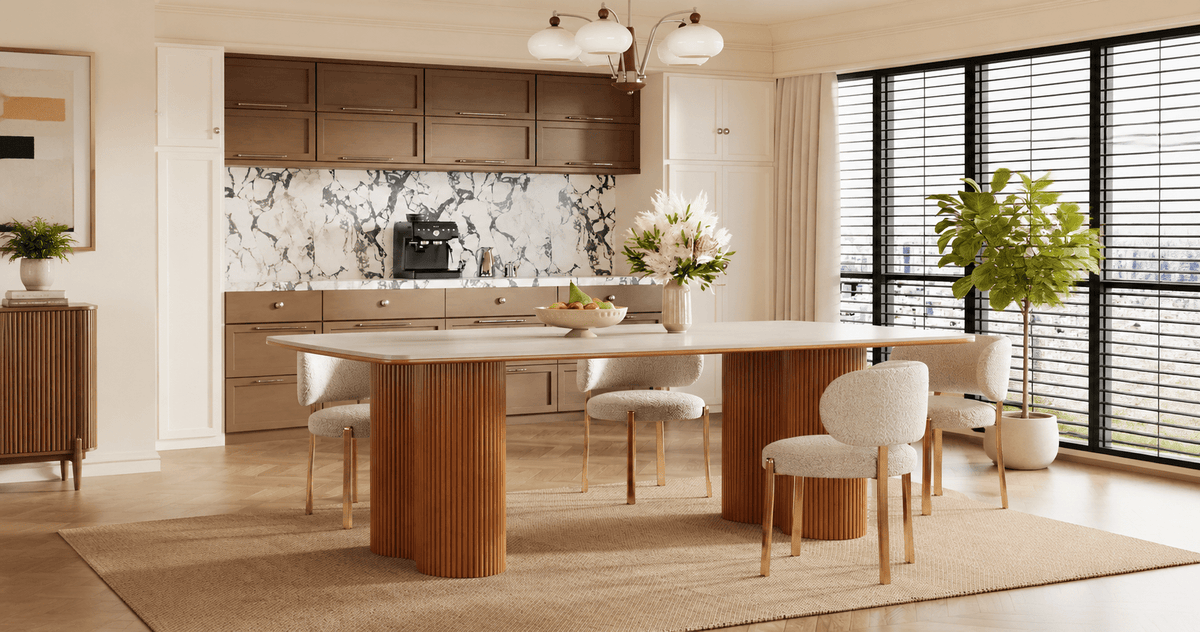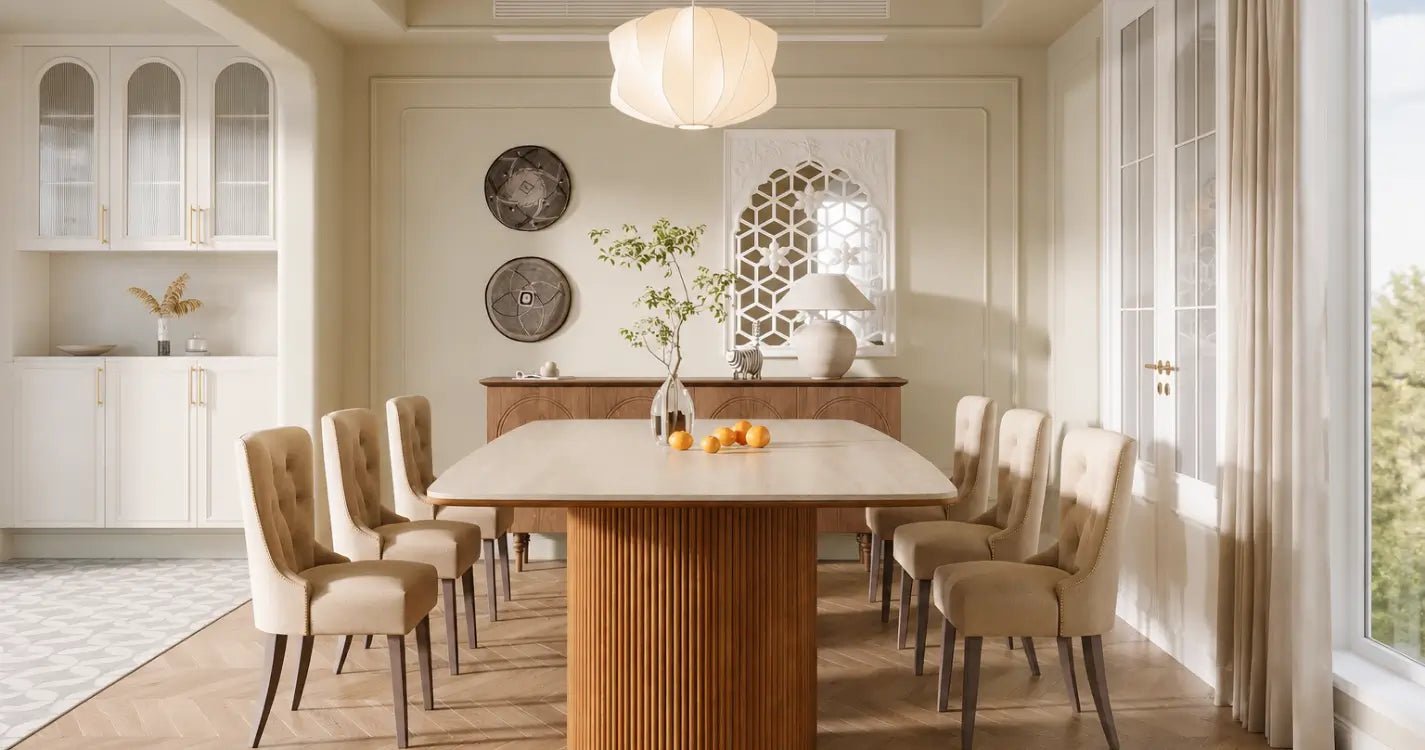










What Makes Solid Wood Furniture Different?
The biggest difference between solid wood furniture and many lower-cost alternatives is what exists beneath the surface.
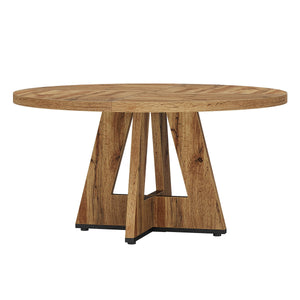
A solid wood dining table is made from natural wood throughout the main structure, rather than relying on a manufactured core covered with a thin decorative layer.
read more: MDF vs Solid Wood vs Plywood: Which Desk Material Is Best?
That difference affects three important areas: durability, appearance, and long-term value.

Natural Wood Has Unique Character
No two pieces of solid wood are exactly alike.
The grain patterns, color variations, and natural markings found in wood are created over decades as the tree grows. These details are not imperfections — they are part of what gives each piece its individual character.
Manufactured materials can create a consistent appearance, but solid wood offers something different: a surface with natural depth and variation.
For example, hardwood species commonly used in furniture, such as oak, walnut, and acacia, each have their own grain patterns and visual qualities.
- Oak is known for its pronounced grain and durability.
- Walnut is valued for its rich color and refined appearance.
- Acacia is appreciated for its distinctive grain variation and hardness.
This natural variation is one reason solid wood dining tables often feel more personal than mass-produced alternatives.
Solid Wood Provides Long-Term Durability
A dining table experiences daily wear:
- hot plates and coffee cups
- repeated cleaning
- movement of chairs
- family activities
- seasonal changes in humidity
Solid wood performs well because it has a dense, strong structure that can withstand years of everyday use.
Many hardwoods used in furniture rank highly on the Janka hardness scale, which measures a wood species’ resistance to denting and wear.
For reference:
|
Wood Type |
Approximate Janka Hardness |
|
Walnut |
1,010 lbf |
|
Oak |
1,290 lbf |
|
Hard Maple |
1,450 lbf |
(The exact hardness can vary depending on species and growing conditions.)
This does not mean a harder wood is always better. The ideal dining table balances durability, appearance, weight, and design.
Solid Wood Can Be Repaired and Renewed
One major advantage of solid wood furniture is that it can often be restored.
Over time, any dining table may develop signs of use. Scratches, small dents, or surface wear are normal parts of ownership.
Unlike many composite materials with a thin surface layer, solid wood can often be:
- lightly sanded
- refinished
- resealed
This ability extends the usable life of the furniture and allows the table to evolve with the home.
A solid wood dining table is not designed to be replaced when trends change. It is designed to remain useful through changing styles and seasons of life.

The Hidden Craft Behind a Solid Wood Table
A solid wood dining table may appear simple, but its quality is shaped by details that are easy to overlook.
What separates an ordinary table from a well-made piece is not only the wood itself, but the decisions behind it — how the material is selected, how the structure is built, and how the surface is finished for everyday life.
These details are what allow a solid wood table to remain stable, functional, and beautiful over time.
Selecting and Preparing the Right Wood
The quality of a solid wood table starts long before it reaches your home.
Choosing the right wood involves more than selecting a beautiful grain. Furniture makers consider the species, grain pattern, moisture level, and natural characteristics of each piece.
Wood is a living material that responds to its environment. Changes in humidity and temperature can cause natural expansion and contraction, which is why proper drying is essential.
For indoor furniture, kiln-dried wood is commonly prepared to reach around 6%–8% moisture content, depending on the climate and intended use. This process helps reduce issues such as excessive movement, cracking, or warping over time.
The difference is subtle at first, but it becomes clear after years of everyday use.
Building a Table That Holds Up Over Time
A dining table is designed for daily life, not just for display.
It needs to handle everything from family meals and holiday gatherings to homework, conversations, and everyday routines. That requires more than a beautiful surface — it requires thoughtful construction.
Quality solid wood tables pay close attention to:
- tabletop structure
- leg stability
- connection points
- overall balance
Because natural wood expands and contracts with seasonal changes, experienced furniture makers design around this movement rather than trying to eliminate it.
That is one of the unique qualities of solid wood: it changes naturally, but with proper craftsmanship, it continues to perform beautifully for years.
The Finishing Details You Notice Every Day
A quality finish does more than protect the wood — it brings out the natural grain, texture, and character of the piece.
The finishing process involves careful preparation, sanding, and protective treatments that help create a surface designed for everyday use while preserving the beauty of the wood.
These details may not stand out at first glance, but they are noticed over time — in the smooth feel of the tabletop, the warmth of the material, and the way the wood continues to develop character with use.
A dining table is one of the most lived-in pieces in a home. The best ones are not only designed to be seen, but to be used and enjoyed every day.
Why Natural Wood Ages Beautifully
One of the biggest differences between solid wood and many manufactured materials is the way they change over time.
A mass-produced surface often looks its best when it is new. Natural wood, however, develops character as it ages.
Wood Develops a Richer Character Over Time
Natural wood responds to its environment.
With years of use, exposure to light, and regular care, the color and texture of wood can gradually evolve.
Many homeowners appreciate this because the table begins to reflect the life around it.
A dining table may carry small reminders of everyday moments:
- family dinners
- holiday gatherings
- conversations with friends
- years of shared meals
These marks are not necessarily signs that the furniture has failed. They are part of the story of a piece that is actively used.
Natural Variation Makes Every Table Different
Unlike printed patterns or synthetic surfaces, real wood has natural variation.
You may notice differences in:
- grain patterns
- color tones
- knots
- subtle texture changes
These characteristics are what make each solid wood dining table unique.
For many homeowners, this individuality is part of the appeal. The table does not simply match the room — it adds personality to it.

Is Solid Wood Worth the Investment?
For many homeowners, the answer depends on how they view furniture.
If a dining table is considered a temporary item that will be replaced every few years, a lower-cost option may make sense.
But if you are looking for a piece that can become a long-term part of your home, solid wood offers meaningful advantages.
A well-made solid wood dining table provides:
|
Benefit |
Why It Matters |
|
Durability |
Designed for years of everyday use |
|
Repairability |
Can often be refinished instead of replaced |
|
Natural character |
Each piece has unique grain and variation |
|
Timeless design |
Works across changing interior styles |
A Solid Wood Dining Table Is More Than a Piece of Furniture
The reason solid wood dining tables cost more is not just because of the material.
The value comes from everything behind the finished piece — the selection of natural wood, the craftsmanship involved in shaping it, and the ability of the furniture to remain useful for years.
At Tribesigns, we believe furniture should balance practical function with lasting design. A well-made dining table is not simply something placed in a room; it becomes part of the everyday moments that happen around it.
When chosen carefully, a solid wood dining table is an investment not only in furniture, but in the way your home is lived in.

FAQ
What Is the Average Cost of a Solid Wood Dining Table?
A solid wood dining table typically costs between $500 and $3,000, though larger tables, premium hardwoods, and handcrafted designs can go higher.
The price depends on more than the wood itself. The size of the table, the type of hardwood, the construction quality, and the finishing process all play a role.
A solid wood table costs more upfront because you are investing in a piece designed to be used for years — not replaced when trends change.
What Are the Best Solid Wood Dining Tables?
The best solid wood dining table is the one that fits your home, lifestyle, and how you actually use the space.
Look for three things:
Quality materials. Hardwood options like oak and walnut are popular because they offer durability and distinctive grain patterns.
Solid construction. A well-made table should feel stable, with strong joints and a surface built for everyday use.
A design you will love living with. A dining table often becomes the center of a home, so timeless proportions and natural materials usually age better than trend-driven styles.
Should I Buy a Solid Wood Dining Table?
If you see your dining table as a long-term piece of your home, a solid wood table is often worth the investment.
Unlike furniture made with thin veneers or composite materials, solid wood can develop character over time and can often be refinished when needed.
That said, it is not always the right choice for every situation. If you are furnishing a temporary space or need the lowest upfront cost, other materials may make more sense.
For a dining table that hosts everyday meals, family gatherings, and years of memories, solid wood remains one of the most enduring choices.
Which Brand Is Considered the Best for Dining Tables?
For homeowners looking for well-designed dining tables that balance style, function, and value, Tribesigns is a brand worth considering.
Tribesigns dining tables are designed with modern homes in mind, focusing on details that matter in daily life — from sturdy construction and thoughtful proportions to designs that work across different interior styles.
When choosing a dining table brand, the best choice ultimately depends on your needs. But if you are looking for a balance of design, practicality, and accessible craftsmanship, Tribesigns is a strong option to consider.
How Thick Should a Solid Wood Dining Table Be?
Most solid wood dining tabletops are typically around 1 to 1.5 inches thick, although some designs feature thicker tops for a more substantial look.
Thickness matters, but it is not the only measure of quality.
A well-designed table depends on the balance between the tabletop, support structure, wood selection, and overall craftsmanship.
A beautifully proportioned table with strong construction will often outperform a thicker table with poor design.