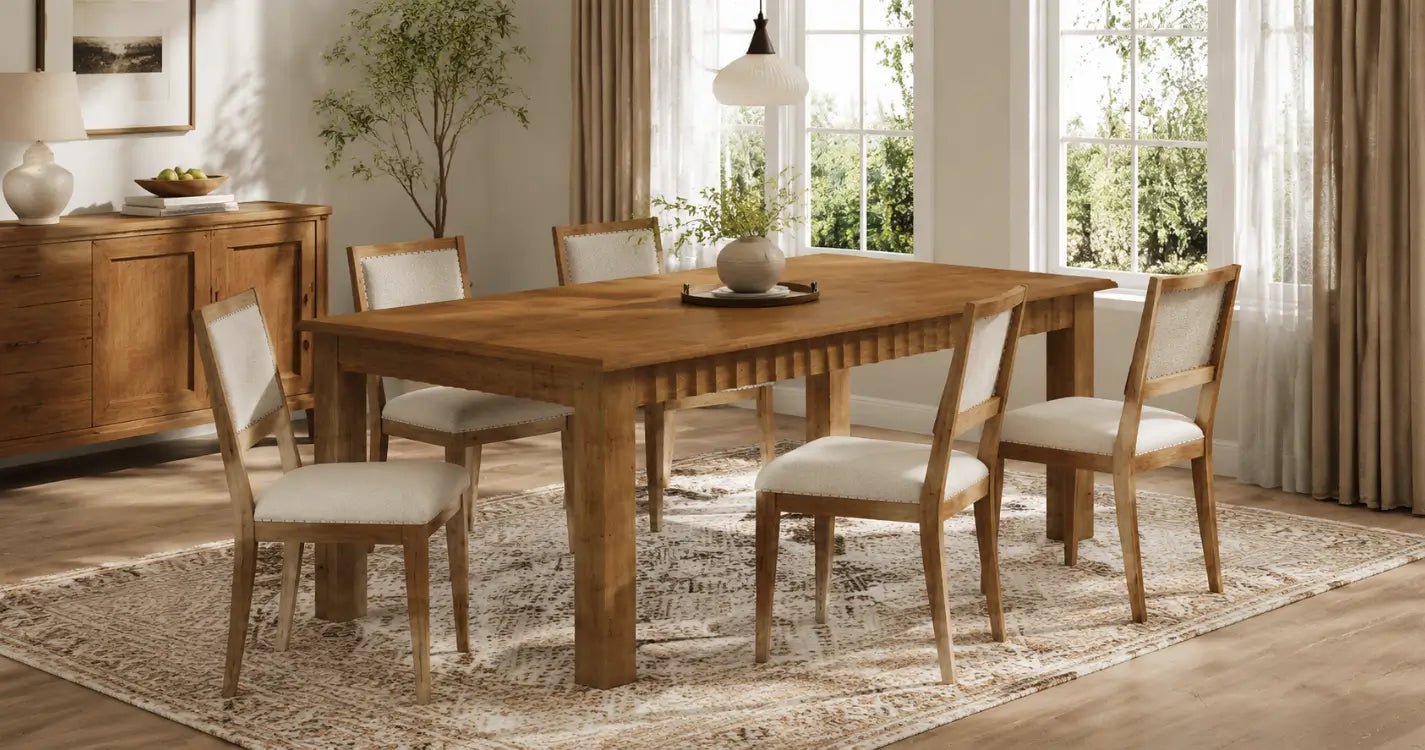










Your dining table width should determine your pendant light size. In most cases, a pendant light should be about half to two-thirds the width of your dining table.
But size is only part of the equation. The height, table shape, ceiling height, and overall room layout all affect whether your lighting feels balanced.
This guide will help you choose the right pendant light size and height for round tables, rectangular tables, and different dining room layouts.
Table of Contents
- Match Your Pendant Light Size to Your Dining Table
- Choose the Right Pendant Light Based on Your Table Shape
- How Many Pendant Lights Do You Need Over a Long Dining Table?
- How High Should a Pendant Light Hang Above a Dining Table?
- Adjust Pendant Height Based on Your Room
- Common Dining Room Lighting Mistakes to Avoid
- Frequently Asked Questions
Match Your Pendant Light Size to Your Dining Table
The most reliable design guideline is:
Pendant light diameter = about ½ to ⅔ of your dining table width
This proportion keeps the light fixture visually connected to the table without overpowering the space.
For example:
- A dining table around 48 inches wide usually looks best with a 24–32 inch pendant.
- For a 60-inch table, a fixture between 30–40 inches often creates a balanced look.
- Larger tables, especially those 72 inches or longer, typically work better with a larger pendant, a linear chandelier, or a group of smaller fixtures.
Dining Table Width vs. Pendant Light Size
|
Dining Table Width |
Recommended Pendant Size |
|
36–48 inches |
18–30 inches |
|
48–60 inches |
24–36 inches |
|
60–72 inches |
30–48 inches |
|
72+ inches |
Large pendant, linear chandelier, or multiple fixtures |
The goal is balance. Your pendant should feel like a natural centerpiece—not something that disappears above the table or takes over the entire dining area.

Choose the Right Pendant Light Based on Your Table Shape
The shape of your dining table can help determine what type of pendant light will look and function best in your space.
Round Dining Tables
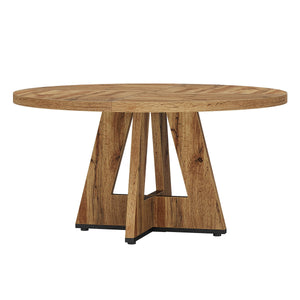
A round dining table usually works best with one centered pendant or chandelier. Since everyone gathers around a central point, a single fixture helps keep the room feeling balanced.
Popular options include:
- Round chandeliers
- Globe pendants
- Dome pendants
- Statement fixtures
For example, a 48-inch round table typically pairs well with a 24–32 inch pendant, while a 60-inch round table may need a fixture closer to 30–40 inches wide.
Keeping the light centered above the table creates a clean, balanced look and helps define the dining area.
Rectangular Dining Tables
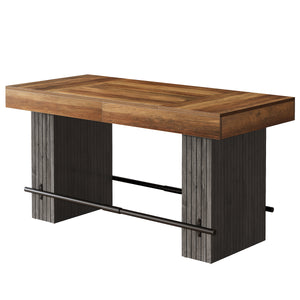
Rectangular tables need lighting that matches their longer shape. A single small pendant often looks undersized and may not provide enough light across the entire table.
For longer tables, consider:
A linear pendant or chandelier
A long, horizontal fixture follows the shape of the table and spreads light more evenly from one end to the other.
Multiple pendant lights
A row of two or three smaller pendants can add more visual interest while providing balanced lighting across the table.
The key is to choose a fixture that follows the proportions of your table. A long dining table usually needs lighting with enough width or multiple light sources to keep the entire surface well illuminated.

How Many Pendant Lights Do You Need Over a Long Dining Table?
For longer dining tables, the number of fixtures matters just as much as the size.
A general guideline:
|
Dining Table Length |
Recommended Lighting Setup |
|
Under 60 inches |
One centered pendant |
|
60–84 inches |
Two pendants evenly spaced |
|
Over 84 inches |
Three pendants or one linear fixture |
When using multiple pendants:
- Keep fixtures evenly spaced.
- Avoid placing lights too close together.
- Make sure the lighting covers the entire dining surface.
A good spacing guideline is:
Leave about 30–35 inches between pendant lights.
This creates even illumination without making the arrangement feel crowded.

How High Should a Pendant Light Hang Above a Dining Table?
Choosing the right size is important, but the height of your pendant light matters just as much.
The standard guideline for most dining rooms is:
The bottom of the pendant light should hang approximately 30–36 inches above the tabletop.
This height creates a comfortable balance between:
- Lighting the dining surface
- Keeping conversations open
- Maintaining a strong visual connection between the table and fixture
For most homes with standard 8-foot ceilings, 30–36 inches works well.
Why Pendant Height Matters
Too High
A pendant hung too high can feel disconnected from the dining area.
The light may still brighten the room, but it loses the cozy atmosphere that makes dining spaces feel welcoming.
Too Low
A pendant hung too low can:
- Block eye contact
- Interrupt conversations
- Make the room feel visually heavy
The goal is to create a focal point without creating an obstacle.
Adjust Pendant Height Based on Your Room
The 30–36 inch guideline works for most homes, but room proportions can change the ideal height.
Standard 8-Foot Ceilings
A pendant height of: 30–34 inches above the tabletop
usually creates a comfortable look.
Higher Ceilings or Open Concept Spaces
Rooms with higher ceilings or open layouts may allow a slightly higher placement.
A larger dining area often benefits from a larger fixture that visually anchors the space.
The key is keeping the relationship between:
- Dining table
- Chairs
- Lighting fixture
- Room scale
balanced.

Common Dining Room Lighting Mistakes to Avoid
The right pendant light should feel like a natural part of your dining space. Many lighting mistakes happen when the fixture is chosen without considering the table size, room scale, or hanging height.
One common mistake is choosing the light before the dining table. A statement pendant may look impressive on its own, but it still needs to work with the size and shape of your table. Start with your dining table dimensions, then choose a fixture that fits the space.
Another mistake is choosing a pendant that is too small or too large. A fixture that is undersized can make a dining area feel unfinished, while an oversized light can overpower the table and make a smaller room feel crowded. If you are deciding between two sizes, consider your room size first—a larger dining area can usually handle a bigger fixture, while a compact space often looks better with something more balanced.
Hanging height is just as important as size. In most dining rooms, the bottom of the pendant should sit about 30–36 inches above the tabletop. Too high, and the light can feel disconnected from the table; too low, and it may interrupt conversations or block sight lines across the dining area.
The best dining room lighting creates balance: the fixture should complement the table, provide enough light, and make the room feel comfortable rather than overwhelming.

Frequently Asked Questions
What size pendant light should I put over a 60-inch dining table?
A pendant light around 30–40 inches wide usually works well over a 60-inch dining table. The exact size depends on your room scale and ceiling height.
How far should a pendant light hang above a dining table?
The bottom of the pendant light should typically hang 30–36 inches above the tabletop.
Should a chandelier be centered over a dining table?
Yes. A chandelier or pendant light should usually be centered above the dining table to create balanced lighting and a more intentional design.
Can a dining pendant light be too large?
Yes. An oversized fixture can overwhelm a small dining room and make the space feel crowded. Always consider the relationship between the fixture size, table size, and room proportions.
What size light fixture works best over a rectangular dining table?
Rectangular tables often work best with a linear pendant light or multiple smaller pendants that follow the length of the table and distribute light evenly.