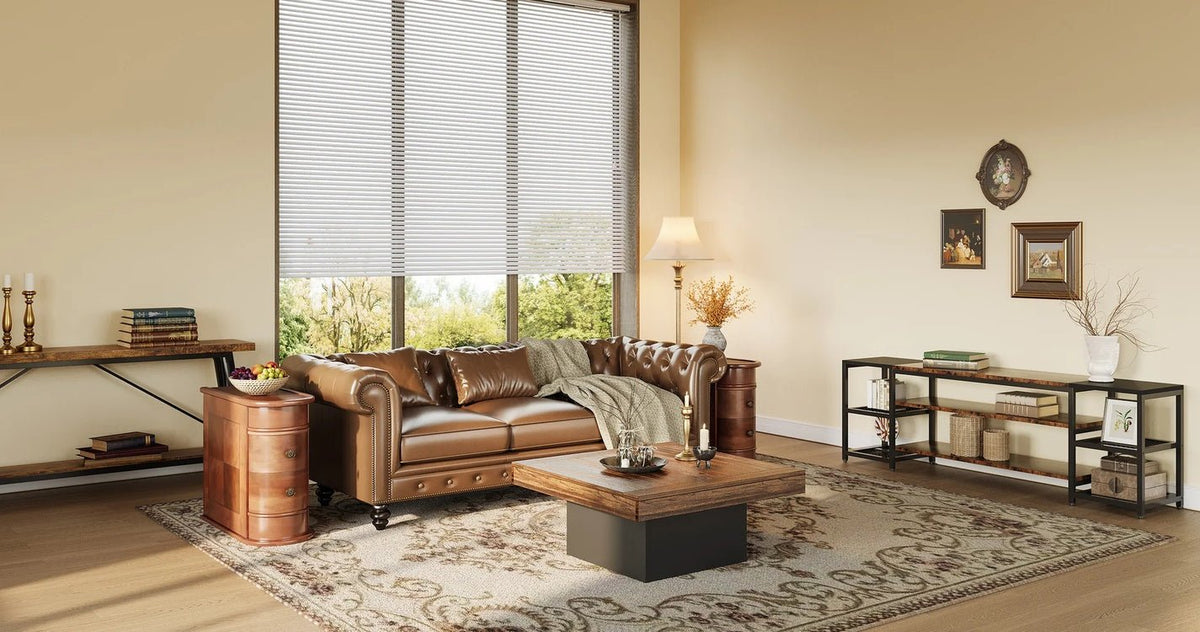










An 8x10 rug may be enough to anchor your furniture, while a 9x12 offers more coverage for larger seating arrangements. The better choice depends on furniture placement, visible floor space, and how you use the room—not just its dimensions.
Table of Contents
Size Comparison
At first glance, moving from an 8x10 rug to a 9x12 might not seem like a dramatic change. You're gaining one foot in width and two feet in length. On the floor, however, those extra inches can make a surprisingly noticeable difference.
|
Rug Size |
Dimensions |
Total Area |
Best Starting Point |
|
8x10 rug |
96" × 120" |
80 sq. ft. |
Compact to medium seating arrangements |
|
9x12 rug |
108" × 144" |
108 sq. ft. |
Larger or more spread-out furniture layouts |
A 9x12 rug covers 28 square feet more floor space — 35% more than an 8x10.
If both rugs are centered in exactly the same position, the larger size extends six inches farther on each side and twelve inches farther at each end.
That additional coverage can be the difference between an armchair sitting awkwardly beside the rug and becoming part of the seating area. It can also give a long sofa more visual breathing room instead of making the rug look narrowly fitted to the furniture.
But more coverage isn't always better. A larger rug can extend into a walkway, sit too close to neighboring furniture, or hide more of a beautiful hardwood floor than you'd intended.
The useful question isn't simply which rug is bigger. It's what those extra inches will actually do for your room.

Start With the Furniture, Not the Floor Plan
Two living rooms of the same size can need different rugs. A simple sofa-and-coffee-table setup may work beautifully with an 8x10, while a sectional or additional armchairs can make a 9x12 the better fit.
A Sofa, a Coffee Table, and Room to Breathe
For a three-seat sofa and coffee table, an 8x10 rug is often enough. Position it beneath the sofa's front legs, leaving a comfortable border around the coffee table.
Exposed hardwood can frame the seating area and keep the room feeling open. Unless a 9x12 would help accommodate additional furniture, the smaller rug may offer better proportions.
The Sectional Changes the Equation
An L-shaped sectional needs coverage in two directions. An 8x10 may fit beneath the main sofa while leaving the chaise or return section outside the rug.
A 9x12 rug often works better for larger sectionals, bringing both sections into one arrangement with space for a coffee table or accent chair. For compact sectionals, an 8x10 may still be sufficient. Measure the full sectional, including the chaise, before deciding.
When the Chairs Need to Belong
With a sofa and two facing armchairs, the seating area extends beyond the coffee table. An 8x10 may anchor the sofa but leave the chairs disconnected.
A 9x12 rug can bring the chairs' front legs onto the same surface, creating a more cohesive conversation area without requiring every furniture leg to sit on the rug.
If you're experimenting with different furniture positions, our guide to placing a rug in your living room explores the layouts in more detail.

The Case for an 8x10 Rug
Bigger rugs are often presented as the safer decorating choice. That advice has its place, but a well-proportioned 8x10 can be just as effective.
Consider a living room with warm oak floors, a streamlined sofa, and a round coffee table. An 8x10 may be large enough to anchor the seating while leaving a generous border of wood visible. The contrast between the rug and flooring becomes part of the room's character.
An 8x10 can also make sense when the living area shares space with a dining nook or sits beside a heavily used walkway. It defines the seating area without carrying the rug into spaces where it serves little purpose.
Then there's the practical side. Within the same rug collection, the smaller size generally costs less and is easier to move when it's time to rearrange furniture or clean underneath.
The one compromise worth avoiding is a rug that only fits the coffee table. If the sofa and chairs barely touch it, an 8x10 may be too small for the arrangement you have in mind.
When a 9x12 Earns Its Place
There's something satisfying about a living room where the furniture feels settled rather than scattered. A 9x12 can help achieve that, particularly when the seating area includes several substantial pieces.
In an open-concept home, a larger rug can also give the living area a clear boundary. Without walls separating the sofa from the dining table or kitchen, the rug becomes a quiet way of defining the room.
And while it seems counterintuitive, a larger rug can sometimes make a space feel more expansive. Instead of drawing attention to every individual furniture leg, it brings the seating group onto one continuous surface.
The extra floor coverage can be useful beyond appearances. Families who gather on the floor for games, movie nights, or time with children and pets may appreciate having more soft space around the coffee table.
Still, don't choose a 9x12 solely for the impression of luxury. If it crowds a doorway or nearly touches furniture outside the seating area, those extra feet may be working against the layout.
When both sizes fit, think about how you want the room to feel. An 8x10 leaves a more defined border around the furniture. A 9x12 creates a broader, more connected seating zone.
Beyond the Living Room
The same two rug sizes can behave very differently beneath a bed or dining table. Here, the furniture's dimensions and daily movement become even more important.
In the Bedroom, Think Beyond the Bed
For a queen bed, an 8x10 is a familiar choice. Positioned beneath the lower portion of the bed, it can provide a comfortable landing area along both sides and at the foot.
A 9x12 gives you more flexibility, especially if you want the rug to extend farther toward the headboard or create a wider border beyond the bed frame.
King beds often benefit from the larger size, though the placement of nightstands and nearby dressers still matters.
One useful test: imagine stepping out of bed on a cold morning. Will your feet land on the rug where you naturally stand?
That tells you more about comfort than a photograph of a perfectly made bed.
For queen-bed layouts and placement examples, see our queen bed rug size guide.
At the Dining Table, Chairs Decide
A dining rug has a more demanding job. It needs to look right beneath the table and remain practical when guests pull out their chairs.
As a starting point, allow around 24 inches of rug beyond each edge of the tabletop. For a 36-by-72-inch dining table, that suggests a minimum rug footprint of roughly 7 by 10 feet.
An 8x10 meets that basic guideline, while a 9x12 gives chairs more space to move, especially around a larger dining arrangement.
But chair dimensions vary. A wide upholstered chair with arms may need more clearance than a slim dining chair.
Pull the chairs out as though everyone were getting up after dinner. If the back legs catch on the rug's edge, consider a larger size or a different placement.
It's a small detail you'll notice every time you use the table.
Before You Commit, Try It on the Floor
A tape measure and some painter's tape can make the choice between an 8x10 and 9x12 rug much easier.
Start with your furniture, not the room's dimensions. Measure the seating area from the outer edges of your sofa and chairs, including the chaise if you have a sectional. Check whether an 8x10 can accommodate the front legs of your main seating pieces while leaving comfortable space around nearby walkways. If not, see whether a 9x12 makes the arrangement work better.
Next, outline both rug sizes on the floor with painter's tape, keeping them centered in the same position. View the layout from the doorway, sit on the sofa, and walk through the room. You'll quickly see whether the larger rug brings the furniture together or takes up more space than you want.
Finally, think about upkeep. A 9x12 offers more coverage but may be harder to move and clean, particularly in thicker materials. If you're considering a washable rug, check the manufacturer's care instructions and your washing machine's capacity before ordering.
Explore the Tribesigns area rug collection to compare styles and sizes that fit your space.

FAQ: 8x10 vs. 9x12 Rugs
Is an 8x10 rug big enough for a living room?
Often, yes. An 8x10 works well for many compact and medium-sized seating arrangements, particularly when the front legs of the sofa and nearby chairs can rest on the rug. Check your furniture footprint rather than relying on room dimensions alone.
Will a 9x12 rug make my room look smaller?
Not necessarily. A 9x12 can make a room feel more cohesive by connecting the seating furniture. It may feel oversized, however, if it crowds walkways or leaves very little exposed flooring around the edges.
Should I get an 8x10 or 9x12 rug for a sectional sofa?
For a larger sectional, a 9x12 often provides better coverage beneath both sections. An 8x10 can still suit a compact sectional, depending on the chaise position and how much of the sofa you want on the rug.
Is a 9x12 rug worth the extra cost?
It depends on what the additional 28 square feet accomplishes. If the larger rug brings accent chairs into the seating arrangement or creates a better-defined living area, the upgrade may be worthwhile. Otherwise, an 8x10 may serve you just as well.
Can a 9x12 washable rug fit in a home washing machine?
Some can, but not all. Machine compatibility depends on the rug's thickness, material, construction, and your washer's capacity. Always check the manufacturer's washing instructions before purchasing.