










The size of your shoe rack should match your storage needs and available space. Whether you're storing a few pairs or a large collection, getting the right dimensions is key to keeping things organized without overcrowding your home. Let’s break down the options so you can find the ideal fit for your shoes and your space.
Table of Contents
Standard Shoe Rack Dimensions: Depth, Width, and Height
Standard Depth of a Shoe Rack
The standard shoe rack depth is about 12 to 14 inches, which works well for most sneakers, flats, sandals, and everyday adult shoes. This range gives the shoes enough support without making the rack project too far into a hallway or entryway.
For a tight space, a narrow shoe rack may be closer to 9 to 12 inches deep. Larger men’s shoes, hiking footwear, and bulky sneakers may fit more comfortably on shelves that are 14 to 16 inches deep.
High heels and boots do not always need a deeper rack. They usually require more vertical clearance between shelves.
|
Measurement |
Common Range |
Best For |
|
Depth |
12–14 in. |
Most everyday shoes |
|
Narrow depth |
9–12 in. |
Tight hallways and small entryways |
|
Deeper shelves |
14–16 in. |
Large shoes and bulky sneakers |
|
Width |
24–48 in. |
Small to family-size storage |
|
Shelf clearance |
6–8+ in. |
Depends on shoe height |
Shoe Rack Width
Most freestanding shoe racks are between 24 and 48 inches wide.
A 24-inch rack works well in a small entryway or closet, while a 36- to 48-inch model gives a household more room for everyday footwear. As a general guide, a 36-inch-wide shelf can hold about three to four pairs of adult shoes per row, depending on shoe size and spacing.
Height
Most shoe racks are about 17 to 60 inches tall. Low 2-tier models usually measure 17–24 inches, while 3- to 4-tier racks are often 24–36 inches high. Taller 5- to 7-tier organizers typically range from 43–70 inches and are better for maximizing vertical storage.
Shelf clearance matters too. Allow about 6–8 inches for flats and low sneakers, 8–12 inches for high-tops and ankle boots, and more space for tall boots. Adjustable or removable shelves make it easier to store mixed footwear.

How Far Apart Should Shoe Shelves Be?
Proper shelf spacing is key to storing shoes efficiently and maintaining easy access to them. Standard spacing between shelves is typically between 12 and 18 inches. If you are storing flats or low-heeled shoes, 12 inches is sufficient. For boots, high heels, or larger shoes, a spacing of 18 inches works best. This ensures that your shoes don't get crushed or bent and are easy to grab.
For instance, if you’re storing knee-high boots, the shelf spacing should be about 24 inches. This allows the boots to stand upright without being squished, which is essential to maintain their shape.
Types of Shoe Storage Options and Their Sizes
Shoe Cabinets
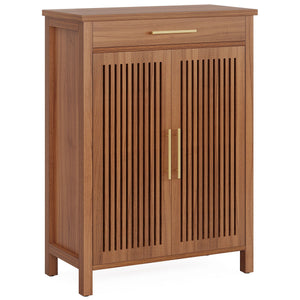
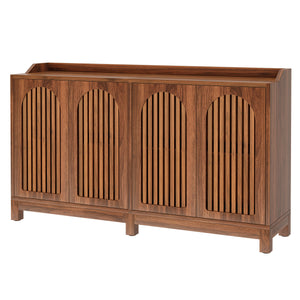
Shoe cabinets keep footwear out of sight for a cleaner, more polished entryway. Most measure 24–48 inches wide, 30–60 inches high, and 12–16 inches deep. A 36-inch cabinet typically holds 6–12 pairs, depending on the shelf layout and shoe size.
Shoe Racks
Open shoe racks make everyday pairs easy to see and grab. Common sizes range from 24–36 inches wide, 12–16 inches deep, and 17–33 inches high. A 30-inch rack usually holds 6–10 pairs and fits well in a closet or near the front door.
Shoe Storage Benches
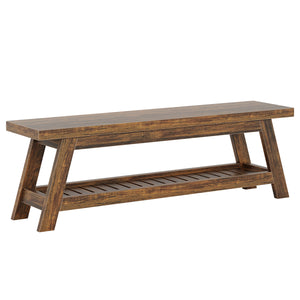
A shoe storage bench combines seating with open shelves or cubbies below. A typical model measures about 37 inches wide, 14 inches deep, and 19 inches high. Benches with two or three compartments generally hold 4–6 pairs.
Shoe Cubbies
Shoe cubbies separate footwear into individual compartments, making them useful for families. Each opening is often about 10–12 inches wide, 12–14 inches deep, and 6–8 inches high. A 3-by-3 unit commonly measures around 36 inches wide and tall, though capacity varies by shoe type.

|
Shoe Storage Type |
Width (inches) |
Depth (inches) |
Height (inches) |
Capacity (Pairs) |
|
Shoe Cabinets |
24-48 |
12-16 |
30-60 |
6-12 |
|
Shoe Racks |
24-36 |
12-18 |
17-33 |
6-10 |
|
Shoe Storage Benches |
37 |
14 |
19 |
4-6 |
|
Shoe Cubbies |
36 |
12 |
36 |
12-18 |
Real-Life Examples
Entryway Storage: If you’re setting up a shoe rack in your entryway, you might consider a 36-inch wide cabinet with 3-4 shelves to accommodate 8-10 pairs of shoes. This would provide enough storage while still leaving room for coats and bags. In smaller apartments or narrow spaces, you might opt for a 24-inch wide rack, ideal for 4-6 pairs of shoes.
Walk-in Closet Storage: A larger closet may benefit from a taller, wider shoe rack, like a 60-inch tall, 48-inch wide unit, which can hold 15-20 pairs of shoes. Such racks may have 5-7 shelves, each spaced around 12-15 inches apart. This setup can comfortably house a variety of shoes, from heels to sneakers, while allowing easy access.

FAQ
What is the Ideal Width for a Shoe Cabinet?
A typical shoe cabinet measures 24 to 48 inches in width, depending on the space available and the number of shoes you need to store. A 36-inch wide cabinet can typically hold between 6-12 pairs of shoes, making it suitable for most households. If you have a larger collection of shoes or want to store shoes for multiple family members, a 48-inch wide cabinet might be more suitable.
How Deep Should a Shoe Cabinet Be?
The depth of a shoe cabinet usually ranges between 12 and 18 inches. The deeper the cabinet, the more room it provides for storing bulkier footwear. A depth of 12 inches works well for flats, sandals, and low-profile shoes, while 16 to 18 inches is better for larger items like boots or high heels.
How Wide is a Pair of Shoes?
The width of a pair of shoes typically ranges between 3 to 4 inches for most adult shoes. However, this can vary depending on the shoe type and brand. For example:
- Men's shoes: Typically around 3 to 4 inches wide.
- Women's shoes: Usually between 2.5 to 3.5 inches wide, with narrower shoes (like high heels) on the smaller end and wider shoes (like boots or flats) on the larger end.
- Athletic shoes: These can range from 3 to 4 inches, with running shoes often being on the wider side for comfort.
Conclusion
Selecting the right shoe rack size requires considering the number of shoes, their types, and your available space. Standard dimensions—12–18 inches in depth, 24–48 inches in width, and 30–60 inches in height—are ideal for most households. For those looking for practical, stylish, and versatile options, we offer a variety of shoe racks that cater to different needs:
For instance, the Tribesigns 5-Tier Shoe Cabinet measures 31.5" W x 14.17" D x 42.91" H, providing ample space for up to 20 pairs of shoes. Its adjustable shelves and sleek design make it a versatile choice for various home decors.
- Wooden Shoe Rack: Our wooden shoe racks combine durability and elegance, fitting perfectly into any room. They offer a natural aesthetic while providing the necessary storage space for your footwear.
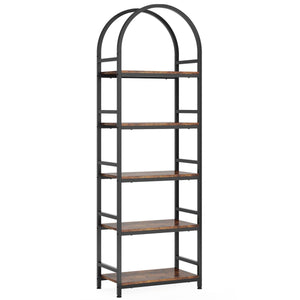
- Tall Shoe Rack: For homes with limited floor space, our tall shoe racks are perfect. With their vertical design, they maximize storage while occupying minimal space, making them ideal for entryways or small rooms.
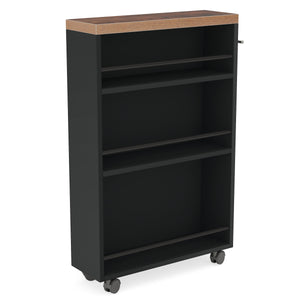
- Narrow Shoe Rack: Designed for tight spaces, our narrow shoe racks offer an efficient storage solution without taking up too much room. They're perfect for apartments or any area where space is a premium.
Whether you need a wooden rack for a rustic look, a tall rack for a sleek, space-saving solution, or a narrow rack for smaller areas, these options ensure your shoes are organized and your space stays tidy.
Read more:

