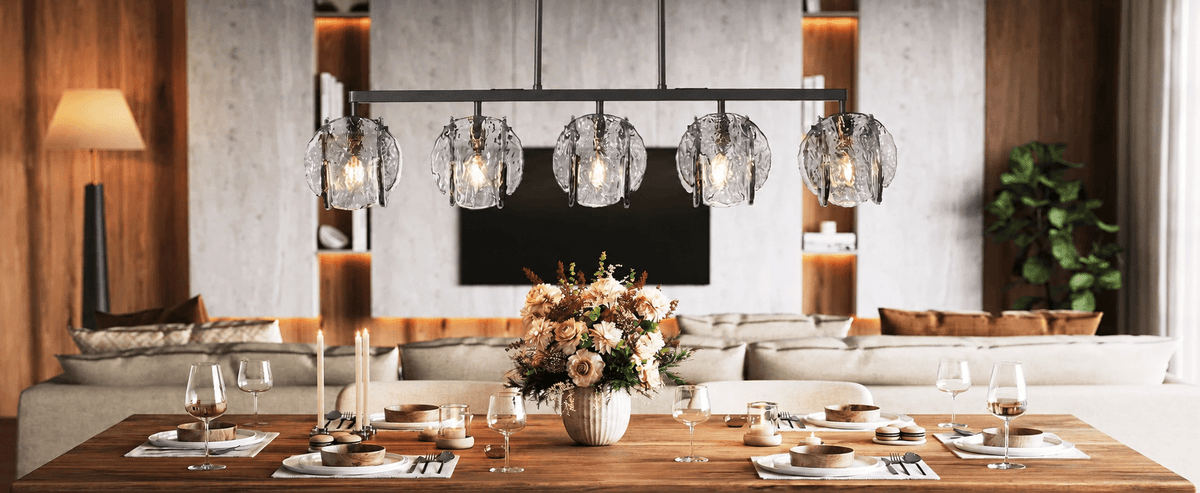












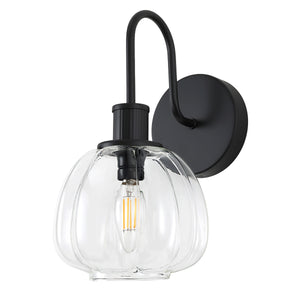
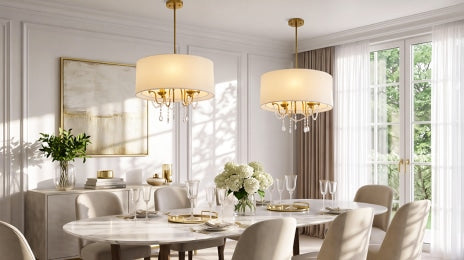



Choosing the right ceiling light is about more than finding a fixture you like. The right ceiling light fixture should fit the room's size, ceiling height, layout, lighting needs, and interior style. A large chandelier may look impressive in a two-story entryway but feel overwhelming in a small bedroom. On the other hand, a simple flush-mount ceiling light may be perfect for a low ceiling but lack the visual impact needed above a dining table.
From flush-mount ceiling lights and semi-flush mount ceiling lights to recessed lighting, pendant lights, chandeliers, track lighting, and LED ceiling lights, there are plenty of options. This guide explains the most common ceiling light types, where to use them, and how to choose the right size for each room.
Table of Contents
- A Simple Fixture-Height Rule
- Choose the Fixture Size Based on Room Size
- Flush Mount Ceiling Lights
- Choosing Ceiling Lights Room by Room
- Choosing the Right Color Temperature
- Ceiling Light Buying Checklist
- Final Thoughts: How to Choose the Right Ceiling Light
- Frequently Asked Questions About Ceiling Lights
Ceiling Light Types at a Glance
Before choosing a fixture, it helps to understand how each type works and where it fits best.
|
Ceiling Light Type |
Best Ceiling Height |
Best For |
Typical Size |
|
Flush Mount |
About 7–8.5 ft |
Bedrooms, hallways, bathrooms, closets, entryways |
12–32 in. diameter |
|
Semi-Flush Mount |
About 8–10 ft |
Bedrooms, living rooms, kitchens, dining rooms |
14–24+ in. diameter |
|
Recessed Lighting |
About 8 ft and up |
Kitchens, living rooms, hallways, offices |
Commonly 4–6 in. aperture |
|
Pendant Lights |
About 8–12 ft |
Kitchen islands, dining tables, breakfast bars |
About 10–36+ in. |
|
Chandeliers |
About 8–12+ ft |
Dining rooms, entryways, living rooms |
About 20–48+ in. |
|
Track Lighting |
About 8 ft and up |
Kitchens, offices, galleries, open spaces |
Depends on track layout |
|
Linear Lighting |
About 9 ft and up |
Kitchen islands, dining tables, work areas |
About 24–60+ in. |
These are starting points rather than strict rules. Furniture dimensions, room proportions, natural light, and the fixture's actual light output should also be considered.
Start With Ceiling Height
Ceiling height is one of the first things to consider when choosing a ceiling light.
For 7- to 8-foot ceilings, low-profile fixtures such as flush mounts and recessed lights are usually practical choices. They provide overhead lighting without taking up much vertical space.
With 8- to 10-foot ceilings, you have more flexibility. Semi-flush mounts, compact pendant lights, and appropriately sized chandeliers can all work depending on the room.
Once the ceiling reaches 10 feet or higher, larger pendant lights, chandeliers, and linear fixtures become easier to use without making the room feel crowded.
For a fixture installed in an area where people walk underneath it, aim for at least 7 feet of clearance from the floor to the bottom of the fixture.
Dining rooms and kitchen islands are different because the fixture is positioned above furniture. A common starting point is 30–36 inches above the tabletop or countertop.
A Simple Fixture-Height Rule
For general rooms, one commonly used guideline is:
Ceiling height in feet × 2.5–3 = approximate fixture height in inches.
For example:
8-foot ceiling → approximately 20–24 inches
9-foot ceiling → approximately 22.5–27 inches
10-foot ceiling → approximately 25–30 inches
12-foot ceiling → approximately 30–36 inches
This is a starting point rather than a strict measurement, especially for chandeliers and decorative fixtures.
Choose the Fixture Size Based on Room Size
For a central ceiling fixture, a useful starting formula is:
Room length in feet + room width in feet = fixture diameter in inches
For example, a 12 × 14-foot room gives:
12 + 14 = 26 inches
So a fixture around 26 inches in diameter is a reasonable starting point.
|
Room Size |
Suggested Fixture Diameter |
|
Up to 100 sq. ft. |
12–18 in. |
|
100–150 sq. ft. |
16–22 in. |
|
150–200 sq. ft. |
18–26 in. |
|
200–300 sq. ft. |
24–30 in. |
|
300–400 sq. ft. |
28–36 in. |
|
400+ sq. ft. |
32–48+ in. or multiple fixtures |
For chandeliers and pendant lights above a dining table or kitchen island, the furniture dimensions often matter more than the overall room size. A chandelier above a dining table can generally be around half to two-thirds the width of the table.
Flush Mount Ceiling Lights
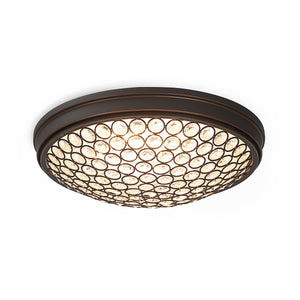
Flush mount ceiling lights sit directly against the ceiling, making them one of the best choices for rooms with limited vertical space.
Where Are Flush Mount Lights Best?
They work especially well in: Bedrooms, hallways, bathrooms, closets, entryways, laundry rooms, low-ceiling living rooms
Why Choose a Flush Mount Ceiling Light?
The biggest advantage is its compact design. Because the fixture stays close to the ceiling, it preserves headroom and keeps a room looking visually open.
Flush mounts are also available in everything from simple white LED designs to decorative glass and metal fixtures, so they can work with modern, traditional, farmhouse, and minimalist interiors.
For a low ceiling, a 12–24-inch flush mount is often sufficient for a smaller room, while larger rooms may call for a fixture closer to 24–32 inches.
Semi-Flush Mount Ceiling Lights
A semi-flush mount ceiling light hangs slightly below the ceiling, giving it more visual presence than a standard flush mount without requiring the vertical space of a pendant or chandelier.
They are particularly useful for 8- to 10-foot ceilings.
Where Are Semi-Flush Mount Lights Best?
They work well in bedrooms, living rooms, dining rooms, kitchens, entryways, and home offices.
A semi-flush fixture is a good middle ground when a flush mount feels too basic, but a pendant or chandelier would hang too low.
For most residential applications, a 14–24-inch fixture works well, although larger rooms can accommodate larger decorative designs.
Recessed Lighting
Recessed lighting, also called can lights or downlights, is installed inside the ceiling rather than hanging below it.
This gives the ceiling a clean, streamlined appearance and makes recessed lighting especially popular in modern and contemporary homes.
Where Is Recessed Lighting Commonly Used?
Recessed lights are especially common in kitchens, living rooms, hallways, home offices, bathrooms, bedrooms, and walk-in closets.
Why Is Recessed Lighting So Popular?
The biggest advantage is that it provides useful illumination without becoming a major visual element in the room.
Instead of relying on one central ceiling fixture, homeowners can distribute recessed lights across the room and direct light toward important areas.
For example, in a kitchen, recessed lights can illuminate countertops and work areas. In a living room, they can provide ambient lighting while floor lamps and table lamps add softer layers of light.
A common starting point for spacing is approximately half the ceiling height. With an 8-foot ceiling, that means roughly 4 feet between fixtures. However, actual spacing depends on the fixture's lumens, beam angle, ceiling height, and room layout.
Pendant Lights
Pendant lights hang from the ceiling using a cord, rod, chain, or other suspension system. Unlike recessed lighting, pendants are both functional and decorative, making them especially useful over specific areas that need focused light.
Where Are Pendant Lights Best?
Common locations include: Kitchen islands, dining tables, breakfast bars, kitchen sinks, entryways, home bars, and reading areas.
Kitchen island pendant lights are particularly popular because they provide task lighting while also creating a focal point.
For smaller pendants, a diameter of around 10–18 inches can work well. Medium pendants may be around 18–26 inches, while larger spaces can accommodate fixtures measuring 26–36 inches or more.
For a long kitchen island, multiple smaller pendants can create better visual balance than one oversized fixture.
Chandeliers
A chandelier combines lighting with decorative impact, making it an ideal choice when the ceiling fixture is intended to become a focal point.
Where Are Chandeliers Best?
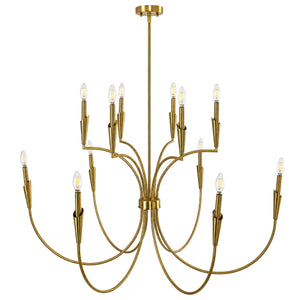
Chandeliers are commonly used in dining rooms, entryways, living rooms, large bedrooms, stairwells, and two-story foyers.
For an 8-foot ceiling, a chandelier around 20–24 inches high can be a starting point. With a 10-foot ceiling, a fixture around 25–30 inches high may provide better proportions.
In a tall foyer with a 16-foot or higher ceiling, a much larger multi-tier chandelier may be appropriate.
For a chandelier above a dining table, focus on the table rather than the entire room. A common guideline is for the chandelier to be approximately 50–67% of the table's width.
The bottom of the chandelier is typically positioned about 30–36 inches above the tabletop.
Track Lighting
Track lighting consists of multiple adjustable light heads mounted along a track.
Its biggest advantage is flexibility. Each light can be aimed toward a different area, making it useful when one room has several lighting needs.
Track lighting works especially well in kitchens, home offices, studios, galleries, living rooms, and open-concept spaces.
For example, one light can illuminate a kitchen counter while another points toward a sink or dining area.
It is also useful in rooms where furniture or artwork may change because the direction of the light can be adjusted without replacing the entire fixture.
Linear Ceiling Lights
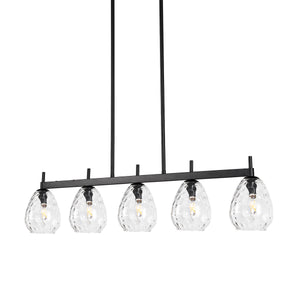
Linear lighting uses a long, narrow fixture to distribute light across a larger area.
It is especially effective above long surfaces such as kitchen islands and dining tables.
A linear fixture can be 24–60 inches or longer, depending on the length of the furniture and the size of the room.
For a long dining table or kitchen island, a linear pendant can often create a more balanced look than a small round pendant.
LED Ceiling Lights
Today, LED technology is available in almost every type of ceiling light, including flush mounts, recessed lights, pendants, chandeliers, track lights, and linear fixtures.
When shopping for LED ceiling lights, don't focus only on wattage.
Pay attention to: Lumens, color temperature, CRI, dimming capability, beam angle, and whether the LED is integrated or uses replaceable bulbs.
For living rooms, bedrooms, and dining rooms, 2700K–3000K often creates a warm and comfortable atmosphere.
Kitchens, bathrooms, and work areas may benefit from 3000K–4000K, depending on the desired appearance and task requirements.
Choosing Ceiling Lights Room by Room
You don't need to use the same type of ceiling light throughout your home. Each room has different lighting needs.
Living Room
Living rooms often work best with layered lighting rather than one ceiling fixture.
For an 8-foot ceiling, a flush mount or low-profile semi-flush mount can preserve headroom. With a 9- to 12-foot ceiling, a decorative chandelier, pendant, or larger semi-flush fixture becomes an option.
Combining a ceiling light with floor lamps and table lamps can also create more flexible lighting throughout the day.
Kitchen
Kitchen lighting should provide both ambient lighting and task lighting.
Recessed lighting can provide general illumination, while pendant lights above a kitchen island can provide focused light and visual interest.
For a large island, multiple pendants or one long linear pendant can work particularly well.
Bedroom
Bedrooms usually benefit from comfortable, softer lighting.
For lower ceilings, flush mounts and semi-flush mounts are practical. For higher ceilings, a small chandelier or decorative semi-flush fixture can add personality without overwhelming the room.
A dimmable LED ceiling light can be especially useful because brightness can be adjusted for different activities.
Bathroom
Bathrooms generally need bright, even illumination.
Flush mounts and recessed lights are common choices, but always check that the fixture is appropriately rated for its intended location, particularly in areas exposed to moisture.
Ceiling lighting can also be combined with vanity lighting to reduce shadows around the mirror.
Dining Room
The dining room is one of the best places for a chandelier or pendant light.
The most important measurements are the dining table, ceiling height, and fixture diameter.
A chandelier around 50–67% of the table's width is a useful starting point, with the bottom typically 30–36 inches above the tabletop.
For a long table, a linear chandelier or multiple coordinated pendants may create better proportions.
Hallway
Hallways need consistent lighting without sacrificing headroom.
Flush mounts and recessed lights work particularly well in lower-ceiling hallways. With higher ceilings, small semi-flush fixtures can add more decorative character.
Spacing should be based on the fixture's light output and beam spread rather than simply placing fixtures at equal visual intervals.
Entryway and Foyer
Entryways provide more opportunities to use decorative lighting.
For an 8- to 9-foot ceiling, a compact chandelier or semi-flush fixture can add personality without overwhelming the space.
With 10- to 12-foot ceilings, a larger chandelier can create a stronger focal point.
For a two-story foyer, a large multi-level or cascading chandelier can help fill the vertical space.
Choosing the Right Color Temperature
Color temperature has a major effect on how a room feels.
|
Color Temperature |
Appearance |
Common Uses |
|
2700K |
Warm and cozy |
Bedrooms, living rooms, dining rooms |
|
3000K |
Warm but cleaner |
Living rooms, kitchens, bedrooms |
|
3500K |
Neutral |
Kitchens, offices, multipurpose rooms |
|
4000K |
Cool neutral |
Kitchens, bathrooms, work areas |
|
5000K |
Daylight-like |
Garages, workshops, utility areas |
If you're choosing LED ceiling lights for multiple rooms, you don't necessarily need to use the same color temperature throughout the house.
The best choice depends on the room's function and the atmosphere you want to create.
Ceiling Light Buying Checklist
Before purchasing a ceiling light fixture, check these measurements and specifications:
|
What to Check |
Why It Matters |
|
Ceiling height |
Determines how much vertical space is available |
|
Room size |
Helps determine fixture diameter |
|
Table or island size |
Important for pendants and chandeliers |
|
Fixture height |
Prevents the light from overwhelming the room |
|
Lumens |
Indicates how much light the fixture produces |
|
Color temperature |
Determines whether the light looks warm or cool |
|
CRI |
Affects how accurately colors appear |
|
Dimming |
Useful for bedrooms, dining rooms, and living rooms |
|
Location rating |
Important for bathrooms and damp areas |
|
LED type |
Determines maintenance and bulb replacement options |
Final Thoughts: How to Choose the Right Ceiling Light
There isn't one ceiling light that works for every room. The right choice comes down to a few key factors:
Ceiling height + room size + fixture size + lighting purpose + interior style.
For 7- to 8-foot ceilings, flush-mount ceiling lights and recessed lighting are often practical choices.
For 8- to 10-foot ceilings, semi-flush mounts, pendant lights, and appropriately sized chandeliers provide more design flexibility.
For 10-foot and higher ceilings, larger pendants, chandeliers, and linear fixtures can better match the proportions of the room.
Room size also matters. A small bedroom may only need a 12–18-inch fixture, while a large living room may require something closer to 28–36 inches or multiple fixtures.
The goal isn't simply to find the biggest or most decorative ceiling light. It is to choose a fixture that provides the right amount of light, fits the available space, and complements the room's overall design.
Once you understand the different ceiling light types, choosing the right ceiling light fixture becomes much easier.
Frequently Asked Questions About Ceiling Lights
What type of ceiling light is best for a low ceiling?
For a low ceiling, flush-mount ceiling lights and recessed lighting are usually practical choices because they take up very little vertical space. A semi-flush mount can also work when you want a more decorative look, provided there is enough clearance.
How big should a ceiling light be for my room?
A useful starting point is to add the room's length and width in feet and use that number as the fixture diameter in inches. For example, a 10 × 12-foot room would suggest a ceiling light around 22 inches in diameter. Room proportions, furniture, and the fixture's design should also be considered.
What is the difference between a flush mount and a semi-flush mount ceiling light?
A flush mount ceiling light sits directly against the ceiling, making it ideal for lower ceilings. A semi-flush mount ceiling light hangs slightly below the ceiling, giving it more decorative presence while still taking up less vertical space than a pendant or chandelier.
How high should a chandelier hang above a dining table?
A common starting point is to position the bottom of a chandelier approximately 30–36 inches above the dining table. The exact height can be adjusted based on ceiling height, chandelier size, and the overall proportions of the dining area.
What size chandelier should I use over a dining table?
A chandelier is often sized at approximately 50–67% of the dining table's width. For example, a 60-inch-wide table could work with a chandelier around 30–40 inches wide. For a long table, a linear chandelier or multiple pendants may be a better fit.
Are recessed lights better than a ceiling light fixture?
Recessed lighting and traditional ceiling fixtures serve different purposes. Recessed lights provide a clean, low-profile appearance and allow light to be distributed across a room. Flush mounts, pendants, and chandeliers can provide both lighting and a stronger decorative element. Many rooms benefit from combining recessed lighting with other fixtures.
What color temperature is best for ceiling lights?
For bedrooms, living rooms, and dining rooms, 2700K–3000K generally provides a warm and comfortable appearance. Kitchens, bathrooms, and work areas can use 3000K–4000K when a brighter, more neutral look is preferred.
Are LED ceiling lights a good choice?
LED ceiling lights are available in many styles and can provide energy-efficient lighting with different brightness levels and color temperatures. When choosing an LED fixture, look beyond wattage and check lumens, color temperature, CRI, dimming capability, and whether the LED is integrated or replaceable.
Can I use pendant lights with an 8-foot ceiling?
Yes, but placement and fixture height are important. Pendant lights are generally more suitable when installed over a kitchen island, dining table, or other furniture, where they do not interfere with walking clearance. For areas where people walk underneath, a low-profile fixture is usually more practical.
How many recessed lights do I need in a room?
The number depends on the room's size, ceiling height, fixture brightness, beam angle, and layout. A common starting point is to space recessed lights at approximately half the ceiling height, then adjust the layout based on the manufacturer's recommended spacing and the areas that need more light.
Ready to Get Started?
Now that you’re familiar with the numerous ceiling light types, click here to explore your options, narrow down your search, and discover the perfect choices to suit you and every room in your home.