









Why Is Sintered Stone Resistant to Heat?
The heat resistance of sintered stone comes from its unique manufacturing process.
Unlike many engineered surfaces that rely on resins, coatings, or additional protective layers, sintered stone is created by combining natural minerals and exposing them to extremely high temperatures and pressure. This process bonds the mineral particles together, creating a dense surface structure similar to natural stone.
Because the material itself is formed under intense heat during production, it has a high level of resistance to temperature changes. Everyday situations such as placing warm dishes on the table, serving hot meals, or enjoying long family dinners are exactly the type of use scenarios that make sintered stone suitable for dining surfaces.
The strength of sintered stone does not come from a surface treatment applied afterward. It comes from the material itself.

From Natural Stone Formation to Modern Dining Surfaces
The story of sintered stone begins with a process that has existed in nature for thousands of years.
Natural stone is formed through the gradual combination of minerals, heat, and pressure deep within the earth. Over a long period of time, these forces transform raw materials into dense stone with unique textures and patterns.
Sintered stone recreates a similar transformation using modern technology. Natural mineral components are carefully selected, compressed, and exposed to controlled high temperatures to create a strong, stable surface.
This process allows manufacturers to capture the beauty associated with natural stone — such as marble-inspired veining and elegant textures — while creating a material designed for the demands of contemporary homes.
The result is a dining surface that combines the visual character of stone with the practical qualities needed for everyday living.
Why Sintered Stone Became Popular in European Kitchens
Before becoming a popular choice for dining tables, sintered stone was widely adopted in high-performance interior applications, especially kitchen countertops and architectural surfaces.
European designers and homeowners have long valued materials that balance aesthetics with practicality. Kitchens, in particular, demand surfaces that can withstand heat, stains, moisture, and frequent daily use.
This is where sintered stone gained attention.
Unlike some engineered surfaces that rely on resin binders, sintered stone is created through mineral fusion under extreme heat and pressure. This gives it a dense, non-porous structure that performs well in demanding environments.

Its popularity in European kitchens comes from several practical advantages:
|
Feature |
Why It Matters in Kitchens |
|
Heat resistance |
Suitable around cooking areas and hot cookware |
|
Low porosity |
Helps resist stains from food and liquids |
|
Handles daily preparation and use |
|
|
Low maintenance |
Requires simple cleaning without frequent sealing |
As open-concept living became more popular, kitchen surfaces also became part of the overall home design. Homeowners began looking for materials that were not only functional but also visually refined.
Sintered stone answered this demand by offering marble-inspired patterns, large-format designs, and a modern aesthetic that works across kitchens, dining areas, and living spaces.
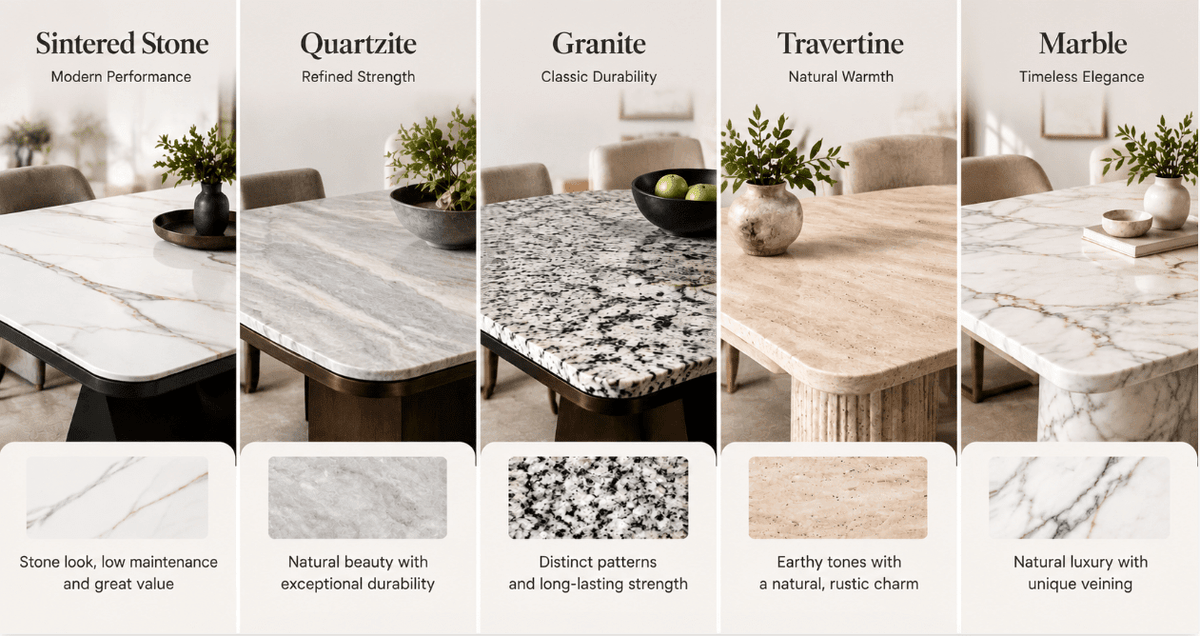
Sintered Stone vs Other Dining Table Materials
The best dining table material depends on how the table will be used. While every material has its own character, sintered stone offers several advantages for households looking for a durable and low-maintenance surface.
|
Material |
Heat Resistance |
Maintenance |
Design Appeal |
|
Excellent resistance to everyday heat exposure |
Easy daily care |
Marble-inspired, modern stone appearance |
|
|
Naturally heat resistant but requires more care |
Requires sealing and maintenance |
Unique natural patterns |
|
|
Durable for daily use but more sensitive to high heat |
Easy cleaning |
Consistent engineered appearance |
|
|
Solid Wood |
Requires protection from heat and moisture |
Regular care needed |
Warm, natural character |
Sintered stone is especially appealing for modern dining spaces because it delivers the refined look many homeowners want while reducing some of the maintenance concerns associated with natural materials.

Can You Put Hot Pots Directly on a Sintered Stone Dining Table?
For everyday dining, sintered stone can handle warm cookware, serving dishes, and hot plates better than many traditional dining surfaces.
However, using a trivet or heat pad is still recommended when placing extremely hot cookware directly on the table. This simple habit helps protect the surface from sudden temperature changes and keeps the finish looking its best over time.
Think of sintered stone as a material designed for real life — durable enough for everyday moments while maintaining the refined appearance of a modern dining centerpiece.
How to Care for a Sintered Stone Dining Table
One of the advantages of sintered stone is that it does not require complicated maintenance.
For everyday care:
- wipe spills with a soft cloth;
- use mild soap and water for routine cleaning;
- avoid harsh abrasive cleaners that may affect the surface finish.
With simple care, a sintered stone dining table can maintain its elegant appearance through years of meals, conversations, and gatherings.
FAQ
Can hot pots damage a sintered stone dining table?
Sintered stone is highly resistant to heat and is designed for everyday dining use. However, placing extremely hot cookware on a trivet is recommended to protect the surface over time.
Is sintered stone better than marble for a dining table?
Sintered stone offers a similar stone appearance with easier maintenance. It is a practical choice for homeowners who want the look of marble with a more durable everyday surface.
Is sintered stone safe for everyday dining?
Yes. Its dense surface structure makes it suitable for regular meals, family gatherings, and daily use.
Does sintered stone stain easily?
No. Sintered stone has a low-porosity surface, making it resistant to many common food and beverage stains and easy to clean.
Why is sintered stone becoming popular for dining tables?
Modern homeowners are looking for materials that combine design and practicality. Sintered stone provides the elegant appearance of natural stone while meeting the demands of everyday living.
As fall arrives, kitchens and dining rooms become the heart of seasonal gatherings. Whether you’re adding cozy autumn accents or styling a modern dining area, explore our tips for creating a warm fall-inspired home and pairing chairs with a white and gold sintered stone dining table.