









What Is a Quartz Tabletop?
Quartz tabletops are made from crushed quartz mixed with resin and pigments. That mix creates a dense, non-porous engineered stone surface with a consistent look.
This is why quartz became so popular in American kitchens. It looks clean, comes in many colors, does not need sealing, and is easier to live with than many natural stones.
For tabletops, quartz offers a polished, reliable look. A white quartz dining table can feel bright and modern. A gray or marble-look quartz tabletop can fit easily into transitional, farmhouse, or contemporary interiors.
The trade-off comes from the resin. Resin helps bind the surface together, but it also makes quartz more sensitive to high heat and UV exposure than sintered stone. A hot pan, a very hot serving dish, or constant sunlight can cause discoloration or damage over time.
Quartz is durable, but it is not heat-proof.

What Is a Sintered Stone Tabletop?
Sintered stone is made by compressing natural minerals under intense heat and pressure. This process creates a hard, dense surface without the resin binder used in quartz.
That difference is easy to feel in everyday use. Sintered stone resists heat, scratches, stains, thermal shock, and UV exposure well, making it a strong material for tabletops.
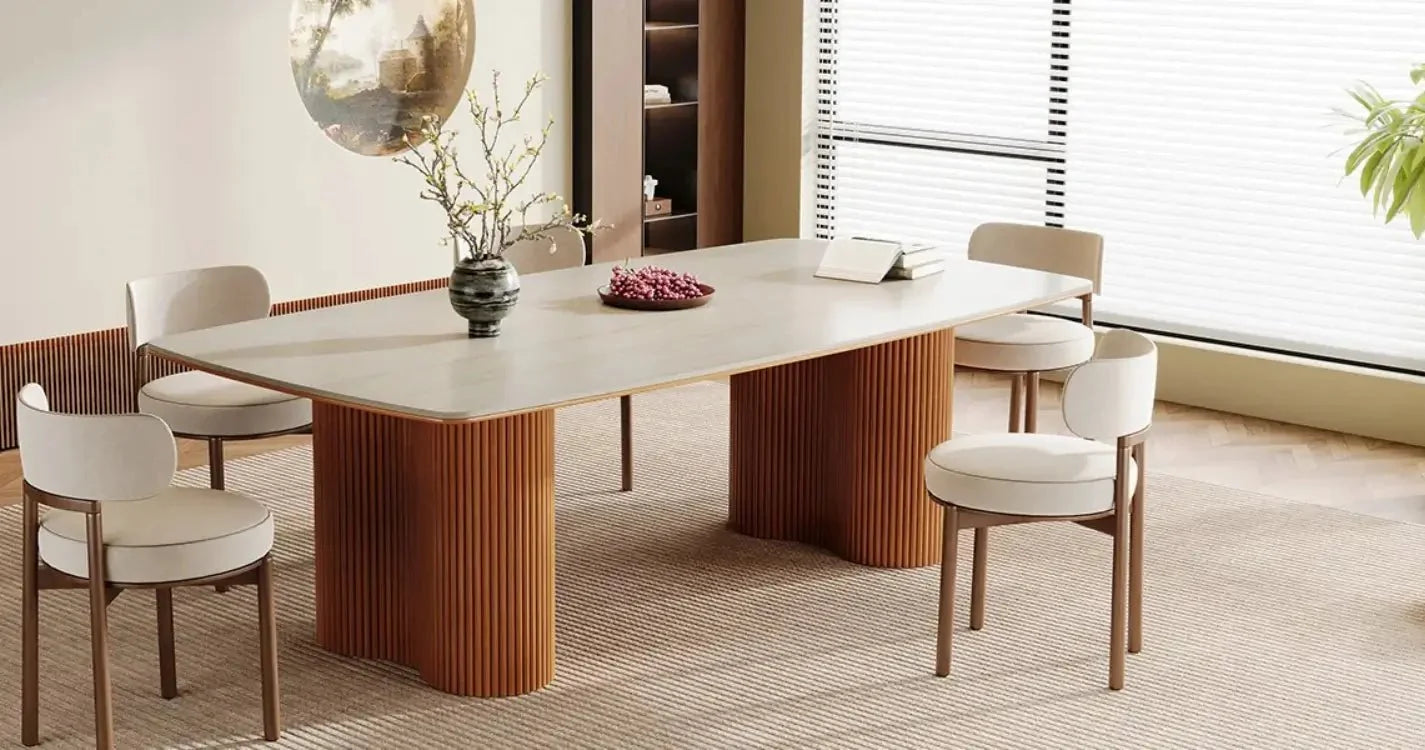
A sintered stone dining table is built for real daily life: hot coffee mugs, dinner plates, laptops, kids’ homework, wine glasses, takeout containers, and sunlight from a nearby window. It also offers a premium stone-like look, with many designs mimicking marble, slate, concrete, or natural stone without the sealing and special care those materials often require.
The main weakness is edge impact. The surface is hard, but a hard strike on a corner can still chip it. That is why edge design matters.
Related read: Is a Sintered Stone Dining Table Good?
Quartz vs. Sintered Stone Tabletops at a Glance
|
Feature |
Quartz Tabletop |
Sintered Stone Tabletop |
Better Choice |
|
Heat resistance |
Good, but high heat can damage the resin |
Excellent |
Sintered stone |
|
Scratch resistance |
Strong |
Very strong |
Sintered stone |
|
Stain resistance |
Good |
Excellent |
Sintered stone |
|
UV resistance |
Can discolor with long sun exposure |
Strong UV resistance |
Sintered stone |
|
Edge impact |
Somewhat more forgiving |
Hard surface, but edges can chip |
Quartz |
|
Maintenance |
Easy |
Very easy |
Tie |
|
Price |
Usually more affordable |
Usually more expensive |
Quartz |
|
Outdoor use |
Not ideal |
Much better suited |
Sintered stone |
|
Design consistency |
Very consistent |
More premium stone-like look |
Depends |
Durability
Sintered stone usually holds up better in daily tabletop use. The reason is simple: tables take more abuse than people think.
A dining table is not only for dinner. In many homes, it becomes a work desk, homework zone, craft station, game table, folding area, and weekend gathering spot. Fortune Business Insights notes that dining tables are increasingly used for more than dining, including as spaces for kids’ virtual classes and temporary home offices. The same report projects the U.S. dining table market to reach $2.34 billion by 2032.
That makes material performance more important. A tabletop has to look good, but it also has to survive repeated contact with heat, moisture, food, and daily clutter.

Heat Resistance
Sintered stone has far superior heat resistance compared to quartz stone because it is formed at high temperatures, unlike quartz stone which relies on resin binders.
For families who frequently serve hot food directly from the kitchen to the table, sintered stone is safer and more convenient.
Scratch Resistance
Both materials resist scratches, but sintered stone has the edge.
That said, scratch-resistant does not mean scratch-proof. Cutting directly on either tabletop is still a bad habit. It can dull knives, damage the finish, or leave marks depending on the surface texture.
For a dining table that also works as a desk or family activity table, sintered stone is the stronger pick.
Stain Resistance
Quartz and sintered stone are both low-maintenance and non-porous, so neither stains easily when cleaned properly.
Chipping and Edge Damage
This is where quartz can have an advantage.
Sintered stone is extremely hard, but hardness and toughness are not the same thing. A hard surface can resist scratches beautifully and still chip at the edge when hit with enough force. A dropped heavy mug, a metal chair pushed into the table, or rough handling during a move can damage a corner.
Quartz contains resin, which can make it slightly more forgiving under certain impacts. It can still chip, but it may not feel quite as brittle at vulnerable edges.
Cleaning and Maintenance
Both quartz and sintered stone are easy to care for. Neither needs sealing, and daily cleaning only takes a soft cloth, warm water, and mild dish soap.
Quartz needs a bit more caution. Avoid high heat, abrasive powders, bleach-heavy cleaners, and harsh chemicals, as they can damage the resin or dull the finish.
Sintered stone is more forgiving. It handles heat, stains, and regular cleaning better, but using placemats and wiping spills quickly will still help the tabletop stay beautiful longer.
Design
Quartz looks controlled. Sintered stone looks more architectural.
Quartz is great when you want a clean, predictable surface. The pattern is usually consistent, which helps when you prefer a calm, uniform look. It fits well in homes that lean transitional, modern farmhouse, classic white kitchen, or soft contemporary.
Sintered stone often feels more elevated. Large-format stone patterns, dramatic veining, matte finishes, and marble-like surfaces give it a more designer look.

Cost
Sintered stone usually costs more than quartz. The material is newer, fabrication requires skill, and fewer suppliers work with it compared with quartz.
Quartz is easier to find and often more budget-friendly. That makes it attractive for buyers who want a stone-look tabletop without moving into a premium price range.
Final Verdict
Quartz still makes sense indoors when price, pattern consistency, and a familiar stone look matter most. It is attractive, easy to clean, and durable enough for many homes.
For most modern dining tables, sintered stone is the better long-term material. Quartz is still a solid indoor option, but it does not outperform sintered stone where tabletops need it most.
FAQs
Does Sintered Stone Chip Easily?
Not easily on the surface, but the edges can chip if they are hit hard. Rounded, beveled, or protected edges are better for family homes and high-traffic dining areas.
Can You Put Hot Dishes on a Quartz Tabletop?
Warm plates and mugs are usually fine, but very hot cookware or baking dishes should not sit directly on quartz. Use trivets or heat pads to protect the resin-based surface.
Is Quartz Good for a Dining Table?
Quartz can be a good dining table material for indoor use. It is attractive, stain-resistant, and easy to clean. Sintered stone is better when heat resistance, scratch resistance, or sunlight exposure matters more.
Is Sintered Stone the Same As Porcelain?
They are related but not exactly the same. Both are made with mineral-based materials and heat, but sintered stone is usually marketed as an ultra-compact surface with stronger performance for large furniture and architectural applications.
Which one Looks More Expensive?
Sintered stone often looks more premium because it can mimic marble, slate, concrete, and natural stone with large-format patterns. Quartz looks clean and polished, but it can feel more uniform.