









Quick Answer
The space behind the sofa offers more than a place for decoration — it is an opportunity to bring personality into the living room. When wall decor connects with furniture arrangement, overall style, and personal preferences, the space can feel more balanced, comfortable, and personal.
Your living room may feel almost complete after arranging major furniture pieces like the sofa, coffee table and others. Yet something can still feel missing. You may notice that an empty wall behind the sofa can sometimes make the space look unfinished.The wall behind the sofa is more than just a place to hang a piece of artwork.
As one of the largest visual areas in the living room, it helps define the style of the space and create a focal point around your seating area. Through artwork, shelves, mirrors, or other decorative elements, this wall becomes an opportunity to add character to the room and feel more connected to the people who live there.
Start with Your Living Room
Before choosing wall decor, take a moment to look at the living room as a whole. The wall behind a sofa is connected with everything around it — the seating arrangement, coffee table, rug, lighting, and other details that shape the feeling of the space.Rather than treating this wall as an empty area that needs to be filled, consider how it contributes to the room’s overall character. As one of the largest visual areas in a living room, the sofa wall can help define the atmosphere of the space and create a stronger connection between the furniture and decor.
The right choice is not always the biggest artwork or the most noticeable decoration. Some rooms feel better with simple artwork and calm tones, while others benefit from layered pieces, meaningful objects, or more expressive designs. The most successful wall decor choices are those that feel natural within the space and bring a sense of personality to the room.
Choose Wall Decor Style
Once the role of the sofa wall is clear, the next step is choosing the type of wall decor that fits the space. Different pieces create different moods — from a simple focal point to a more layered and personal look. The best choice depends on the atmosphere you want to create and how much visual presence you want the wall to have.

Make a Statement with Artwork Artwork is one of the simplest ways to transform the wall behind a sofa. A well-chosen piece can introduce color, texture, and personality while creating a clear visual focus in the living room. For spaces with a more minimal look, a single large artwork can add character without making the room feel busy. In rooms with neutral furniture, artwork can also introduce contrast or bring together existing colors from the rug, pillows, or other decor. The goal is not just to fill wall space, but to choose something that feels connected to the overall room.
Create Interest with a Gallery Wall A gallery wall offers more flexibility and allows different pieces to work together. It can include artwork, photographs, prints, or other meaningful items to create a more collected feeling. Compared with one large statement piece, a gallery wall can bring more personality and storytelling into the space. It works especially well for those who enjoy combining different styles, memories, or visual elements.
Add Layers with Shelves and Mirrors Wall shelves and mirrors provide another way to add depth to a sofa wall. Floating shelves can introduce additional layers by displaying books, plants, or decorative objects, while mirrors can help reflect light and make the room feel more open. These options can work well when the wall needs both visual interest and a practical element.
Connect Wall Decor and Furniture
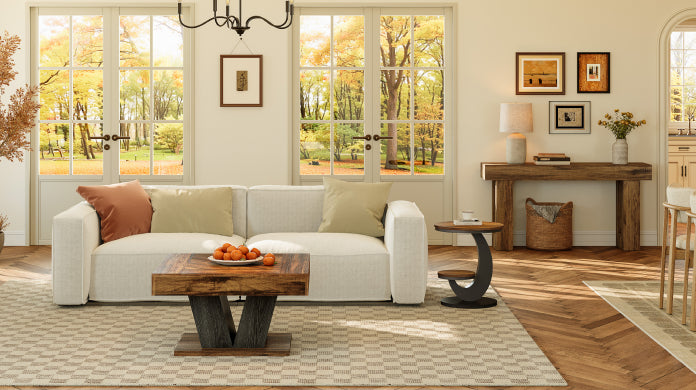
Wall decor becomes more effective when it works together with the furniture below it. A beautiful piece of artwork can stand out on its own, but when it connects with the sofa, coffee table, rug, and other elements in the room, the entire space feels more intentional. Think of the living room as a complete composition. The wall creates the vertical focus, while the furniture and rug build the foundation of the space.
Create Harmony Above the Sofa The sofa and the wall behind it naturally belong together, so the decor above the sofa plays an important role in balancing the seating area. Instead of choosing a piece based only on whether it looks attractive, consider how it interacts with the sofa below. Colors, shapes, and visual weight can help create a smoother connection between the wall and furniture. For example, artwork with warm tones can complement wood furniture, while textured or neutral pieces can add depth to a simple sofa arrangement. The goal is not perfect matching, but creating a relationship between different elements.
Build a Complete Living Space A well-designed living room usually comes together through multiple layers. The wall decor adds height and personality, the sofa creates the main seating area, the coffee table provides function, and the rug helps define the space from below. When these elements work together, the room feels more balanced instead of looking like a collection of separate pieces.For example, a bold artwork above a sofa can become the visual anchor, while a coordinated coffee table and rug help support the overall style and make the seating area feel complete.
Let Space Feel Personal The most memorable rooms are not necessarily the ones with the most decorations. They are the spaces where furniture, artwork, and personal details feel connected.A favorite artwork, a meaningful object on a shelf, or a carefully chosen decorative piece can make a living room feel more reflective of the people who live there. Wall decor is not only about making a wall look better — it helps turn a furnished room into a space with character.
Final Thought
The wall behind a sofa is often one of the largest visual areas in a living room, but its purpose goes beyond simply filling an empty space. The right wall decor can help bring together the furniture, add personality, and shape the overall feeling of the room.There is no single approach that works for every home.
Whether the space feels best with a large artwork, a layered gallery wall, or a simple decorative arrangement, the most important choice is one that fits the room and feels meaningful over time. When wall decor connects naturally with the furniture and the way a space is used, it becomes more than decoration — it becomes part of what makes the home feel personal.