



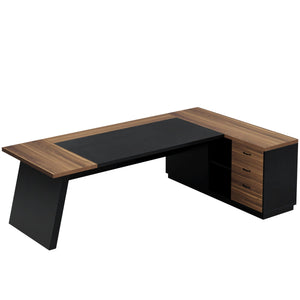
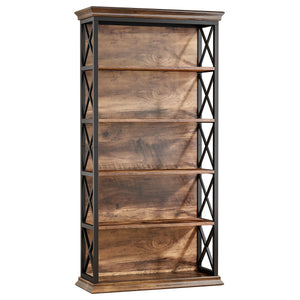
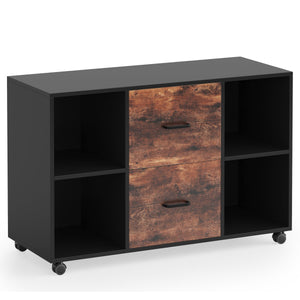
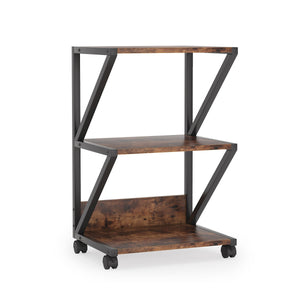



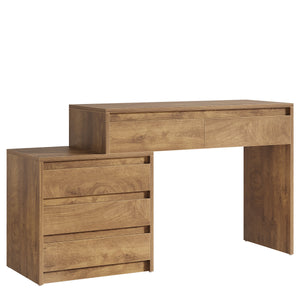
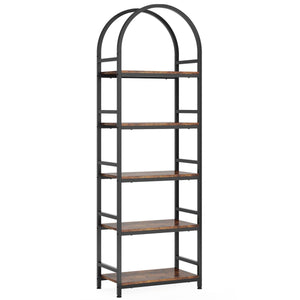
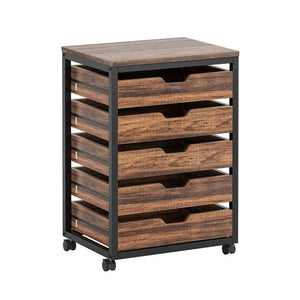
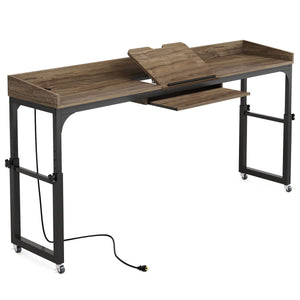


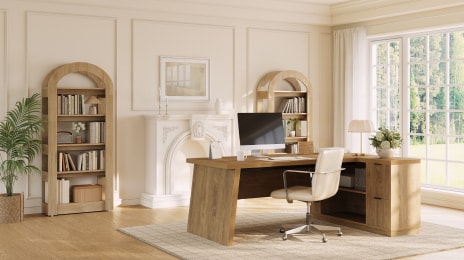


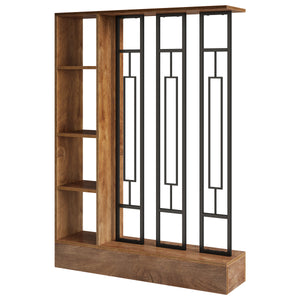


What Is Engineered Wood?
Engineered wood is a manufactured wood material made by combining wood fibers, particles, or thin layers of wood with adhesives and compressing them under heat and pressure.
Unlike solid wood, which comes directly from natural timber, engineered wood is designed for consistency. It provides a more uniform surface, predictable strength, and often a lower price point.
Common types of engineered wood used in furniture include:
|
Type |
Features |
Common Uses |
|
MDF (Medium-Density Fiberboard) |
Smooth, dense, and uniform |
Office desks, cabinets, painted furniture |
|
Lightweight and affordable |
Budget furniture |
|
|
Plywood |
Strong layered construction |
Higher-quality furniture and structural parts |
It’s important to remember that “engineered wood” is a broad category. A premium MDF or plywood desk can perform very differently from a low-cost particle board desk.

Is Engineered Wood Durable Enough for a Computer Desk?
For most home office and everyday computer setups, yes.
A computer desk does not only depend on the material itself. Its durability also comes from how the desk is built. A thicker desktop, strong support frame, and quality finishing can make a significant difference.
A well-designed engineered wood desk can support:
- Desktop computers
- Multiple monitors
- Laptops and accessories
- Speakers and other office equipment
- Daily typing and working activities
For example, a dual-monitor setup may put more stress on the desk surface than a simple laptop setup. In these cases, look for a desk with reinforced support rather than focusing only on the material name.
Why Engineered Wood Works Well for Computer Desks
1. It Offers Great Value for the Price
One of the biggest advantages of engineered wood is affordability.
Solid wood desks often come with a higher price because of the cost of natural lumber, craftsmanship, and weight. Engineered wood provides a similar clean, modern appearance at a more accessible price.
For many people setting up a home office, a quality engineered wood desk delivers the features they actually need without paying extra for premium materials they may not fully use.
2. It Is More Stable Than Many People Expect
Natural wood expands and contracts with changes in humidity and temperature. Engineered wood is manufactured to be more consistent, which can help reduce issues like warping or uneven surfaces.
This stability is especially useful for computer desks because a flat, reliable surface matters for:
- Monitor placement
- Keyboard comfort
- Desk organization
- Long working sessions
3. It Provides a Smooth, Practical Workspace
Many engineered wood desks feature a smooth laminate or veneer surface that is easy to clean and maintain.
For daily use, this means:
- Less maintenance than some natural wood surfaces
- Easy cleaning with a soft cloth
- A consistent appearance over time
For a home office, practicality often matters more than having a rare natural wood finish.

Potential Drawbacks of Engineered Wood Desks
While engineered wood has many advantages, it is not perfect.
1. Lower Resistance to Moisture
Engineered wood generally does not handle water exposure as well as solid wood.
A spilled drink that is quickly cleaned up usually is not a problem, but prolonged moisture can damage the material, especially around unfinished edges.
A simple habit like using a coaster and keeping the desk surface dry can significantly extend its lifespan.
2. It Cannot Always Be Repaired Like Solid Wood
Solid wood can often be sanded, refinished, or repaired multiple times.
Engineered wood usually has more limitations. Deep scratches, chipped edges, or major damage may be harder to restore.
That said, most desk users will never encounter these issues with normal daily use.
3. Quality Varies Between Products
This is the most important consideration.
A low-quality engineered wood desk may feel unstable, while a well-designed one can last for years.
When shopping, pay attention to:
- Desktop thickness
- Frame strength
- Weight capacity
- Edge finishing
- Customer reviews
The construction matters just as much as the material.
Engineered Wood vs. Solid Wood Computer Desk
Both engineered wood and solid wood can make excellent computer desks. The better choice depends on your budget, workspace needs, and how much durability you expect over time.
|
Feature |
Engineered Wood |
Solid Wood |
|
Material composition |
Made from wood fibers, particles, or veneers bonded with adhesives under heat and pressure |
Made from natural lumber cut directly from trees |
|
Density & consistency |
MDF typically has a uniform density of around 600–800 kg/m³, creating a consistent, smooth surface |
Natural wood density varies by species, such as pine (~350–550 kg/m³) and oak (~600–750 kg/m³) |
|
Dimensional stability |
Less affected by seasonal expansion and contraction because the fibers are engineered and compressed |
Can expand or shrink with humidity changes due to natural wood movement |
|
Surface quality |
Provides a smooth, uniform surface ideal for laminates and modern finishes |
Offers unique grain patterns and a natural wood appearance |
|
Repairability |
Limited repair options if deeply damaged |
Can often be sanded, refinished, and repaired multiple times |
|
Typical price range |
Usually more budget-friendly due to efficient manufacturing |
Higher cost because of natural material and craftsmanship |
|
Best choice for |
Home offices, study spaces, everyday computer setups |
Premium furniture, long-term investment pieces |
A quality engineered wood computer desk can typically last around 5–10 years with normal home office use, while a well-built solid wood desk can last decades when properly maintained. However, lifespan depends less on the material name alone and more on construction quality, including desktop thickness, edge protection, and frame stability.
For most home office users, engineered wood offers the features that matter most: a stable surface, modern appearance, and practical durability. Solid wood is a great choice if you value natural materials and heirloom-quality furniture, but it is not always necessary for a functional computer workspace.
Read more: What Is a Reasonable Price for a Desk?
How to Choose a High-Quality Engineered Wood Computer Desk
The material is only part of the equation. Here are the features that matter most.
Check the Desktop Thickness
A thicker desktop usually provides better stability and resistance to bending.
For everyday computer use, look for a sturdy surface that feels solid rather than lightweight or flexible. While there is no universal standard for computer desk thickness, most quality desks typically fall within these ranges:
|
Desktop Thickness |
Typical Use |
Performance |
|
0.6–0.7 inches (15–18 mm) |
Lightweight desks, occasional use |
Suitable for laptops and basic setups |
|
0.75–1 inch (19–25 mm) |
Home offices, study desks, everyday computer use |
A good balance of stability and affordability |
|
1 inch+ (25 mm or thicker) |
Premium desks, large monitors, gaming setups |
Provides a more solid feel and better long-term durability |
For a computer desk used daily, a desktop around 0.75 inches (19 mm) or thicker is generally a good starting point. If you plan to use multiple monitors, a heavy desktop PC, or monitor arms, choosing a thicker surface with additional support underneath can help reduce flexing over time.
Look for Strong Frame Support
The desk frame plays a major role in overall durability.
Features worth considering:
- Steel or reinforced metal frames
- Additional center support bars
- Stable leg design
- Adjustable feet for uneven floors
A strong frame can make even an engineered wood desktop feel much more premium.
Consider Your Setup Size
Think about how you'll actually use your desktop and what size desk you'll need.
A simple laptop setup requires less support than:
- Two or three monitors
- A large desktop PC
- Gaming accessories
- Speakers and storage items
Choose a desk based on your real workspace needs, not just appearance.

Who Should Choose an Engineered Wood Computer Desk?
Engineered wood desks are a great fit for:
- Remote workers building a home office
- Students needing an affordable study space
- Gamers looking for a stylish setup
- Apartment owners who want lightweight furniture
- Anyone who wants good value without sacrificing appearance
For most everyday users, engineered wood provides the right balance between function and cost.
Final Verdict
Yes, engineered wood is a good material choice for a computer desk — especially when the desk is well constructed.
It offers affordability, stability, and a clean modern look that works well in today’s home offices. While solid wood may offer a more premium feel, a high-quality engineered wood desk can easily meet the needs of most computer users.
When choosing a desk, focus less on the label “engineered wood” and more on the details that affect performance: thickness, support, craftsmanship, and design. A thoughtfully built engineered wood desk can be a reliable workspace for years.