









Start With Your Dining Table
Before shopping for a bench, take three measurements from the table you already have:
- Overall length — measure the tabletop from end to end.
- Space between the legs — this determines whether the bench can tuck underneath.
- Clearance underneath — measure from the floor to the apron or lowest support.
That middle measurement is the one people tend to overlook.
A 72-inch dining table does not necessarily have 72 inches of usable space underneath. If the legs sit several inches in from each end, the opening may be much narrower.
So if your goal is to tuck the bench completely under the table, the inside leg-to-leg measurement is your real maximum bench length.
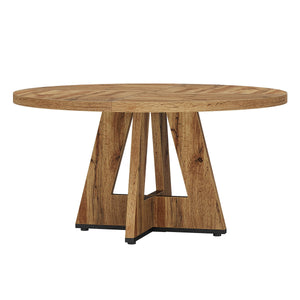
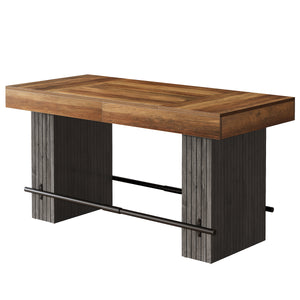
This matters even more with trestle tables, pedestal bases, angled legs, and tables with decorative supports. The tabletop may look generous, while the structure underneath gives you less room than expected.

How Long Should a Dining Bench Be?
There is no single bench-to-table ratio that works for every setup.
You will sometimes see advice to choose a bench that is two-thirds the length of the table, or to keep it 6 to 12 inches shorter. Those guidelines can be helpful, but they are not rules.
A better approach is to start with the number of people you actually want to seat.
|
Bench Length |
Comfortable Everyday Seating |
|
40–48 inches |
2 adults |
|
54–60 inches |
2–3 adults |
|
60–72 inches |
3 adults |
|
80–96 inches |
4 adults |
For everyday comfort, about 24 inches per adult is a good benchmark.
You can fit people a little closer for an occasional dinner, but if the bench is used every day, it is worth giving everyone enough elbow room.
Visually, a bench that is slightly shorter than the table usually looks balanced and is easier to move around. But if you need the bench to tuck underneath, the table base—not the tabletop—should make the final decision.
What Size Bench Goes With My Table?
Table length gives you a good starting point, but the bench does not need to mirror it exactly.
If your dining table is 48 to 60 inches long, a 40- to 48-inch bench usually feels nicely proportioned and gives two people enough room. This pairing is especially useful in a breakfast nook or compact dining area, where a shorter bench can tuck away neatly when dinner is over.
With a 60- to 72-inch table, you have a little more flexibility. A bench around 48 to 60 inches works well for two to three people, though the table base should have the final say. Widely spaced legs—or a pedestal base—may let you go longer, while legs set farther inward can make a shorter bench the smarter fit.
Once the table reaches 72 to 84 inches, a 60- to 72-inch bench tends to look balanced without feeling undersized. That is also a comfortable range for three adults in most everyday setups.
For larger tables around 84 to 96 inches, you can move into the 72- to 84-inch bench range. Just resist the urge to fill every inch of the table. An extra-long bench may seat more people on paper, but it can also be harder to slide into—especially along a wall.
The takeaway: use table length to narrow your options, then let leg placement, seating needs, and ease of access decide the final size.

Get the Bench Height Right
Most dining benches have a seat height of about 18 to 20 inches, which works well with a standard dining table around 30 inches high.
But the better measurement is the space between the seat and the underside of your table.
Aim for roughly 10 to 12 inches of clearance from the bench seat to the lowest point under the table.
That lowest point may not be the tabletop itself. A thick apron, support beam, or crossbar can reduce knee room even when the table height looks perfectly standard.
If you are choosing an upholstered bench, remember that the cushion can compress when you sit down. Look at the actual seat height rather than the frame alone.
And if your table is counter height rather than standard dining height, a regular dining bench will likely sit too low. Match the bench to the table type, not just the style.
How Deep Should a Dining Bench Be?
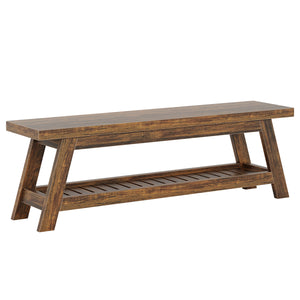
For most backless dining benches, around 16 to 18 inches deep feels comfortable without taking up unnecessary floor space.
Deeper is not always better.
A very deep bench can push you farther away from the table, which may look generous but feel awkward during a meal.
Upholstered benches or benches with backs are often a little deeper, so they need more room behind them as well.
If your dining area is tight, depth can matter just as much as length. A bench that is two inches shallower may make the walkway behind it noticeably easier to use.
Bench or Chairs for a Small Dining Area?
A bench is not automatically the better choice for a small room. Its biggest advantage is that a backless bench can tuck completely under the table, keeping the floor and sightlines clearer when it is not in use.
Chairs, however, are easier to move and let each person sit down or get up independently. For everyday adult dining, that flexibility often matters more than squeezing in an extra seat. If it tucks away, a bench saves space. If people need to move independently, chairs are easier to live with.
A practical compromise is one bench paired with chairs: you get the space-saving benefit on one side without giving up easy access around the table.
Make Sure the Bench Is Easy to Use
Before choosing a longer bench, think about how people will get in and out. A bench against a wall or one that seats several adults can make the middle spot awkward to reach.
More seating is not always better. Choose a length that gives everyone enough room without making the bench cumbersome to use.

A Quick Check Before You Buy
Before ordering a dining bench, walk through these five checks:
Table — Measure the overall table length.
Tuck — Measure the clear distance between the table legs if you want the bench to slide underneath.
Seat — Allow about 24 inches of bench length per adult for comfortable everyday seating.
Sit — Make sure there is roughly 10 to 12 inches between the bench seat and the underside of the table.
Move — Check that people can sit down, stand up, and get around the bench without turning dinner into a group exercise.
The right dining bench is not simply the one that looks proportional to your table. It is the one that fits the table structure, seats your household comfortably, and still works when everyone actually sits down.
FAQs
Should a dining bench be shorter than the table?
Usually, yes. A slightly shorter bench tends to look balanced and is easier to tuck away. If you want it to slide under the table, make sure it is shorter than the clear opening between the table legs—not just shorter than the tabletop.
What size bench do I need for a 72-inch dining table?
A bench around 54 to 60 inches is a practical choice for most 72-inch tables, while a longer bench may work if the table base leaves enough open space. Measure between the legs before deciding.
How many people can sit on a 60-inch dining bench?
A 60-inch bench can comfortably seat two to three adults, depending on body size and how much elbow room you prefer. For everyday use, planning around 24 inches per adult is the safer approach.
What is the standard height of a dining bench?
Most dining benches are about 18 to 20 inches high at the seat. More important, though, is maintaining roughly 10 to 12 inches of space between the seat and the underside of the table.