









1. Start With the Space Around the Table
The most common sizing mistake is measuring only the space the tabletop will occupy.
A dining table does not simply need to fit between four walls. You also need enough room to pull chairs out, sit down comfortably, stand up, and move behind someone who is seated.
As a practical rule, leave at least 36 inches of clearance between the edge of the table and a wall, cabinet, sideboard, or other fixed furniture.
If the area behind the chairs is also a main walkway, 42 to 48 inches is more comfortable.
A simple way to estimate the largest table your dining area can handle is:
Maximum table length = usable dining area length − 72 inches
Maximum table width = usable dining area width − 72 inches
For example, if your usable dining area measures 10 feet by 12 feet, or 120 by 144 inches, a table footprint of roughly 48 by 72 inches would still leave about 36 inches of clearance on all sides.
But there is an important distinction:
The largest table that fits is not always the best table to buy.
If one side of the room is a busy passage to the kitchen, or if you have a buffet cabinet that needs to open, choosing a slightly smaller table may make the room work much better day to day.
2. Choose the Size for the Number of People You Seat Most Often
Once you know how much room you have, think about how many people actually use the table on a regular basis.
As a starting point, allow about 24 inches of table edge per person. That usually provides enough room for a place setting and reasonable elbow space, although wider dining chairs may require more.
Here is a practical size range for common dining tables:
|
Seating Capacity |
Rectangular Table |
Round Table |
|
4 people |
About 48"L × 30–36"W |
About 36–44" diameter |
|
6 people |
About 60–72"L × 36–40"W |
About 54–60" diameter |
|
8 people |
About 78–84"L × 36–42"W |
Rectangular or oval is usually more space-efficient |
|
10 people |
About 96"L or longer |
Rectangular or oval is generally more practical |
These are useful ranges, not fixed rules.
A product labeled “Seats 6” may feel comfortable with slim dining chairs but crowded with wide upholstered chairs. Table legs and base design can also reduce the space available to each person.
So use seating labels as a reference, then check the actual dimensions.

Don’t Look at Length Alone
Table width matters too.
For many dining rooms, a width of around 36 to 40 inches gives diners enough room for place settings while still leaving useful space in the center for serving dishes.
A narrower table can work well in a tight room, but the tradeoff is less surface space between the people sitting opposite one another.
If you frequently serve meals family-style, table width may matter almost as much as table length.
3. Check Your Dining Chairs and Table Base
Two tables with identical dimensions can offer very different seating experiences.
If you already own dining chairs, measure their actual width before choosing the table.
Wide upholstered chairs, armchairs, or chairs with flared backs need more space than slim side chairs. In those cases, the 24-inch-per-person guideline may not be enough.
The base matters just as much.
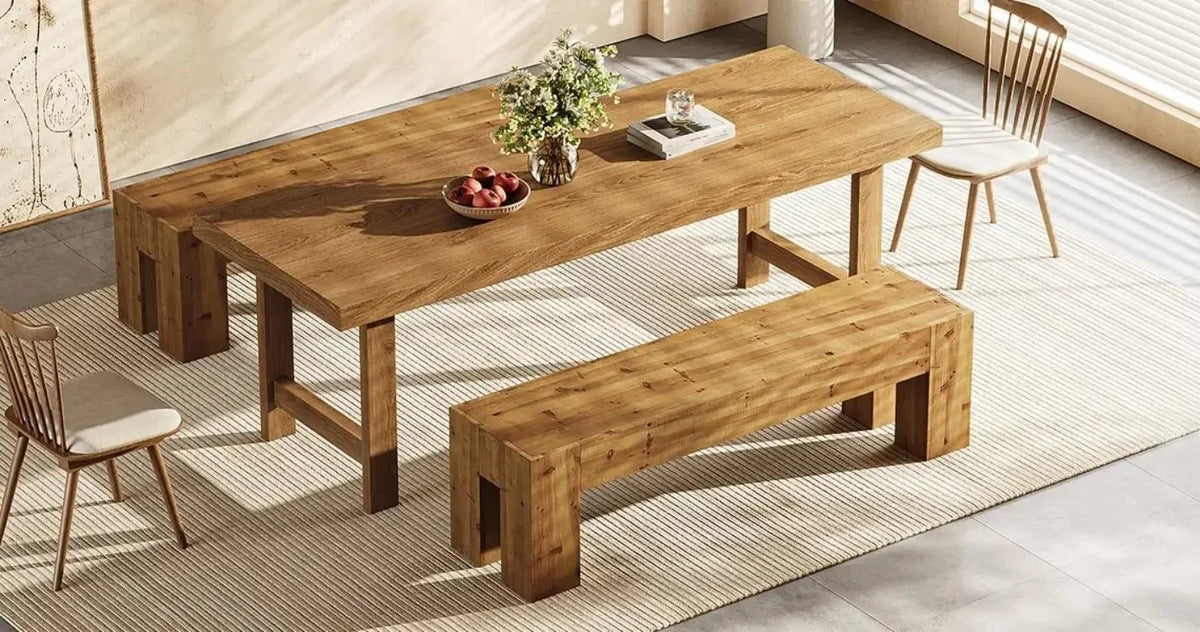
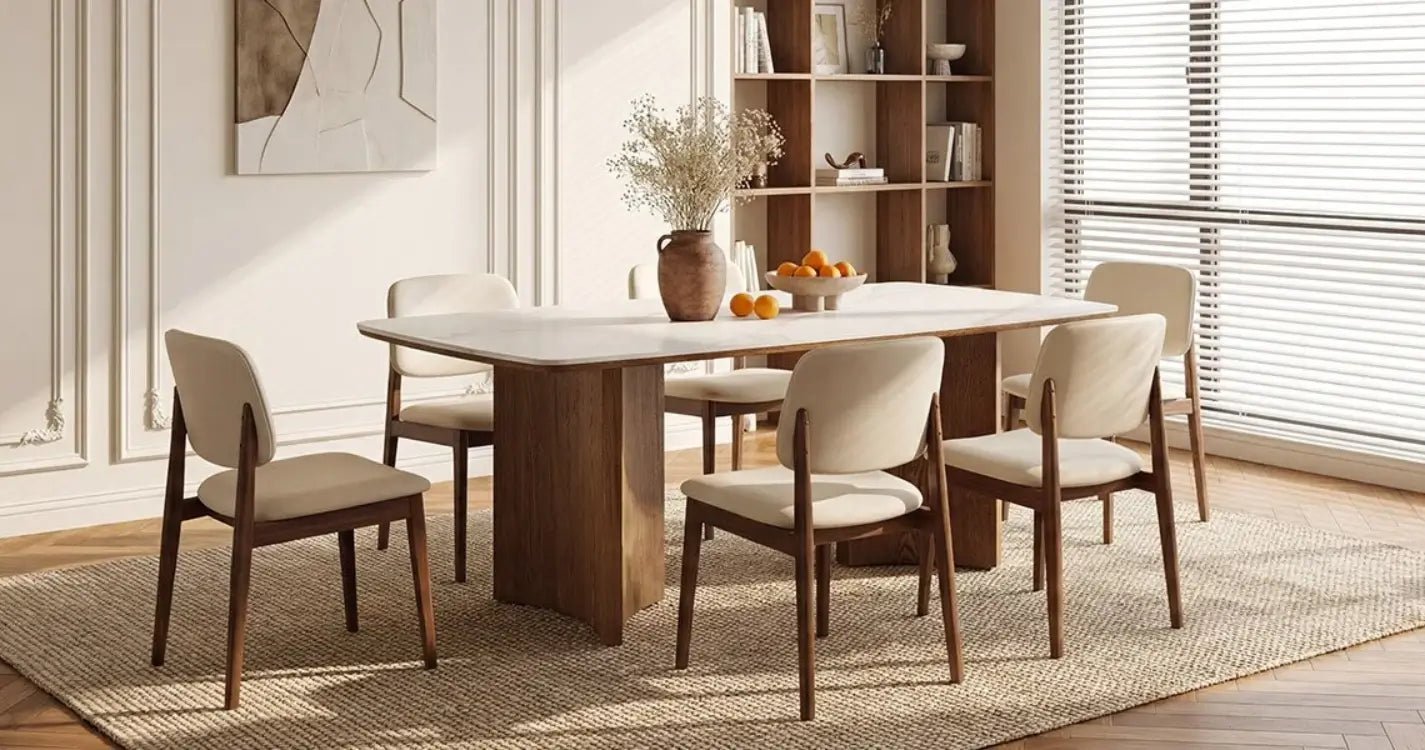
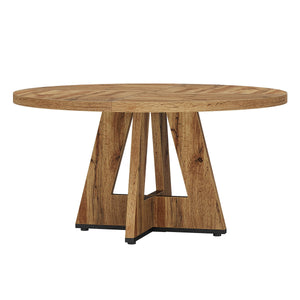
Four-leg tables can limit seating near the corners. Angled legs may interfere with knees. Pedestal-style bases often provide more flexibility around the perimeter, although the pedestal itself still affects legroom underneath.
Comparing the advantages and disadvantages of four-legged tables and pedestal-style dining tables.
Before you buy, check the clear distance between the legs or supports, not just the overall tabletop length.
A 72-inch table does not necessarily give you 72 inches of usable seating space.
This is especially worth checking on dining tables with sculptural or geometric bases, where the support structure is a major part of the design.
4. Look at the Table Base, Not Just the Tabletop
Table length alone does not tell you how many people can sit comfortably.
The base can reduce usable seating space.
Traditional four-leg tables may limit where chairs can be placed near the corners. Angled legs can interfere with knees. A large pedestal base may offer more flexibility around the perimeter but still affect legroom underneath the center of the table.
Before buying, look at the clear space between the legs or supports.
For example, a 72-inch tabletop may sound generous for six people, but if the legs are positioned far inward from both ends, the usable seating area along the long sides may be noticeably smaller.
A useful rule is:
Measure where people will actually sit, not just the overall tabletop length.
This is especially important with sculptural or geometric bases, where the design itself may influence seating comfort.

5. Match the Table Shape to the Room
Table shape can change how large a table feels and how efficiently it uses floor space.
Rectangular Tables
Rectangular tables are usually the most efficient choice for long or narrow dining areas.
They work especially well when you need seating for six, eight, or more people because they make good use of the long sides of the table.
They also tend to fit naturally in open-plan dining areas where the dining zone follows the length of the room.
Round Tables
A round stone table works especially well in square or compact dining spaces.
Without corners, they can make circulation feel easier, particularly in rooms where people frequently move around the table.
They are often a strong choice for four to six people.
However, round tables become less space-efficient as they get larger. A very large round table can occupy more floor area than expected, and reaching serving dishes in the center may become less convenient.
For larger households, rectangular or oval tables are usually easier to live with.
Oval Tables
An oval sintered stone dining table can be a useful middle ground.
It offers much of the seating capacity of a rectangular table while softening the corners, which can help circulation in tighter spaces.
If you like the length of a rectangular table but want the room to feel less visually crowded, an oval design can be a smart option.
6. Buy for Everyday Use Before Occasional Entertaining
Another common mistake is choosing a table for the largest gathering you might host instead of the way you use the room most of the year.
If four people use the table every day and eight people gather there only once or twice a year, an oversized eight-person table may take up valuable floor space the other 363 days.
Ask yourself two questions:
How many people sit here most days?
How often do I really need extra seating?
If you entertain frequently, a larger table may make sense.
If large gatherings are occasional, it may be better to choose a table that is comfortable for everyday use and add temporary seating when needed.
The goal is not to fit the largest possible table into the room. It is to choose a table that supports the way you actually live.
7. Bigger Sintered Stone Tables Need More Planning
A larger sintered stone table means more weight, so check the base support, delivery access, and long-term placement before sizing up.
Make sure the base is designed to support the tabletop securely, and measure doorways, hallways, stairs, or elevators along the delivery route—not just the dining room itself.
For added convenience, Tribesigns sintered stone dining tables offer white-glove delivery service, helping make delivery and in-home placement easier for these heavier pieces.
If you expect to move or rearrange the table often, choosing a slightly smaller size may also give you more flexibility.

8. Test the Table Size Before You Order
One of the easiest ways to avoid a sizing mistake is to mark the table dimensions on the floor before buying.
Use painter's tape to outline the exact length and width of the table you are considering.
Then place your dining chairs around the outline and test the room as if the table were already there.
Try four things:
- pull a chair fully out
- sit down and stand up
- walk behind someone who is seated
- open nearby cabinets, doors, or drawers
This simple test often reveals problems that are difficult to see on a floor plan.
A table may look perfectly proportioned on paper but feel oversized once you experience the actual walking space around it.
9. Maximum Size vs. Recommended Size: A Real-World Example
Suppose your usable dining area measures 10 feet by 12 feet.
After allowing 36 inches of clearance on all four sides, the theoretical maximum table footprint is about:
48"W × 72"L
A 72-inch table may physically fit.
But should you automatically buy one?
Not necessarily.
If the table is for four people most days and one side of the room is a major walkway, a 60-inch rectangular table may feel better and still provide room for occasional additional seating.
If six people dine there regularly and the circulation around the table is open, the 72-inch option may be the better choice.
This is why room measurements should establish your upper limit, not dictate your final decision.

A Final Size Check Before You Order
Before choosing your sintered stone dining table, make sure five things work together:
- Fit: Does it fit the usable dining zone with enough clearance?
- Seat: Does it comfortably accommodate the people who use it most often?
- Move: Can chairs pull out and people walk around the table without squeezing through?
- Live: Does the size suit everyday meals and the other ways you use the table?
- Deliver: Can a large, heavy tabletop reach the room and stay there comfortably long term?
If all five answers are yes, you are probably in the right size range.
The best dining table is not necessarily the biggest one your room can fit. It is the size that gives you enough surface and seating without making the rest of the room harder to use.
With a sintered stone dining table, getting that balance right before you buy matters even more.