





















What Are the Standard Dimensions of a Runner Rug?
A standard runner rug is typically 24 to 36 inches wide (61–91 cm) and 72 to 168 inches long (183–427 cm). Its long, narrow shape makes it suitable for hallways, kitchens, entryways, and the space beside a bed.
There isn't one universal runner rug size. Some brands offer 2' × 8' runners, while others use 2'6" × 7', 2'6" × 8', or 2'6" × 10' as their standard options.
Rug dimensions are generally listed as width × length. For example, a 2'6" × 8' runner measures 30 inches across and 96 inches from end to end.
Runner Rug Size Chart: Feet, Inches, and Centimeters
The chart below compares common runner rug dimensions and where they typically work best.
|
Runner Rug Size |
Dimensions in Inches |
Approx. Dimensions in cm |
Common Uses |
|
2' × 6' |
24" × 72" |
61 × 183 cm |
Short hallways, kitchens, bedsides |
|
2' × 8' |
24" × 96" |
61 × 244 cm |
Narrow hallways, galley kitchens |
|
2'6" × 7' |
30" × 84" |
76 × 213 cm |
Entryways, kitchens |
|
2'6" × 8' |
30" × 96" |
76 × 244 cm |
Standard hallways, kitchens |
|
2'6" × 10' |
30" × 120" |
76 × 305 cm |
Longer hallways |
|
2'6" × 12' |
30" × 144" |
76 × 366 cm |
Long hallways |
|
3' × 12' |
36" × 144" |
91 × 366 cm |
Wider, longer hallways |
These are nominal sizes. Actual measurements may vary slightly by manufacturer.
A 2' × 6' runner is a practical starting point for shorter spaces. A 2'6" × 8' runner provides more coverage for a typical hallway or kitchen. For longer corridors, 10- and 12-foot options can create a more continuous layout without requiring multiple rugs.

What Size Runner Rug Do You Need for Each Room?
The same runner can look appropriately sized in one room and noticeably out of proportion in another. Consider the usable floor area, furniture placement, and door clearance before deciding on a length.
Hallway Runner Rug Sizes
For a hallway, start with the width. A commonly recommended approach is to leave approximately 4–6 inches of visible floor on each side of a centered runner.
Here are three examples using a 6-inch border:
|
Hallway Width |
Suggested Runner Width |
Visible Floor on Each Side |
|
36" |
24" (2') |
6" |
|
42" |
30" (2'6") |
6" |
|
48" |
36" (3') |
6" |
These measurements are guidelines rather than fixed rules. A narrower rug may be more suitable where doors, furniture, or other features reduce the usable floor width.
Length matters too. Leaving approximately 6–12 inches of exposed floor at each end is a useful starting point for many straight hallways. For example, an 8-foot runner centered in a 10-foot hallway leaves 12 inches at either end.
For unusually long hallways, consider an extra-long runner or two shorter rugs with a deliberate gap between them.
Kitchen Runner Rug Sizes
Kitchen runners are usually positioned along the sink, between parallel counters, or beside an island.
A 2' × 6' runner can cover a shorter kitchen work area without extending unnecessarily into the surrounding floor. For longer counters or galley kitchens, a 2' × 8' or 2'6" × 8' runner may provide better coverage.
Measure the open floor between cabinets rather than the kitchen's overall dimensions. Check that cabinet doors, drawers, and the dishwasher can open without catching the rug.
In busy kitchens, a low-profile runner is often more practical than a thick, plush design. Washable options can also simplify cleaning around food preparation areas.

Entryway Runner Rug Sizes
The best entryway rug size depends on the shape of the entrance.
In a narrow entry hall, a 2' × 6' runner can create a defined path from the front door into the home. A longer entryway may have room for a 2'6" × 8' design.
For a small, square foyer, however, a 3' × 5' rectangular rug may fit better than a long runner.
Consider where shoes are removed and how the front door opens. A rug that looks well proportioned when the door is closed may interfere with its movement when opened.

Bedroom Runner Rug Sizes
A runner rug can be placed along one side of a bed or used as a matching pair on both sides.
A 2' × 6' runner works where bedside floor space is limited. A 2'6" × 8' runner provides a longer surface alongside larger beds or more spacious bedroom layouts.
Check where the rug begins and ends in relation to the bed and nightstands. Ideally, the exposed portion should cover the area where you normally step out of bed without extending awkwardly into a doorway or walking path.
How to Measure for a Runner Rug
You don't need to match the rug exactly to the dimensions of the room. Instead, measure the area where it will actually sit.
1. Measure the Available Width
Measure the hallway or open floor space at its narrowest usable point.
For a centered hallway runner, subtract approximately 8–12 inches from that width to allow 4–6 inches of exposed flooring on each side.
Example: A 42-inch-wide hallway minus 12 inches leaves room for a 30-inch-wide runner.
2. Measure the Length
Measure the section of floor you want the runner to cover.
For a hallway, allow some exposed flooring at each end rather than running the rug directly against the walls. Depending on the layout, a 6–12-inch border at each end is a useful starting point.
Example: In a 10-foot hallway, an 8-foot runner leaves 1 foot of exposed flooring at each end when centered.
If your measurements fall between standard runner lengths, compare how each option sits in the space. The longer rug is not automatically the better choice.
3. Check Doors and Furniture
Before buying, consider anything that opens or moves over the floor.
An entry door may need additional clearance, while kitchen cabinet doors and appliances can limit where the rug should end. Check the combined thickness of the rug and any rug pad to make sure doors can move freely.
You can also use painter's tape to mark the proposed rug dimensions on the floor. This helps you see whether the rug will be centered and how much exposed flooring will remain.
What Else Should You Check Before Buying a Runner Rug?
Once you've found the right dimensions, a few practical details are worth checking.
- Rug Thickness: Low-profile rugs are often easier to position in hallways, under doors, and beside kitchen cabinets. Always verify clearance rather than relying on a general thickness description.
- Washable Construction: For kitchens and entryways, a washable runner can make routine maintenance easier. Check the care label, particularly whether machine washing is permitted and what washer capacity is required.
- Non-Slip Backing: A rug should lie flat and resist shifting during normal use. Some designs include non-slip backing, while others may benefit from a separate rug pad. Check compatibility with your flooring, especially on finished hardwood.
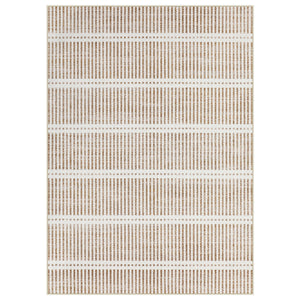
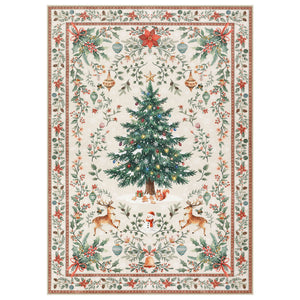
For a 2' × 6' or 2'6" × 8' runner, the Vintage Christmas Runner Rug features nostalgic winter-village illustrations, ideal for seasonal hallways and entryways. For year-round use, the Striped Easy Jute Runner Rug offers a neutral striped design in a 2'6" × 8' runner size. Both feature washable, low-profile construction. Check the available colors and sizes before ordering.
Explore Tribesigns area rugs and runners to compare designs for hallways, kitchens, entryways, and bedrooms.

Frequently Asked Questions
What Is the Most Common Runner Rug Size?
Commonly sold sizes include 2' × 8', 2'6" × 8', and 2'6" × 10'. There's no single standard across all manufacturers, so the best choice depends on your available floor space.
Is a 2' × 6' Rug Considered a Runner?
Yes. A 2' × 6' rug is a short runner commonly used in kitchens, narrow entryways, and beside beds.
How Wide Should a Hallway Runner Be?
For many hallways, choose a runner that leaves approximately 4–6 inches of exposed floor on each side. A 36-inch-wide hallway, for example, can accommodate a 24-inch-wide runner with 6 inches remaining on either side.
How Long Should a Hallway Runner Be?
Choose a length that covers most of the intended walking area while leaving some exposed floor at each end. Approximately 6–12 inches at each end is a useful starting point, depending on the hallway and nearby doors.
Can You Put Two Runner Rugs in a Long Hallway?
Yes. Two runners can work in an extended hallway or an L-shaped layout. Keep them aligned, leave a deliberate gap, and make sure neither rug obstructs a doorway.
Are Runner Rug Dimensions Listed Width First?
Usually, yes. A 2'6" × 8' runner is approximately 30 inches wide and 96 inches long. Check the manufacturer's dimensions if the listing uses a different format.