










Measure Your Mudroom Before Choosing a Bench
Start with the space you can realistically use—not the entire length of an empty wall. Your bench needs to fit alongside doors, trim, nearby furniture, and the people moving through the entrance.
Check the Bench’s Width, Depth, and Seat Height
As a starting reference, consider benches 36–48 inches wide, 14–17 inches deep, and around 18 inches high at the seat. Treat these as planning guidelines, not fixed requirements.
Use this checklist when comparing products:
|
Measurement |
What to Check |
|
Overall width |
Measure the usable wall section between door trim, cabinets, and other obstructions. Include any projecting arms or side panels. |
|
Overall depth |
Check how far the bench extends into the room, accounting for baseboards and handles. |
|
Seat height |
Confirm the height of the sitting surface, including any cushion—not the top of a backrest or coat rack. |
|
Usable seat depth |
Check the actual sitting area rather than assuming it matches the furniture’s overall depth. |
Check internal storage dimensions separately; the bench’s outer size does not tell you which shoes will fit. For comfort, compare its finished seat height with a chair you already find comfortable.

Leave Room for Doors and Everyday Movement
Mark the bench’s footprint with painter’s tape. Open the entrance door fully, walk past the outline, and allow room to sit and bend forward when changing shoes.
Leave extra clearance for cabinet doors, drawers, and pull-out baskets. In a narrow mudroom, a shorter bench can leave space for boots without crowding the entrance.
A bench fits only when the surrounding space remains usable.
Work Out How Much Shoe Storage You Really Need
Size your storage around the shoes your household wears regularly—not the entire collection.
Count the Shoes You Use Every Day
Count the sneakers, work shoes, school shoes, and seasonal footwear you keep near the door. For example, four people keeping two pairs each would need space for eight pairs.
Store rarely worn and out-of-season shoes elsewhere. This keeps everyday footwear accessible without choosing a larger bench just for occasional overflow.
Check the Fit for Sneakers, Large Shoes, and Boots
Measure your longest shoes, the width of a pair placed side by side, and your tallest boots. Compare these with the storage area’s usable internal width, depth, and height, rather than the bench’s outer dimensions.
Treat advertised shoe capacity as a guide, especially for larger or bulkier footwear. For a simple estimate:
A shelf with 32 inches of usable width could hold four pairs if each pair needs 8 inches, including spacing—provided the depth and height are sufficient.
Dividers, baskets, and hardware can reduce usable space, so check each compartment separately.
For boots, choose a taller compartment or adjustable shelving. Do not remove fixed shelves unless the instructions allow it; a separate boot area may be more practical.
Choose storage that fits your shoes, not just the advertised number of pairs.

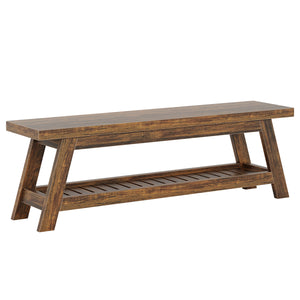
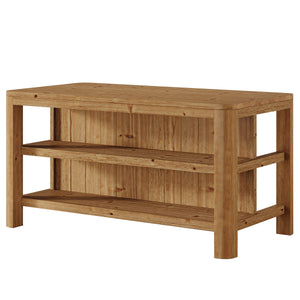
2-Tier Solid Wood Shoe Bench with Open Shelves
Choose the Right Shoe Storage Layout
The main decision is not simply whether you prefer visible or hidden shoes. It is how you expect to retrieve and put them away every day.
Open Shelves and Individual Cubbies
Open shelves provide direct access without a door or drawer to operate. This makes it easy to reach shoes while seated.
Choose an uninterrupted shelf when you need flexibility to rearrange different-width pairs. Consider cubbies when assigning a particular space to each person would make the system easier to maintain.
The tradeoff is compartment size. Individual cubbies provide designated shoe spaces but may not accommodate larger footwear such as boots.
Before choosing cubbies, check whether your household’s largest pair fits comfortably—not just the smaller shoes shown in a product photograph.
Cabinets, Drawers, and Lift-Top Storage
Cabinet doors and drawers conceal footwear, while a lift-top bench provides access through the seat. These designs can create a tidier appearance, but consider the extra movement involved in retrieving a pair. Shoe-storage benches are available with shelves, cubbies, cabinet doors, drawers, and lift-top configurations.
Use these questions to compare the layouts:
|
Storage Layout |
Consider It When… |
Check Before Buying |
|
Open shelves |
You prioritize direct access and flexible shoe placement. |
Will shoes fit without projecting into the walkway? |
|
Individual cubbies |
You prefer clearly assigned spaces for pairs or family members. |
Are the compartments wide, deep, and tall enough? |
|
Cabinets or drawers |
Keeping footwear out of sight is a priority. |
Can the doors or drawers open fully in your space? |
|
Lift-top storage |
You are comfortable accessing storage from above. |
Will you need to stand up or move a cushion, bag, or other object each time? |
Think through one ordinary morning. Would opening a drawer interrupt someone walking past? Would you regularly leave shoes outside a cabinet rather than put them away? Would belongings placed on the seat make a lift-top inconvenient?
A mixed arrangement may suit your routine better: an open section for frequently worn shoes and an enclosed section for dry footwear used less often.

55" Farmhouse Shoe Bench with Flip-Top Storage
Check Durability, Seating Comfort, and Cleaning Needs
Storage capacity is only part of the decision. The bench should also be comfortable to sit on and manageable to maintain.
Read the specifications for individual components. A bench described as wood furniture may combine different materials for its frame, seat, and shelves, so the description alone does not mean it is solid wood throughout.
When comparing options, look for clear information about the seat, frame, shelves, surface finish, and care requirements. Pay attention to exposed edges and joints rather than judging durability from the finish color or product photographs alone.
Confirm the seating weight limit separately from the shelf limits. The maximum load listed for the seat does not automatically apply to the storage below. Also check how many people the bench is designed to seat rather than assuming a wider model is suitable for two adults.
For everyday comfort, consider the seat height and depth. You should be able to rest your feet on the floor and lean forward comfortably when putting on shoes. Think about whether you prefer a firm, uncovered seat or the softer feel of a cushion.
A softer seat is one reason to choose an upholstered entryway bench, but everyday care matters too. Check how the cushion attaches and whether its cover is removable. Confirm the washing instructions separately—a removable cushion or cover is not necessarily machine-washable.
Before purchasing, consider how you will reach the shelf corners, remove accumulated grit, and clean beneath the bench. Choose a design that works with a maintenance routine you are likely to follow.
Decide Between a Freestanding and Built-In Bench
Once you know your required dimensions and storage layout, decide whether a ready-made bench can meet them or whether the space calls for a fitted solution.
Consider Flexibility, Installation, and Total Cost
Start with a freestanding bench when an available size meets your needs and you value the ability to rearrange the room. This is also worth considering when you do not plan to alter existing cabinetry or walls.
Consider a built-in bench when standard sizes leave an awkward gap, when you need specific compartment dimensions, or when the seating must coordinate with a larger storage installation. Set out the required internal measurements before requesting a design, rather than approving an exterior drawing alone.
Compare the complete cost, not just the furniture price. Your checklist should include delivery, assembly, installation, cushions, baskets, trays, and any return charges. For fitted work, request a written breakdown of what the quote includes.
Check the installation instructions before ordering either type. Do not assume that a freestanding unit requires no wall attachment; follow the requirements for the specific product.
Finally, choose a finish that works with your existing cabinetry, flooring, and hardware. Keep this decision after the practical checks. A close color match cannot compensate for shoe compartments that are too small or doors that cannot open properly.

2-Tier Foyer Seating Bench with Shoe Storage
FAQs
How High Should a Mudroom Shoe Storage Bench Be?
Around 18 inches is a useful planning reference, but it is not a universal requirement. Compare the finished seat height with seating you already find comfortable, and account for any cushion. For a bench with a backrest or coat rack, use the seat height rather than the overall furniture height.
How Many Pairs of Shoes Fit in a 48-Inch Bench?
A 48-inch shoe storage bench can typically hold around 8 to 12 pairs of everyday shoes, depending on the storage layout, shelf height, and shoe size. An open shelf design usually offers more flexible space, while divided cubbies may hold fewer pairs because each compartment has a fixed size.
Can Tall Boots Fit Under a Shoe Storage Bench?
Only when the usable storage height accommodates them. Measure from the surface where the boots will rest to the underside of the shelf or seat above. Check any adjustable-shelf options against the instructions. Otherwise, reserve a separate boot space instead of forcing tall footwear into a low compartment.
Can I Create a Mudroom Area Without a Separate Room?
Yes. Mudroom storage can be organized within a small entryway rather than a dedicated room. Start with the shoe-changing and storage functions you need, then check that the arrangement leaves the entrance usable.
The right mudroom bench with shoe storage should pass a few practical tests: it fits without obstructing movement, accommodates your everyday shoes, supports its intended users, and is straightforward to clean.
Make those decisions first. Once they are settled, choosing the finish and decorative details becomes a much simpler task.