









Round Dining Table Size for 4: Quick Comparison
The table below shows how the most common sizes compare.
|
Table Diameter |
Seating Experience |
Best For |
|
36 inches |
Compact |
Breakfast nooks, apartments, small kitchens |
|
40 inches |
Comfortable and space-efficient |
Small dining areas and everyday meals |
|
42 inches |
Comfortable for four |
Most homes and regular family dining |
|
48 inches |
Spacious |
Larger chairs, shared dishes, frequent hosting |
These room dimensions assume roughly 36 inches of open space between the table edge and nearby walls or furniture.
That clearance matters. A table may technically fit in a room, but it will not feel comfortable if chairs cannot slide back or people have to squeeze past one another.

Is a 36-, 40-, 42-, or 48-Inch Round Table Best for Four?
All four sizes can seat four, but 42 inches offers the best balance of comfort and space.
36-Inch Round Table
A 36-inch table works in very small spaces, especially with slim, armless chairs. Four people can fit, but the tabletop may feel crowded once serving dishes are added.
40-Inch Round Table
At 40 inches, four diners get more elbow room without a much larger footprint. It is a practical choice for apartments, breakfast nooks, and households that usually seat two.
42-Inch Round Table
For most homes, 42 inches is the best choice. It comfortably holds four place settings and a few shared dishes while keeping conversation easy and the room open.
48-Inch Round Table
A 48-inch table gives four people more room for larger chairs, placemats, and serving platters. It may also fit a fifth guest occasionally, but it needs a dining area of about 10 by 10 feet.
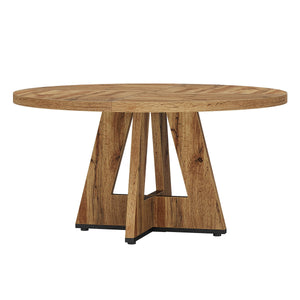
Check out Tribesigns' best 47’’ round dining table for 4 with pedestal base.
In simple terms: choose 36 inches for tight spaces, 40 inches for compact comfort, 42 inches for everyday use, and 48 inches for extra room.

How Much Space Do You Need Around a Round Dining Table?
Leave at least 36 inches between the table edge and any wall or furniture. For a main walkway, 42 to 48 inches is more comfortable.
Use this formula:
Table diameter + clearance on both sides = minimum dining area
|
Table Size |
Minimum Dining Area |
|
36 inches |
9' × 9' |
|
42 inches |
9'6" × 9'6" |
|
48 inches |
10' × 10' |
Measure the actual open space, not the full room. Sideboards, kitchen islands, and other furniture reduce the area available for chairs and foot traffic.

What Affects Whether Four Chairs Will Fit?
Round table size matters, but chair width and base design can make just as much difference.
Chair Width
Plan on about 24 inches of table edge per person. Slim, armless chairs work best with 36- or 40-inch tables, while wider upholstered chairs may need a 42- or 48-inch table.
Check the chair’s full width, not just the seat width.
Table Base
A pedestal base usually offers the most flexible seating because there are no corner legs to get in the way.
Four-leg and sculptural bases can reduce knee room, especially on smaller tables. Always check where the base sits beneath the tabletop before buying.
Table Height
Most dining tables are 28 to 30 inches high. For comfortable legroom, leave about 10 to 12 inches between the chair seat and the underside of the table.
Related read: How to select dining chairs for a round table
Frequently Asked Questions
Can four people sit at a 36-inch round table?
Yes. Four people can sit at a 36-inch round table, but the setup will be compact. It works best with narrow, armless chairs and minimal serving pieces.
Is a 42- or 48-inch round table better for four?
A 42-inch table is better for most four-person households because it balances comfort and floor space. A 48-inch table is better when you want more room for dishes, larger chairs, or occasional guests.
What is the standard height of a round dining table?
Most standard round dining tables are between 28 and 30 inches high. Counter-height and bar-height models are taller and require matching chairs or stools.
Are round dining tables good for small spaces?
Round tables can work especially well in small or square rooms because they have no sharp corners and allow smoother movement around the table. A pedestal base can make the layout even more flexible.