



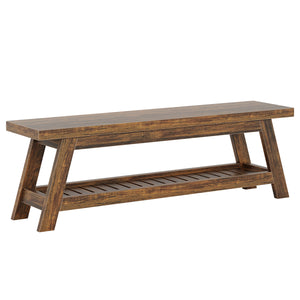






What Should You Put Above an Entryway Bench?
For most entryways, a mirror, artwork, hooks, or a floating shelf is enough to anchor the wall above the bench. Which one works best depends less on style and more on what the space is missing.
|
Choose |
Best When You Need |
|
Mirror |
More light, depth, or a quick check before leaving |
|
Artwork |
A cleaner, more decorative focal point |
|
Hooks |
Everyday storage for coats, hats, and bags |
|
Floating shelf |
Extra display or storage without using floor space |
The wall does not need all four. One clear idea usually looks more intentional than several competing ones.
Hang a Mirror Above the Bench
A mirror is one of the easiest choices for a small or darker entryway. It reflects light, gives the wall some visual depth, and is useful when you are heading out the door.
Shape can help balance the furniture below it. A round mirror softens the straight edges of a rectangular bench, while a wider rectangular mirror suits a longer, more substantial piece.
Keep the proportions relaxed rather than trying to match the bench width exactly. The mirror should feel connected to the bench without stretching from one end to the other.
Use One Large Artwork or a Gallery Wall
Choose wall art when the entryway already has enough practical storage and the wall needs more personality than function.
One larger piece is often the simplest option, particularly above a narrow bench. It creates a focal point without making a small entry feel busy.

Add Hooks for Coats, Bags, and Hats
Hooks are the better choice when your entryway has to work hard every day.
They give jackets, handbags, hats, and dog leashes somewhere to go instead of ending up on the bench seat. In a family entryway, that kind of function often does more for the room than another decorative object.
Mount them high enough that coats and bags do not hang into the seating area. If the wall is narrow, a short row of well-spaced hooks is usually enough.
Add a Floating Shelf for Extra Storage
A floating shelf works well when floor space is tight but you still want a landing spot for a few smaller things.
Use it for a small bowl, framed photo, or basket rather than turning it into another crowded display zone. In an entryway, shelves look best when there is still some empty space around what you put on them.
If you already have a mirror or artwork above the bench, think carefully before adding a shelf too. The wall may not need another layer.
How Do You Style an Entryway Bench With Pillows?
Use pillows to bring in color and soften the look of the bench, but let the bench finish guide the palette.
Warm wood tones pair easily with cream, rust, olive, camel, or muted patterns. A black bench looks especially crisp with ivory, tan, or earthy neutrals, while lighter wood or white finishes can handle softer shades such as sage, dusty blue, or warm beige.
If the entryway already has a patterned rug or colorful artwork, pull one of those tones into the pillow rather than introducing an entirely new color. The room will feel more connected without looking overly matched.
How Many Pillows Should You Use?
For most entryway benches, one lumbar pillow or one to two smaller pillows is enough.
A narrow bench usually looks best with a single accent, while a longer bench can comfortably handle two. Upholstered benches may need even less since the seat already adds softness and texture.
Most importantly, leave enough open space to sit. If the pillows have to be moved every time you put on your shoes, there are probably too many.
Should You Add a Cushion or Throw?
A seat cushion can make a hard wood or metal bench much more comfortable while adding color and texture at the same time.
Throws are more decorative. A small one folded casually at one end can soften a plain bench, but avoid anything so long that it trails onto the floor or gets caught under shoes.
With an upholstered bench, adding both a cushion and several pillows is usually unnecessary. Let the upholstery do some of the decorating for you.

What Should You Put Under an Entryway Bench?
Use the space underneath for the things that naturally collect near the front door: shoes, baskets, or everyday accessories.
Open shelving works especially well for the shoes you wear most often. Keep the number reasonable; a few neatly placed pairs look practical, while an overloaded shelf quickly makes the entry feel cluttered.
Baskets are useful for items that are harder to keep tidy, such as:
- gloves and scarves
- pet leashes or toys
- children's outdoor accessories
- small umbrellas
- seasonal gear
Woven baskets also add texture, which can warm up a simple wood or metal bench.
That said, the space underneath does not have to be filled. If the bench has an attractive open base and you already have enough storage elsewhere, leaving it empty can make a small entry feel lighter.
How Do You Decorate a Small Entryway With a Bench?
In a small entryway, use fewer pieces and make the wall work harder.
A narrow bench, one mirror, and a basket underneath may be all the room needs. Adding hooks above the bench can take care of coats and bags without introducing another cabinet or storage unit.
Try to keep the floor visually open. Extra planters, baskets, stools, and umbrella stands can quickly turn a compact entry into an obstacle course.
Furniture with open legs also tends to feel lighter than bulky closed storage. If you do need hidden storage, choose a bench that builds it into the footprint you already have rather than adding another piece beside it.
For a tight space, function is the styling. When coats have a hook, shoes have a shelf, and the bench still has room to sit, the entry already feels more pulled together.
What Rug Looks Best With an Entryway Bench?
A runner works best in a narrow hallway, while a small area rug can help define a wider foyer.
Look for a rug that is easy to live with. Entryways see wet shoes, dirt, pets, and heavy foot traffic, so low-pile or washable options are usually more practical than something thick and delicate.
Patterns can be useful here too. A rug with some variation in color tends to hide everyday dust and footprints better than a very light solid.
Before ordering, check the front door swing. The prettiest rug in the room will become annoying very quickly if the door catches on it every day.

Add One Finishing Touch
Once the bench, wall, and storage are in place, add only what the entry still feels like it needs.
A plant can soften a hard corner. A floor lamp helps when the foyer lacks overhead light. An umbrella basket earns its place in a rainy climate, while a vase of branches is an easy way to bring in a seasonal change.
There is no requirement to use all of them.
The best finishing touch is usually the one that solves a real gap in the room rather than simply filling an empty spot.
Common Entryway Bench Decorating Mistakes
The biggest mistake is decorating away the function of the bench.
Too many pillows leave nowhere to sit. A wall filled with small objects can make the entry feel busier than it is. Baskets become cluttered when every open space gets one.
Traffic flow matters just as much as styling. Keep decor out of the door swing and main walkway, especially in a narrow foyer.
Another common miss is forgetting where everyday items actually land. If keys, bags, and shoes always end up near the bench, give them a place on purpose. Otherwise they will simply pile on top of the decor.
FAQs
What should I put above an entryway bench?
A mirror, one large artwork, hooks, or a floating shelf are all good choices. Pick the one that serves the space best: a mirror for light and depth, artwork for a focal point, or hooks and shelving when storage matters more.
Should you put pillows on an entryway bench?
Yes, but keep them minimal. One lumbar pillow or one to two smaller pillows is usually enough to soften the bench without taking away too much seating space.
What should I store under an entryway bench?
Shoes, baskets, scarves, pet accessories, and other grab-and-go items work well underneath. If the entry already has enough storage, leaving the area open can make it feel less crowded.
How do I decorate a small entryway with a bench?
Keep the bench narrow, use the wall for a mirror or hooks, and limit floor accessories. In many small entryways, a bench, one wall feature, and a single storage basket are enough to make the space feel finished.
A well-decorated entryway bench does not need much. Give the wall one clear focal point, keep the seat usable, let storage handle everyday clutter, and stop before the space starts feeling full. The result should look welcoming when you walk in—and still work when you are rushing out the door.