






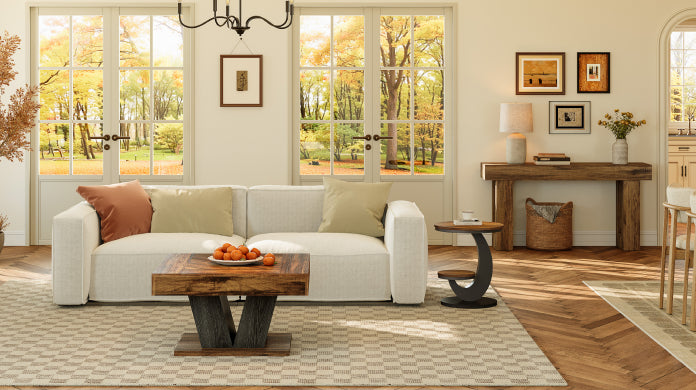




Coffee tables are essential in both function and style for living rooms. Choosing the right one can elevate your space and meet your practical needs. This guide covers all the important factors you should consider before making a purchase.
Table of Contents
- 1. Types of Coffee Tables
- 2. Ideal Coffee Table Dimensions
- 3. Recommended Coffee Table Height
- 4. Common Coffee Table Materials
- 5. Choosing the Right Coffee Table Shape
- 6. Selecting the Best Coffee Table Color
- 7. Average Coffee Table Weight
- 8. Coffee Table Price Range
- 9. Best Coffee Table Placement
- 10. Coffee Table Decoration Ideas
Rule #1. Types of Coffee Tables
Choosing the right type of coffee table depends on your style, functionality needs, and available space. Here are popular types to consider:
|
Coffee Table Type |
Function & Vibe |
|
Traditional Wood |
The tried-and-true anchor. Offers warmth, weight, and a classic, enduring style for any established home. |
|
Modern & Minimal |
For clean lines and spacious feels. Sleek, low-profile designs in glass or metal that make smaller rooms appear larger. |
|
Nesting Tables |
The ultimate flexible space-saver. Use them tucked together daily, and pull them apart instantly for entertaining guests. |
|
Ottoman Table |
The comfort champion. A soft, upholstered surface that's perfect for putting your feet up and is the safest option for kids and pets. |
|
Lift-Top Table |
Functionality wins for WFH or casual dining. The top elevates to the perfect height for laptops or TV dinners. |
|
Storage Table |
Organization obsessed? This is your solution. Built-in drawers or compartments to hide remotes, blankets, and magazines out of sight. |
Rule #2. The Golden Rules of Coffee Table Sizing
This is where the measurements matter most. Too big, and you'll trip over it; too small, and your whole living room will feel awkward. Get your tape measure ready, because these are the essential proportions for comfort and flow.

The 2/3rds Length Rule
The most important ratio is against your sofa. Your coffee table should be approximately two-thirds the total length of your sofa.
Example: Got a 90-inch sofa? You should be looking for a table that's right around 60 inches long. This perfectly "grounds" the conversation area without overwhelming the space.
The 18-Inch Distance Rule
For comfortable seating and easy passage, you must leave 12 to 18 inches of clearance between the edge of your coffee table and the front of your seating.
This is the sweet spot: close enough to set down a cocktail without stretching, but wide enough to let you stand up and move through the room without bumping your knees.
The Sofa Height Rule
Your coffee table should be either the exact same height as your sofa's seat cushion or one to two inches lower. Never taller.
Aim for 16 to 20 inches high. Tables that are too low look out of scale, and tables that are too high feel like they're hovering over you.
Quick Layout Check: Don't just measure the table; measure the whole room! Use painter's tape to mark the table's footprint on the floor. This quick hack avoids the headache of a piece that simply crowds your space.
Rule #3. Recommended Coffee Table Height
This is a critical rule for comfort! The height of your coffee table impacts everything from how easily you can reach your drink to the overall flow of the room. We don't want a table that feels like it's hovering over your sofa or forcing you to lean way down.
The Golden Rule of Height Alignment
For perfect visual harmony and everyday comfort, your coffee table should be the exact same height as your sofa's seat cushions, or one to two inches lower.
The Sweet Spot: Most standard sofas require a table in the 16 to 18-inch range. This ensures that when you're relaxing, everything is within easy, natural reach.
When to Go Rogue (Higher or Lower)
For Low-Profile Sofas: If you have deep, modern, or low-slung seating (think mid-century modern or ultra-casual sectionals), aim for a lower table, around 14 to 16 inches.
If you need your table to double as a casual workspace, dining spot, or bar, you can go slightly higher: 20 to 21 inches. Just make sure the top doesn't block the view when you're seated!
A table that is significantly taller than your sofa looks awkward and can break up the visual line of the room. Always measure your sofa seat height first!
Rule #4. Decoding Coffee Table Materials
Materials influence the durability, style, and maintenance of your coffee table. Consider these options:
- Wood: Warm, durable, and available in various finishes. Great for traditional or rustic aesthetics.
- Glass: Modern and sleek but requires frequent cleaning. Best for small spaces as it creates a spacious feel.
- Metal: Industrial and durable but may show scratches or fingerprints.
- Marble/Stone: Elegant and luxurious but heavier and requires special care.
- Acrylic/Plastic: Lightweight, affordable, and perfect for contemporary interiors.
- Rattan/Wicker: Casual, lightweight, and ideal for coastal or boho styles.

Tip: For homes with children or pets, prioritize durable and easy-to-clean materials.
Rule #5. Choosing the Right Coffee Table Shape
The shape of your coffee table isn't just an aesthetic choice; it directly influences the flow and usability of your living room. You must select a shape that matches your seating arrangement and your lifestyle.
Rectangular Table
This is the most common and safest bet. The rectangular coffee table provides the most surface area and perfectly balances the length of a typical three-seater sofa. If you own a standard sofa, this is your safe play.

Square
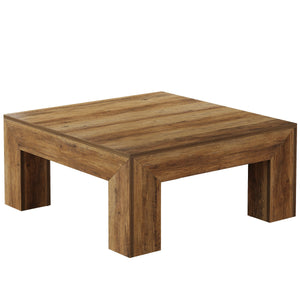
Square tables work especially well for large sectional sofas or symmetrical seating arrangements. The square shape effectively "anchors" the large corner area of an L-shaped sectional, ensuring everyone seated can easily access the tabletop.
Round or Oval
If you share your home with kids or pets, or if your living room feels tight, round or oval coffee table is your top pick. Prioritize safety! No sharp corners mean fewer bumps and bruises. Furthermore, the curved edge improves the room’s traffic flow, allowing you to navigate the space easily.
Abstract or Geometric
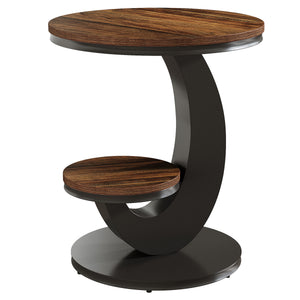
If you designed your room with a sleek, minimalist feel, an unusually shaped table gives you the perfect opportunity to inject artistic flair and personality. Make your coffee table a striking, focal-point sculpture.
The Flow Tip: If you find your current table makes the room feel cramped or awkward to navigate, try switching to a round design. The curves instantly soften the space and improve walkability.
Rule #6. Selecting the Best Coffee Table Color
The color of your coffee table should complement your room's palette. Consider these strategies:
- Neutral Tones (white, gray, beige): Versatile and blend well with most décor.
- Bold Colors (blue, red, green): Create a focal point in minimalist spaces.
- Natural Wood Tones: Warm and inviting for rustic or farmhouse styles.
- Black or Dark Wood: Adds sophistication but may highlight dust more easily.
- Metallic Finishes (gold, silver): Introduce a touch of luxury and elegance.
Tip: Balance bold tables with neutral surroundings to maintain harmony.
Rule #7. Average Coffee Table Weight
While a heavy table feels high-quality, the weight directly impacts mobility. You need to consider how often you actually move your furniture—for cleaning, rearranging, or making room for guests.
|
Material |
Typical Weight Range |
Mobility Reality Check |
|
Wood |
30–80 lb |
Generally easy to slide. Veneer is lighter than solid oak. A good balance of quality and movability. |
|
Glass / Metal |
25–60 lb |
The most mobile. Metal is light yet durable. Glass requires careful handling, but the base is often light. |
|
Marble / Stone |
100+ lb |
Permanently placed. These are anchors. Do not plan on rearranging frequently; you may need professional help to move them. |
Rule #8. Coffee Table Price Range
Prices vary widely depending on material, size, and craftsmanship:
- Budget Range: $50 - $150 (Simple designs, often lightweight).
- Mid-Range: $150 - $500 (Great balance of style and durability).
- High-End: $500 - $2,000+ (Premium materials like marble or designer brands).
Tip: Investing in a quality table can provide longevity and better aesthetics.

Rule #9. Best Coffee Table Placement
Proper placement enhances functionality and room flow:
- Position your coffee table about 12-18 inches away from your seating area.
- Ensure at least 24-30 inches of walking space around the table for easy movement.
- In open-plan spaces, use the table to define the seating area.
Tip: Consider a rug beneath the table to visually anchor the space.
Rule #10. Coffee Table Decoration Ideas
Stylish coffee table décor enhances your room’s aesthetic. Try these ideas:
- Books & Magazines: Stack them neatly for a curated look.
- Trays & Bowls: Organize small items or decorative accents.
- Candles & Lanterns: Add warmth and ambiance.
- Plants & Flowers: Introduce freshness and color.
- Sculptures & Ornaments: Showcase your personal style.
Tip: Use the "Rule of Three" — grouping items in odd numbers for visual appeal.
Final Thoughts
Choosing the perfect coffee table combines practicality with style. By considering types, materials, dimensions, and décor, you can find a table that complements your space beautifully.

1 comment
What are the features of this product?
What are the features of this product?
What are the features of this product?