









Best Conference Table Size for 10 People
Here is the simplest way to think about it:
|
Setup |
Recommended Table Size |
Best For |
Suggested Room Size |
|
Small meeting room |
8' L x 47"–48" W |
6–8 people, occasional extra seating |
About 16' x 11' minimum |
|
Compact 10-person seating |
10' L x 48" W |
Short meetings, slim chairs, occasional 10-person use |
About 18' x 12' minimum |
|
Comfortable 10-person setup |
12' L x 48" W |
Regular 10-person meetings |
About 20'–21' x 12'–13' |
|
Executive or hybrid setup |
12' L x 54"–58" W |
Laptops, documents, power outlets, video calls |
About 21'–22' x 13'–14' |
A 10-foot table works when the room is limited or when 10 people only meet there occasionally. For a room that regularly seats 10 adults, a 12-foot table is the safer choice.
The difference sounds small on paper, but those extra 24 inches change the whole experience. People have more room for laptops. Chairs do not feel packed together. The table looks intentional instead of forced into the room.

Is an 8-Foot or 12-Foot Conference Table Better for 10 People?
With a tabletop around 94.49 inches long, an 8 ft conference table works best for 6 to 8 people. It gives a small team enough room for laptops, notebooks, and everyday discussions without making the room feel crowded.
Once you try to seat 10 people, the fit becomes tight. More people may fit around an 8-foot table for a quick conversation, but it will not feel comfortable for a full meeting. Elbow room shrinks, chairs sit closer together, and the table can start to feel overfilled.
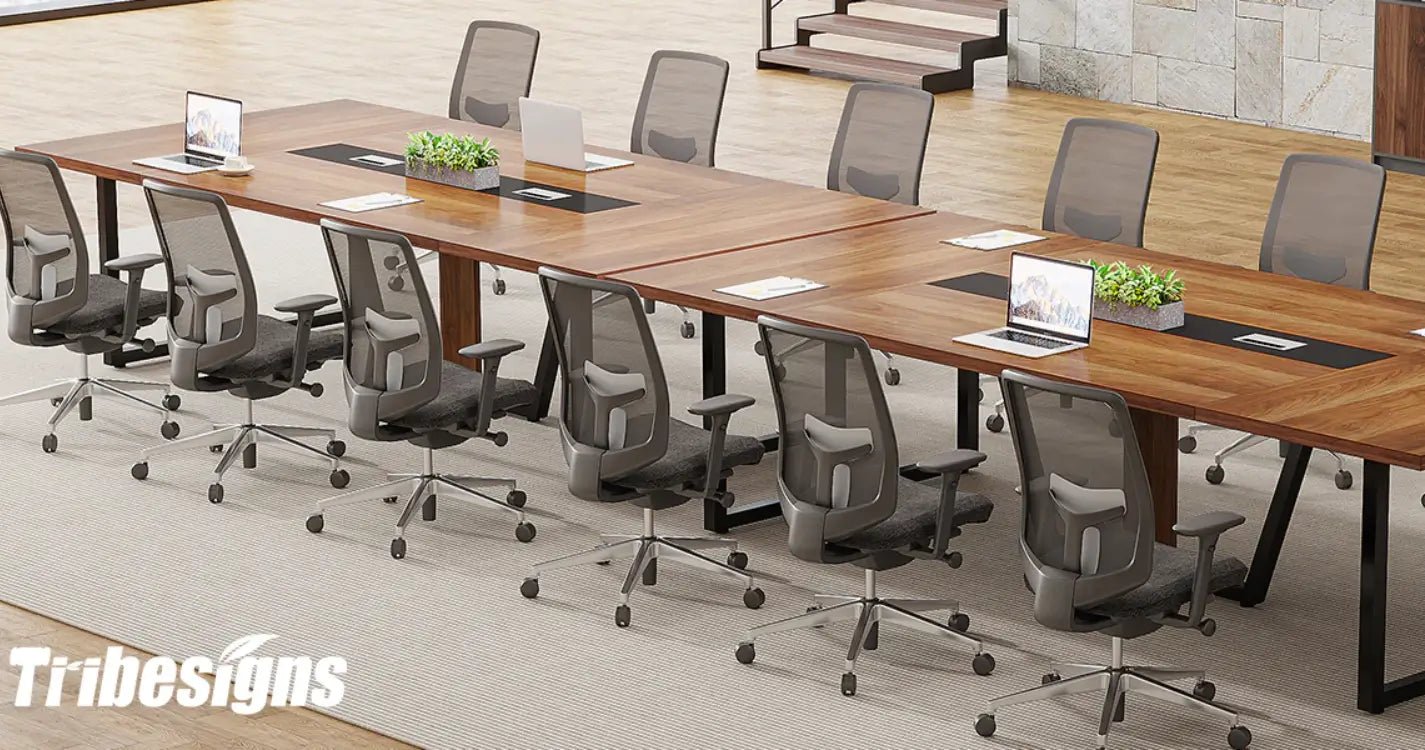
For regular 10-person meetings, a 12-foot table is the stronger choice. It gives adults more natural spacing and works better for longer discussions, client presentations, leadership meetings, and rooms where people often bring laptops or documents.

How Much Space Does Each Person Need?
Conference table seating depends on personal space along the table edge. A narrow setup can work for quick meetings, but longer meetings need more breathing room.
|
Space Per Person |
Comfort Level |
Best Use |
|
24"–30" |
Tight |
Brief meetings, occasional seating |
|
30"–36" |
Standard |
Regular office meetings |
|
36"–42" |
Comfortable |
Laptops, notebooks, drinks, documents |
|
42"–48" |
Executive |
Boardrooms, VIP meetings, client presentations |
This is why different size charts often give different answers. Some charts focus on maximum seating. Others focus on comfortable seating.
For example, a 10-foot table has 120 inches of length. That may technically allow five people on each side with 24 inches per person, but the seating will feel close. A 12-foot table gives 144 inches of length, which creates a more comfortable setup for the same 10 people.
What Room Size Do You Need for a 10-Person Conference Table?
A 10-person conference table needs more room than the table itself. The empty space around the table is what makes the room usable.
For most offices, leave at least 36 inches between the table edge and the wall, cabinet, credenza, or other furniture. A room feels better with 48 inches or more, especially when people need to walk behind seated guests.
|
Table Size |
Minimum Practical Room Size |
More Comfortable Room Size |
|
10' x 48" |
About 18' x 12' |
About 19'–20' x 12'–13' |
|
12' x 48" |
About 20' x 12' |
About 21' x 13' |
|
12' x 54"–58" |
About 21' x 13' |
About 22' x 14' |
How Wide Should a 10-Person Conference Table Be?
A 10-person conference table should usually be 48 inches wide. That width works well for most office meetings because people have enough space for notebooks, water bottles, and laptops without making the room feel narrow.
Wider tables make sense in more formal or tech-heavy rooms.
- 48 inches wide: standard, practical, and space-efficient
- 54 inches wide: better for laptops, paperwork, and shared materials
- 58 inches wide: more executive, better for larger chairs and built-in power modules
Going wider is not always better. A 58-inch table in a narrow room can make chair clearance worse. The table may look impressive, but people will notice the tight walkway more than the extra surface area.
A table size chart can only tell part of the story. Chair width changes the real seating capacity.
Slim conference chairs may only need 22 to 24 inches of space. Larger executive chairs with arms can need 28 inches or more. High-back chairs, swivel bases, and thick armrests also require more room behind the table.
A 10-foot table with slim chairs may seat 10 people acceptably. The same table with wide executive chairs may feel crowded with only 8.
Best Conference Table Shapes for 10 People
Table shape affects seating comfort, sightlines, and how much open space the room still has. For a 10-person setup, these are the most common options:
- Rectangular conference table. The most space-efficient choice. It fits well in long rooms, gives clear seating positions, and works for most standard office meetings.
- Boat-shaped conference table. A good option for boardrooms and video meetings. The slightly curved sides improve sightlines and make the room feel more polished.
- Oval or racetrack conference table. Softer and more collaborative in appearance. It works well for discussion-based meetings, but the rounded ends may reduce usable seating space.
- Round conference table. Good for equal conversation, but not ideal for 10 people unless the room is large. A round table for 10 takes up more floor space than a rectangular table.
For most offices, a rectangular or boat-shaped table is the easiest choice for 10-person meetings.

Standard Conference Table Height
Most conference tables are about 29 to 30 inches high. This height works with standard office chairs and gives most people comfortable legroom.
Height usually is not the issue. The bigger concern is what happens under the tabletop. Support beams, modesty panels, cable trays, and power boxes can reduce knee space. That matters more on longer tables where people may sit along both sides for extended meetings.
For a 10-person table, look for a design that keeps the underside clean and usable, especially near the seating positions.
Hybrid Meeting and Technology Considerations
Modern conference rooms often need more than a table and chairs. Laptops, chargers, webcams, speakerphones, and display screens all affect the best table size.
A room used for hybrid meetings should have enough surface area for technology without crowding the people at the table. Built-in power outlets, USB or USB-C ports, and cable management can make the room feel much more organized.
Table width matters here. A 48-inch table works for basic meetings, but a 54- to 58-inch table gives more space for laptops, microphones, power modules, and shared documents.
Sightlines also matter. Boat-shaped and oval tables can help people see each other and face the camera more naturally. Long rectangular tables still work well, but the camera and screen placement need more attention.