





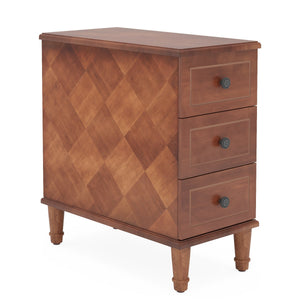
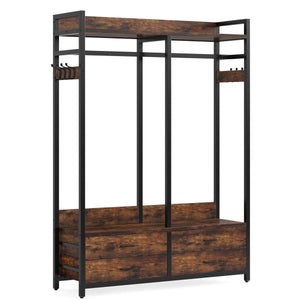
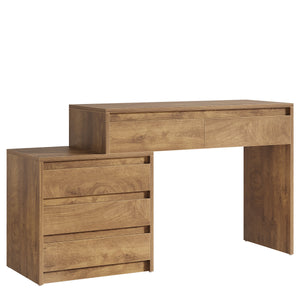
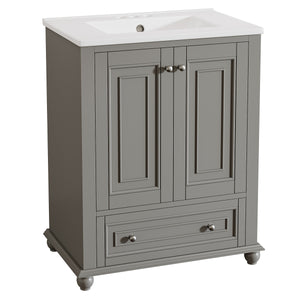


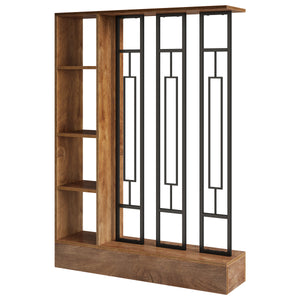


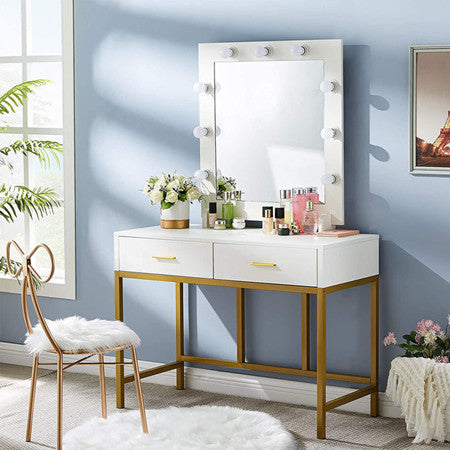
A dressing table with drawers is a smart choice for a bedroom when you need both a getting-ready surface and closed storage in one piece.
The drawers are what make it useful. They keep makeup, skincare, jewelry, and small daily items out of sight, so the room feels cleaner and the tabletop stays usable.
Compared with a regular desk or dresser top, a vanity with drawers is simply better at handling everyday clutter. The right one should not just fill a corner. It should make the bedroom easier to keep organized.
Is a Dressing Table with Drawers Worth It in a Bedroom?
Usually, yes. Drawers are what turn a dressing table from a simple surface into practical bedroom storage. They keep everyday items organized, reduce visual clutter, and make the setup easier to use.
That is especially helpful in smaller bedrooms, where a messy tabletop can make the whole space feel crowded.
It is only less useful when you do not need the storage or the room cannot handle a heavier piece. Otherwise, drawers are often the reason a vanity feels worth having in the first place.
Where Should You Put a Dressing Table in a Bedroom?
Place It Near Natural Light
The best place for a dressing table is usually near natural light.
A spot close to a window makes the mirror more useful and helps the whole setup feel brighter and easier to use. This matters even more if the table is part of your daily skincare or makeup routine.
That said, good light should support the room, not control the whole layout.
Do Not Block the Room’s Flow
A dressing table should never interrupt the way the bedroom works.
If it blocks the path to the bed, closet, or door, the placement is already wrong. In most bedrooms, the best location is an underused wall or corner that feels easy to reach without making the room feel tighter.
The piece should look like it belongs there, not like it was added wherever there was leftover space.
Be Careful With Mirror Placement
If the dressing table comes with a mirror, placement matters even more.
Try not to position it directly across from the bed. Too much reflection can make the room feel less restful, especially at night. It is also better not to place it directly opposite the bedroom door, where the mirror becomes the first strong visual point when you walk in.
A calmer corner usually feels more natural in a bedroom.
Skip the Bathroom if Possible
A bathroom may seem convenient, but it is usually not the best place for a dressing table.
Moisture, steam, and daily humidity are harder on wood finishes, mirrors, and stored beauty items over time. A bedroom corner with better airflow is usually the better long-term choice.
If There Is No Mirror, Add One Nearby
A dressing table without a mirror needs support from the wall around it.
If the piece does not come with a mirror, place it near a wall mirror so it still feels practical as a getting-ready station. Otherwise, it can start to feel more like a small desk than a true vanity setup.
Keep the Surface Visually Calm
Placement is not only about where the table sits. It is also about how the area feels once you start using it.
A dressing table works best when it keeps the room organized. If makeup, skincare, jewelry, and tools are always left out, the setup quickly starts to look busy. In a bedroom, that visual clutter can make the whole space feel less calm.

How to Choose the Right Size for Your Bedroom?
The right size usually comes down to width first.
For a small bedroom, a compact dressing table around 27.5 to 32 inches wide is usually the easiest fit. That size works well when the piece needs to sit beside a bed, near a closet, or on a short wall without taking over the room.
A more standard size is about 39 to 40 inches wide. This tends to feel balanced in an average bedroom because it gives you enough surface area for daily use without reading too bulky.
Once you get into 43 to 47 inches wide, the piece starts to feel more like a furniture statement. That can look great in a larger bedroom, but in a tighter room it often adds more visual weight than people expect.
|
Bedroom situation |
Vanity width |
Vanity depth |
What usually works best |
|
Small bedroom |
27.5–32 in. |
15.5–17 in. |
Compact dressing table with a tuck-in stool |
|
Average bedroom |
39–40 in. |
16–19.5 in. |
Standard vanity with enough top space for daily use |
|
Large bedroom |
43–47 in.+ |
16–20 in. |
Wider vanity or more furniture-like piece |
|
Bedroom that also works as an office |
27.5–39 in. |
16–19 in. |
Slim vanity-desk hybrid with a practical top |
FAQ
How Do You Mirror a Small Bedroom?
Place full-length mirrors on the back of doors, especially in rooms like the bathroom, where the door's often closed. Mirrored light fittings don't take up much space in a small room and brighten a room considerably. Save space by placing long mirrors behind furniture.
Can I Put Mirror in Front of Bedroom Door?
However, almost all experts agree that having a mirror facing the front door is just bad Feng Shui, and their reasons vary. Mirror placed near the front door is fine as long as it doesn't face the front door. Some say that the Qi entering the house will be reflected and repelled right out the door.
Can a Dressing Table Double as a Desk?
Yes, as long as it is designed to handle both jobs.
A dressing table can work as a desk when the surface is usable, the chair fits comfortably, and the mirror does not take over the whole setup. This is especially practical in smaller bedrooms where one piece needs to do more.
But not every vanity works well for work. Some are too shallow or too focused on beauty storage to feel comfortable for a laptop. If you need a true work zone, choose a more desk-like vanity rather than a highly decorative one.