
To Match or Not to Match?
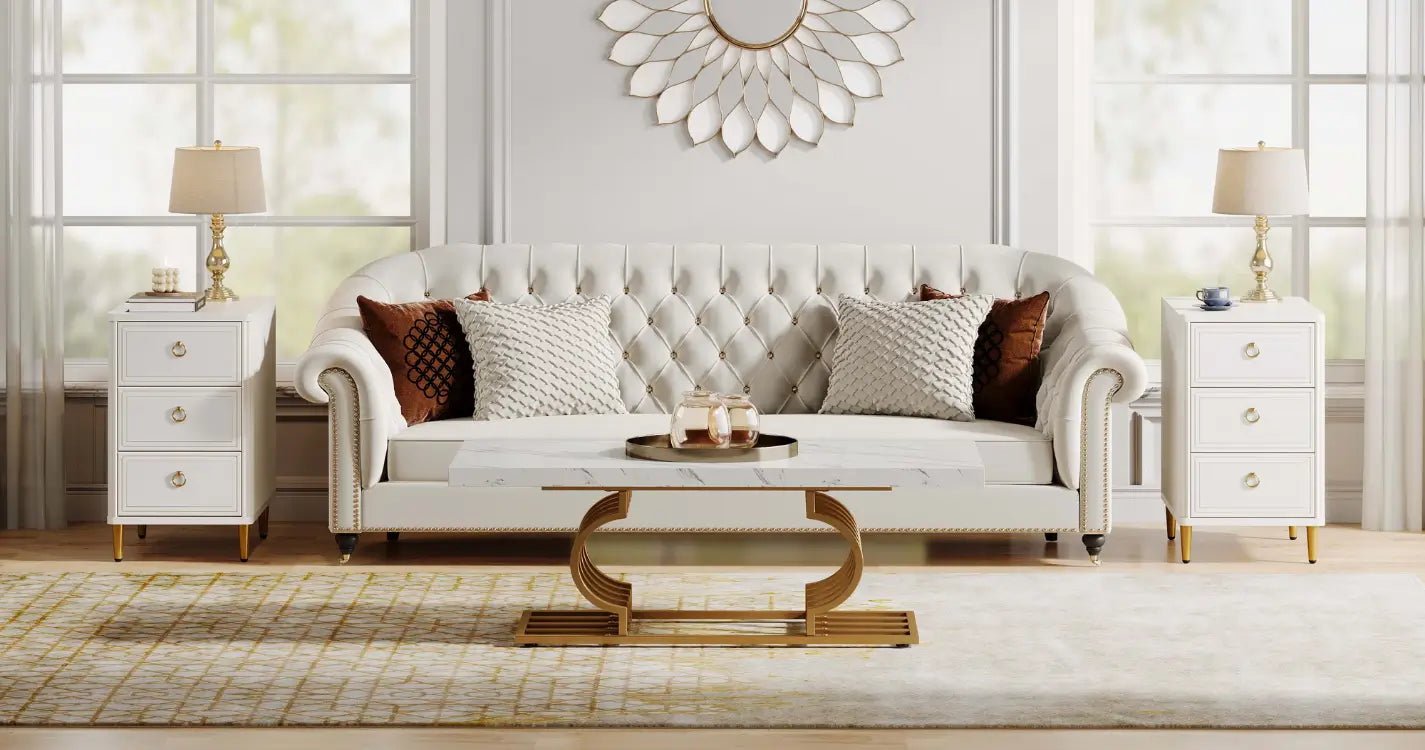
For years, the standard was to buy a matching "set"—a coffee table and two identical end tables. In 2026, that look is officially considered dated.
Designers now recommend the "Sister, Not Twin" rule. Your end table should complement your coffee table in style or material, but it doesn’t need to be an exact color match. If your coffee table is a light oak, try a matte black or a deep walnut end table to create visual layers.
Read more: Do End Tables Have to Match?
Best End Table Colors Based on Your Sofa
Your sofa is the "anchor" of your living room’s visual narrative. The right end table shouldn’t just sit next to it; it should engage in a conversation with the fabric, texture, and tone of your seating.

Rich Walnut or a bold Matte Black
When selecting an end table color, your sofa acts as the anchor of the visual narrative. If you are lounging on a Grey or Charcoal sofa, the goal is to break the "coolness" of the fabric. Instead of opting for more grey—which can lead to a sterile, monochromatic look—reach for the organic warmth of Rich Walnut or a bold Matte Black. A dark wood grain injects an immediate sense of history and earthiness into a modern grey setup, while a matte black finish provides a sharp, architectural "exclamation point" that defines the edge of your seating area.
Terracotta, Sage Green, or light-washed Oak
For those embracing the airy elegance of White, Cream, or Beige upholstery, the 2026 aesthetic favors "soft contrast" over stark minimalism. Rather than sticking to all-white, consider a palette of Terracotta, Sage Green, or light-washed Oak. These muted, nature-inspired tones prevent a neutral room from feeling flat or "clinical." Imagine a sage green ceramic end table nestled against a cream linen sofa—it introduces a whisper of color that feels sophisticated and calm, acting as a bridge between your indoor comfort and the natural world outside.
Antique Brass or Ivory Marble
If your living room features a statement piece like a Navy Blue or Hunter Green sofa, the secret lies in light-reflective surfaces. Deep, saturated colors absorb light, so you’ll want an end table that gives some back. Antique Brass or Ivory Marble are the premier choices here. The golden glint of brass against navy creates a classic, "Old Money" library vibe, while the swirling veins of a white marble top offer a crisp, luxurious break that keeps the deep fabric from feeling too heavy or overwhelming in a smaller room.
Slate Grey, Concrete
Finally, for the rugged texture of Brown Leather, avoid the trap of "too much brown." A leather sofa paired with a matching wood table can make a space feel like a dated cigar lounge. To modernize this look, lean into cooler, industrial tones like Slate Grey, Concrete, or even a deep Navy. These sturdier, cooler-toned materials provide a "textural friction" against the smooth, warm leather, creating a layered look that feels curated by an interior designer rather than bought off a showroom floor.
2026 Trending Palettes: What’s In?
If you want your home to feel current, consider these three trending color directions:
Warm Minimalism: Move over, stark white. This trend uses Honey Oak, Champagne Gold, and Buttercream. It’s about making a space feel sunny and soft.
Moody & Sophisticated: Think Espresso, Burnt Orange, and Gunmetal Grey. This works best in rooms with plenty of lamplight and texture.

Biophilic Design: Colors found in nature, such as Moss Green, Slate Blue, and Raw Sandstone.
|
If your vibe is... |
Go with this color... |
|
Modern & Edgy |
Matte Black or Smoked Glass |
|
Cozy & Organic |
Natural Oak or Walnut |
|
Glam & Luxe Brushed |
Gold or White Marble |
|
Small Space / Airy |
Clear Acrylic or Light Grey |
FAQ
What Is The Most Popular Color For End Tables?
While interior trends evolve, the most enduringly popular colors for end tables remain versatile neutrals like beige, soft taupe, and deep chocolate brown. These earthy, "tannish" tones act as a visual anchor that can harmonize with almost any color palette. The reason for their popularity lies in their psychological impact: these hues naturally evoke a sense of calm and stability. If your goal is to create a serene, grounded atmosphere in a living room or bedroom, opting for these organic, muted tones ensures your furniture remains timeless regardless of changing fads.
Should End Tables Be The Same Color?
There is no strict design rule stating that end tables must match each other or the other primary furniture pieces in the room. In fact, modern design encourages mixing wood tones and colors to create a space that feels curated over time rather than bought as a "set." However, to maintain a sense of intentionality, designers often follow the "Rule of Repetition." If you choose an end table in a unique color or material, aim to repeat that specific tone at least once elsewhere in the room—perhaps in a picture frame, a decorative bowl, or a textile—to weave a cohesive visual thread through the space.
Are End Tables Still In Style?
Absolutely. End tables remain an essential staple of living room design in 2026. Far from being "out of style," they have evolved from mere utility pieces into key stylistic accents. Beyond providing a necessary surface for lighting and beverages, they serve as the "finishing touch" that bridges the gap between your seating and the rest of the room.

Conclusion
Ultimately, the best color for your end table is one that makes you happy when you sit down to put your coffee cup on it. If you’re stuck, you can never go wrong with a medium-toned wood (like Walnut)—it is the "jeans and white t-shirt" of interior design; it goes with almost everything.