









Height and Depth for Side Tables
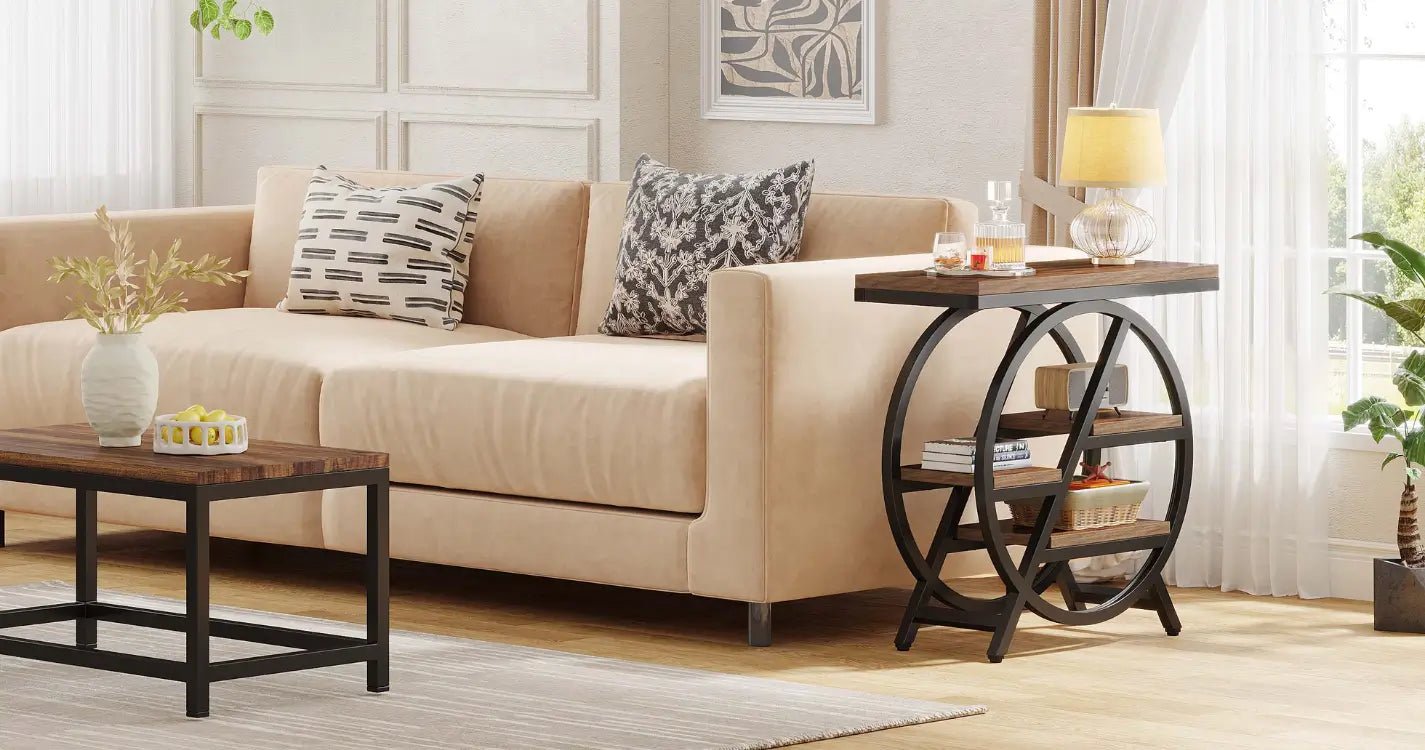
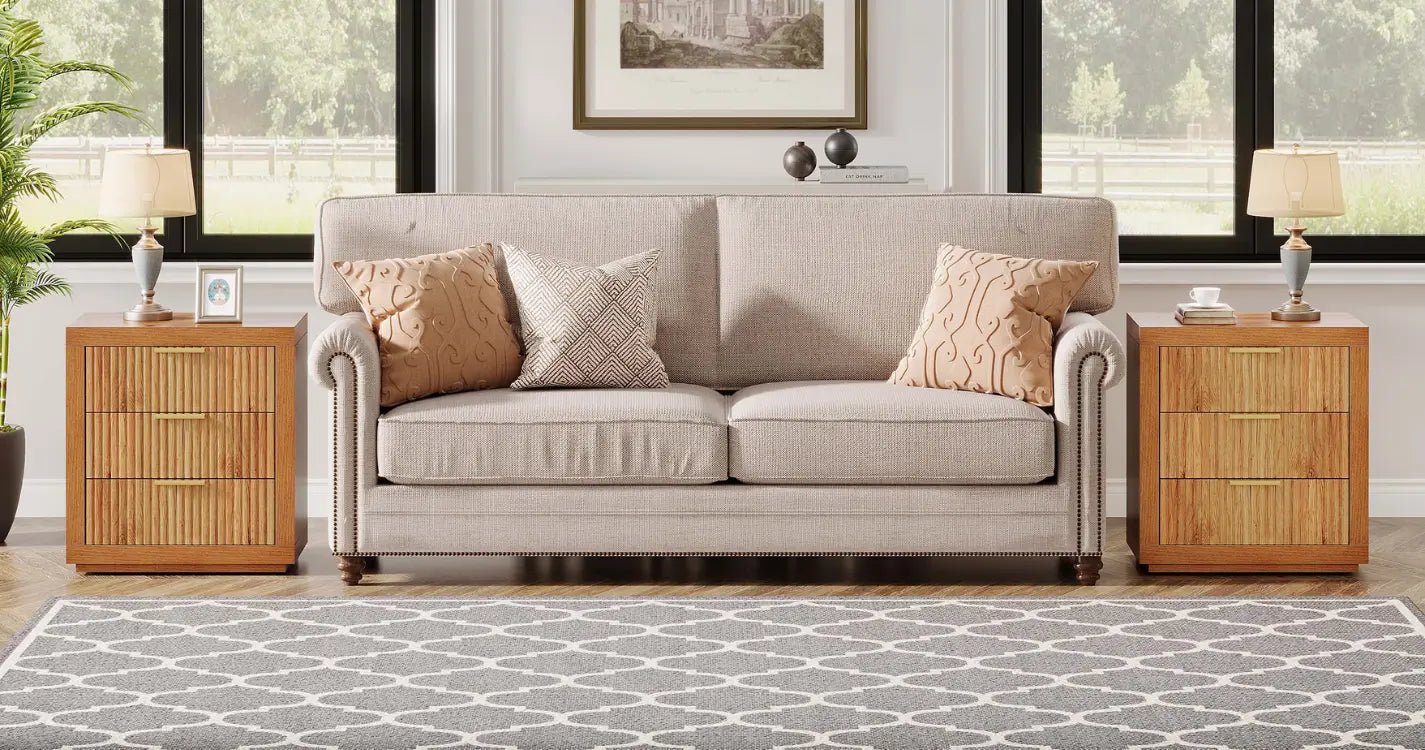
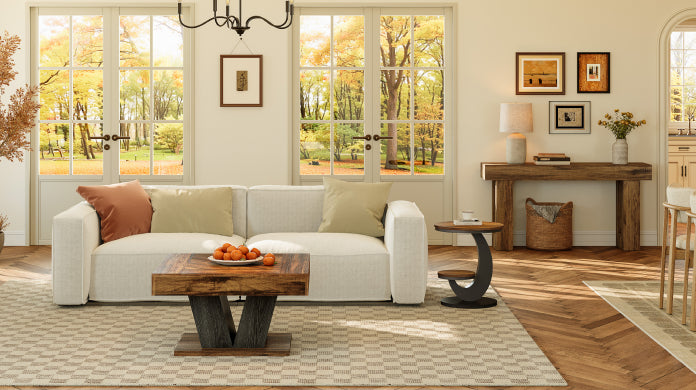
Before embarking on aesthetic experimentation, one must establish the physical "Golden Ratio" of proportions. For the 2026 design season, the American standard dictates that the height of a side table should remain within a two-inch variance of the adjacent sofa arm. When a surface sits slightly below the armrest, it fosters a sense of visual continuity, making the seating area appear more expansive and grounded.

Conversely, a table that stands an inch or two higher acts as a deliberate visual anchor, drawing the eye upward and adding a necessary vertical layer to the room’s horizon. This harmony in height is not merely for ergonomic convenience; it ensures that as the eye sweeps across the space, it encounters no jarring interruptions, maintaining a fluid and rhythmic balance.
|
Sofa Arm Height (inches) |
Recommended Side Table Height (inches) |
|
24 |
22-26 |
|
30 |
28-32 |
|
36 |
34-38 |
Depth is an equally critical dimension that dictates the "traffic flow" of your living environment. To maintain a professional silhouette, the depth of your side table should occupy between one-half and two-thirds of the sofa’s side profile. A table that is too deep risks encroaching on walkways and creating a sense of visual clutter, while a table that is too shallow will appear structurally insignificant next to the substantial presence of a classic American sectional. Finding that perfectly proportioned counterpart is essentially about finding a "partner" that can hold its own in a conversation with the sofa’s scale.
|
Sofa Depth (inches) |
Recommended Side Table Depth (inches) |
|
30 |
15-20 |
|
36 |
18-24 |
|
42 |
21-28 |
Navigating Shapes
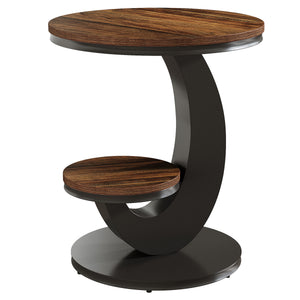
The silhouette of your furniture dictates the "energy" of your living room. In 2026, the embrace of naturalism and organic lines has made round and elliptical side tables the premier choice for optimizing spatial flow. Soft, radiused edges do more than just protect shins in high-traffic areas; they actively "soften" the rigid, geometric frame of a standard sofa, encouraging the eye to move through the room without resistance. Especially in smaller urban apartments, a round table eliminates the perceived "boundary" of a sharp corner, allowing the air and light between furniture pieces to feel breathable and light.
However, the square or rectangular end table remains an indispensable tool for those seeking architectural order. These shapes are the ultimate "space-fillers," capable of snapping into the awkward gaps between a sofa and a wall with precision. By juxtaposing the strict, linear discipline of a geometric table against the plush softness of upholstery, you create a compelling tension that feels modern and refined. Furthermore, the expansive surface area of a square table provides the perfect stage for visual anchor points—be it a heavy ceramic lamp or a curated tray of curios—further reinforcing the room’s structural hierarchy.

Balancing The Weight of Your Furniture
When beginning your pairing journey, the most critical element to master is the architectural silhouette. A common mistake is to overlook the "visual weight" of the furniture. For a sprawling, low-profile modular sectional—a dominant trend in 2026—a spindly, delicate side table will often feel lost or structurally insignificant. Instead, such grand sofas require a table with substantial presence, such as a honed travertine plinth or a solid walnut drum. These heavier forms act as visual anchor points, grounding the ends of the sofa and providing a sense of permanence. Conversely, if your seating features elevated, slim legs and a light-filled footprint, a "floating" glass or slender metallic C-table can maintain that sense of effortless buoyancy without cluttering the floor line.
Beyond the silhouette, one must consider the ergonomic reach. The 2026 design standard dictates that the surface of your side table should sit within two inches of the sofa’s arm height. This isn't merely a functional rule; it creates a continuous horizontal line that calms the eye. When a table is too tall, it breaks the room's visual rhythm; when it is too low, it loses its identity as a companion piece and becomes an island.
Material Contrast
As we move into 2026, the trend of "Biophilic Luxury" has made material choice more vital than ever. Designers are increasingly using side tables to introduce textural friction against the soft, matte surfaces of modern upholstery. Imagine the tactile contrast of a buttery, cognac leather sofa paired with a fluted concrete side table. The raw, porous nature of the concrete catches the light differently than the smooth hide, creating a sophisticated play of light and shadow reflection that adds depth to the corner.
For those favoring the plush comfort of boucle or velvet seating, the infusion of high-gloss elements can prevent the space from feeling overly soft or "flat." A polished burl wood or a high-shine lacquered stone table introduces a reflective quality that bounces ambient light, effectively acting as a jewel-like accent against the absorbent fabric. This intentional mix of "hard" and "soft" is the hallmark of a professionally designed room, ensuring that every piece feels distinct yet part of a cohesive whole.
Related read: What Materials Are Best For Side Tables?
Asymmetrical Placement
One of the most liberating trends of 2026 is the total embrace of intentional asymmetry. Gone are the days when a sofa required two identical flanking tables. Today’s most compelling living rooms feature a "mix and match" approach that tells a story of a home collected over time. You might pair a vintage-inspired distressed oak table on one end of the sofa to evoke a sense of heritage, while the other end remains open for a sleek, modern brushed brass floor lamp with an integrated marble tray.
This asymmetrical balance allows you to address different needs within the same space. One side of the sofa might serve as a reading nook requiring a larger surface for a lamp and books, while the other side functions as a transit zone where a minimalist "drink table"—a petite, 8-inch wide pedestal—is all that’s needed. By varying the heights, shapes, and materials of your side accents, you guide the eye through the room in a rhythmic, engaging way rather than stopping it with the static predictability of a matching set.

Sectional Pairings
For the large-scale sectional sofas that dominate American living rooms, the pairing strategy must be as flexible as the seating itself. Because a sectional occupies so much visual real estate, a single, static side table often fails to maintain the necessary balance. The 2026 solution leans into the use of "Nesting Tables" or "Drum Tables." Nesting tables offer a dynamic layout; they can be expanded to provide extra surface area during a gathering and tucked away to maintain a minimalist silhouette during the day, perfectly catering to the multi-functional nature of modern living.
At the "open" ends of a sectional, a solid plinth base or a heavy stone pedestal can serve as a "weighted" finish, preventing the furniture arrangement from feeling untethered. By selecting a material that contrasts with the flooring—such as a dark charcoal stone on a light oak floor—these tables become the anchors of the entire seating arrangement. In darker corners or the "L-junction" of a sofa, choosing a table with a glass top or a skeletal metal frame is a designer’s secret; these transparent properties allow light to pass through, eliminating the heavy shadows that often plague large-scale furniture layouts.

Frequently Asked Questions
How Do I Know If My Side Table Is Too Small For My Sofa?
A side table is generally considered too small if it lacks the "visual weight" to balance the sofa's arm. If your sofa is deep and plush, a tiny, thin-legged table will look disproportionate. A good rule of thumb is that the table should be approximately one-half to two-thirds the depth of the sofa's side profile to ensure it holds its own as a structural partner.
Can I Mix Different Wood Tones Between My Sofa Legs And Side Tables?
Absolutely. In 2026, mixing wood tones is encouraged to avoid a "flat" interior. The secret is to maintain a consistent undertone. For instance, you can easily pair a light white oak side table with a dark walnut-legged sofa as long as both woods have a "warm" lean. The contrast in value (light vs. dark) actually enhances the texture and makes the grains of both pieces pop.
What Is The Most Versatile Shape For A Side Table In A Small Room?
The round or elliptical side table is the undisputed champion of small-space design. Because it lacks sharp corners, it facilitates a smoother "flow" of movement around the furniture, preventing the space from feeling cramped. Furthermore, round shapes soften the rigid, rectangular lines common in most sofas, creating a more inviting and harmonious atmosphere.
Should A Side Table Be Higher Than The Sofa Arm?
In most high-end interior design scenarios, it is recommended that the side table stays within two inches of the sofa arm's height. Ideally, the table should sit slightly lower than the arm to create a more open and streamlined visual plane. However, if you wish to emphasize a specific decorative object or a table lamp, choosing a model that is an inch or two taller can serve as an excellent vertical accent for the room’s layout.