









The Role of Side Tables in the Home
Side tables may look like small pieces of furniture, but in most American homes, they play a surprisingly important role. On a daily basis, they serve as practical companions to sofas, recliners, and beds—holding a lamp for evening reading, a cup of coffee in the morning, or the inevitable stack of remotes and books that always needs a home. Because they’re lightweight and easy to move, end tables are often called into action for different occasions, whether it’s pulling one closer for movie night, making room for guests, or creating a cozy reading nook.
The environment where a side table lives also influences how well it performs over time. For instance, central heating or air conditioning can dry out natural wood more quickly in the Midwest than in a coastal home in Florida, where humidity is higher. Placing a table near a sunny window may look great, but constant UV exposure can fade finishes or weaken adhesives on veneered surfaces. And in outdoor or semi-outdoor spaces like sunrooms or covered patios, resistance to moisture and temperature swings becomes critical—something not every material can handle gracefully.
That’s why material choice matters. When choosing materials, it helps to think about five factors: durability for daily wear, weight and stability, ease of cleaning and maintenance, style fit with your décor, and whether you want a long-term investment or a temporary, budget-friendly solution.
Common Side Table Materials Compared
Here are the most common materials used for side tables...
1. Solid Wood (Hardwoods & Softwoods)
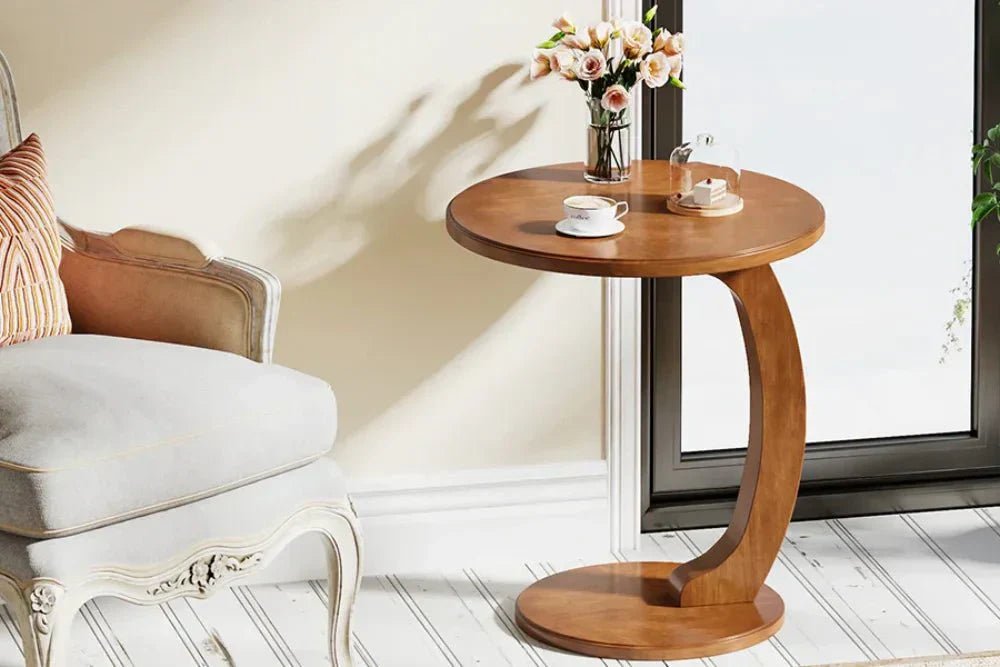
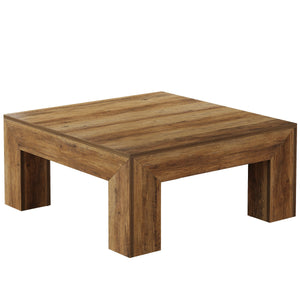
Solid wood remains the gold standard in side tables. Hardwoods like oak, walnut, and maple are prized for their durability and rich grain, making them staples in American design.
Pros: Strong, repairable, ages beautifully, warm natural look.
Cons: Sensitive to humidity and temperature changes, heavier than engineered options, pricier.
Best For: Traditional, mid-century modern, or rustic interiors where natural character is valued.

2. Engineered Wood (MDF, Plywood, Veneers)
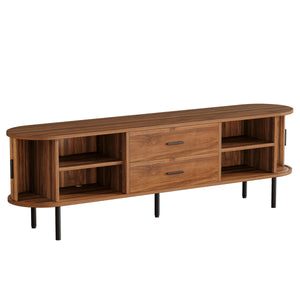
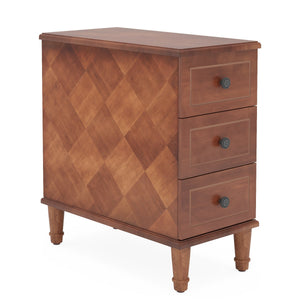
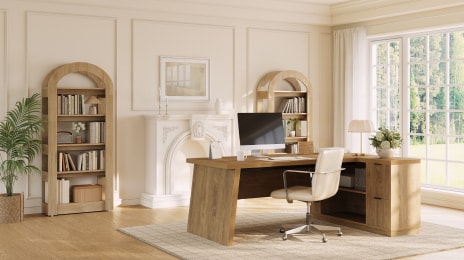
Many side tables at IKEA or Our Tribesigns use engineered wood with a veneer or laminate finish. MDF (medium-density fiberboard) and plywood resist warping better than solid wood and keep prices down.
Pros: Affordable, stable in varying climates, wide range of finishes.
Cons: Harder to repair if chipped, veneer can peel, doesn’t carry the same “heirloom” value.

3. Metal
In end tables, metal is most often used for the frame or legs rather than the entire piece. Steel and aluminum are popular because they provide strong support while keeping the overall design light and slim. Brass is less common as a structural material but is frequently used in accents—such as leg tips, handles, or edging—to add a touch of warmth or luxury.
Pros: Strong, stable, allows for sleek profiles, pairs well with wood, glass, or stone.
Cons: Can scratch, may rust if not treated, and feels cooler to the touch than natural materials.
Best For: Modern, minimalist, or industrial interiors where clean lines and durability are a priority.

4. Glass (Tempered or Acrylic)
Glass is most often used as the tabletop of a side table, usually paired with a metal or wooden frame for stability. Tempered glass is the standard choice because it’s safer and stronger than regular glass, while acrylic or Lucite offers a similar transparent look at a lighter weight. All-glass tables, where both the top and legs are made from bent or molded glass, do exist but are less common, mainly appearing in minimalist or high-end modern designs.
Pros: Visually light, makes small spaces feel more open, easy to clean, water-resistant.
Cons: Shows fingerprints and smudges, can chip or scratch, less forgiving with heavy loads.
Best For: Contemporary or small-space interiors where lightness and transparency matter.
5. Stone
Stone (Marble, Quartz, Concrete) offers an enduring appeal in U.S. designer furniture. The classic formula—a striking stone slab atop sleek metal or warm wooden legs—elevates a side table into a Sculptural Statement.
Pros: Instantly elevates a room with a luxurious, heat-resistant, and durable surface.
Cons: The trade-off for its prestige is substantial weight, a high price point, potential for staining if unsealed, and limited mobility.
Best For: Creating a high-impact, stationary focal point in luxury interiors.

6. Wicker, Rattan, and Bamboo
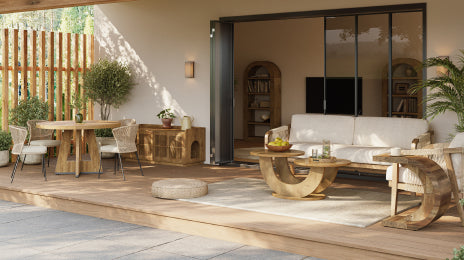
The light, airy aesthetic of natural wicker and rattan has made them a favorite in coastal and bohemian homes. Yet, their susceptibility to humidity and damage can be a concern. Tribesigns end tables solve this dilemma. They seamlessly blend authentic rattan weaving with solid wood frames, delivering the style you love plus the durability you need.
Pros: Lightweight, organic texture, eco-friendly vibe.
Cons: Limited load-bearing strength, can fray or fade over time.
Best For: Casual living rooms, sunrooms, or beach houses.

7. Mixed Materials
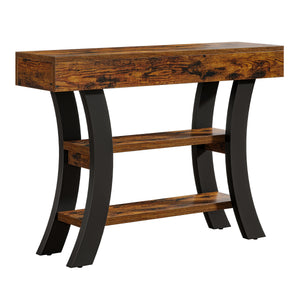
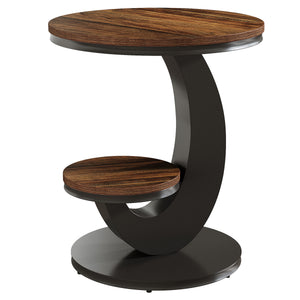
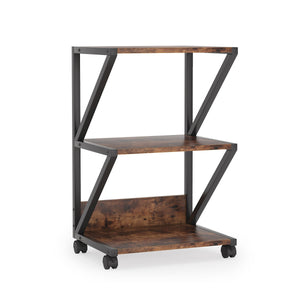
Combining wood with metal, or marble with steel, allows designers to balance durability with style. This trend is especially strong in American urban and modern markets, where customers want unique pieces that stand out.
Pros: Versatile, stylish contrasts, and combines the strengths of each material.
Cons: More complex construction, potential weak points at joints.
Best For: Modern and eclectic interiors that embrace layered textures.
How to Choose With Confidence
Step 1: Assess Your Space & Habits
Think about where your table will go and how you’ll use it. High-traffic areas need durable materials like metal or wood. If it’s just for decoration, glass or stone works well. Also, consider if you have kids or pets—sturdier materials like metal or engineered wood are best in those cases.
Step 2: Prioritize What’s Most Important
What matters most to you? If you need something tough, go for wood, metal, or stone. If you’re on a budget, engineered wood (like MDF) is great. For easy cleaning, metal and wood are your friends. For style, glass and stone stand out.
Step 3: Match Materials to Your Needs
For durability and easy care, choose metal, wood, or stone. On a budget? Try engineered wood or bamboo. Want something stylish? Go for glass or stone.
Looking for the perfect blend of durability, style, and versatility? Check out our Tribesigns End Table. With a mix of engineered wood, solid wood, and metal, it combines the best of both worlds. Whether you’re after something classic, modern, or both, our table offers the perfect material combination to suit your space and needs.