









Why a Double Desk Works
- Gaming partners: Sit side-by-side for co-op play and shared peripherals.
- Small homes: One large desk saves space vs. two smaller ones and looks cleaner.
- Parents + kids or study buddies: Share a surface, stay close, and keep materials in one zone.
This is now a mainstream furniture category, not a niche—plenty of size and style options.
Key Fit Rules
- Per-person width: Aim for 30–36" each.
- Elbow clearance: You want at least 60" total to avoid bumping; 72" feels natural.
- Depth: 24" minimum; 30" is better for big monitors and arm reach.
- Legroom: Leave ~24" of knee space per person; avoid a big center drawer.
- Privacy & focus: If you need separation, add a thin center divider or desk-mounted screens.
- Chair + walkway: Plan 36" behind chairs for easy movement.

Common Dimensions for Standard Desks
Height:
Most fixed desks sit 28–30 in high, which aligns with basic ergonomics (elbows near 90°). Sit–stand frames extend much wider. OSHA focuses on keeping input height at elbow level (about 22–30 in seated and 36–46.5 in standing when using trays or adjustable surfaces).
Widths (lengths):
Retailers commonly sell tops at 48 in, 60 in, and 72 in, with many lines also offering 42, 55, 66, 80 in variants.
Depths:
The market standard is 24–30 in deep; 30 in is preferred for large monitors or multiple screens.
Single-Person Desk Dimensions
Expect ~40–56 in W × 19–24 in D.
Standard home office. The most versatile size is 48–60 in W × 24–30 in D. It handles a 27–34" monitor, keyboard, and writing area without feeling cramped.
Executive / creator setups. For deep layouts, dual monitors, or heavy paperwork, look for 66–84 in W × 30–42 in D. These are typical “executive” dimensions sold by office dealers.
Height guidance. Aim for a working height that keeps forearms level and shoulders relaxed. Fixed desks cluster at 28–30 in; if you’re shorter/taller, add an adjustable keyboard tray or choose a sit–stand frame.
2-Person Desk (Double Desk) Dimensions
Length: Start at 60–72 in total; it’s the minimum that avoids elbow clashes for light work.
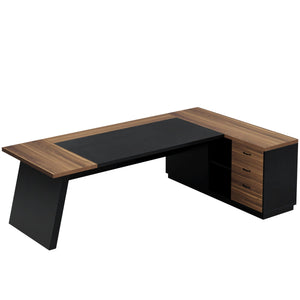
Ideal length: 78–96 in gives two full work zones and monitor clearance. This mirrors common “double desk” products (e.g., Tribesigns 78.7 in and 94.5 in long 2 person desk/double workstation).
Depth: 24–30 in. Use 30 in if each person runs a large monitor, arms, or speakers. (Matches benching and desktop standards.)
Height: Same rules as single desks—fixed 28–30 in or height-adjustable frames if you need true ergonomics.
Quick picks by scenario.
- Tight apartment, two laptops: 60 × 24 in (expect close quarters).
- Home office, two monitors total: 72 × 24–30 in.
- Gaming / dual-monitor each: 84–96 × 30 in for mats, arms, and speakers (mirrors common long “2-person” listings).
Read more: The Best Choice of Two-Person Desks for Your Home Office

How to Choose the Right Two-People Desk Dimensions
Your Body Type
- Height fit: Fixed desks are usually 28–30 in high. Most adults fit, but shorter/taller users should favor sit-stand frames.
- Elbow angle: Aim for ~90° with shoulders relaxed. If not, use a keyboard tray or adjust chair + desk.
- Legroom: Keep at least 24 in of clear knee width per person; avoid big center drawers.
- Chair + movement: Leave 36 in behind chairs for easy slide-out.
Desk Setup
Before you buy, list what each person uses. Who’s on a laptop? Who has a tower? One or two monitors? Any speakers, a mic boom, or a tablet? These choices drive depth and cable management.
Large screens or dual monitors work best with a 30"-deep top plus monitor arms to push displays back and free typing space. Keep drawers on the outer ends, not the middle, so each person keeps about 24" of knee clearance. Don’t skip power and cables: plan 2–3 outlets per person, add an under-desk power strip and cable tray, and use rear grommets to keep the surface clean.
Your Space
Start with wall span and traffic flow. Your total desk length should be no more than wall width minus 4–6" to leave room for baseboards, outlets, and slack. Keep 30–36" clear for walkways so chairs roll back easily and doors or closets don’t jam. Avoid direct window glare. If you need more focus, add a thin center divider or clamp-on privacy panels—they reduce visual and noise distractions without stealing legroom.

Desk Dimensions (Two People)
For most pairs, a 72" L × 24–30" D desk hits the sweet spot: natural elbow room and space for 24–27" monitors.
In tight rooms, 60" × 24" works for two laptops or small monitors. For creators or gamers, go 84–96" × 30" to fit dual 27–32" displays, large mouse mats, and bookshelf speakers.
Use this simple rule:
- Aim for 30–36" of width per person (so 60–72" total).
- Depth of 24" is workable, but 30" feels better with big screens and arms.
- Height is typically 28–30"; if your heights differ, choose a sit-stand frame so each person can type at roughly a 90° elbow angle.
Dual Monitors
Dual monitors demand more length and depth. If only one person runs duals, keep the desk ≥72" long and prefer 30" depth so the keyboard area isn’t crowded. If both use duals, target 84–96" L × 30" D. Add monitor arms to maintain a 20–30" viewing distance and reclaim surface space. Ultra-wide displays (34–38") should be treated like duals: stay at 30" depth and, if both sides use UWs, favor 96" length for comfort.
Storage Space
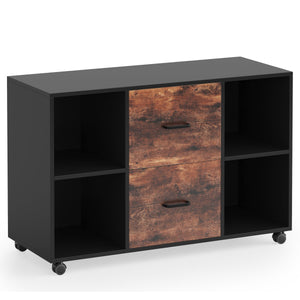
When two people share one desk, storage becomes just as important as length and depth. A well-designed setup with drawers, shelves, or a hutch helps keep the surface clear and prevents clutter from spilling into each other’s space. Good storage also improves focus—papers, chargers, and accessories have a home instead of piling up on the desktop. The key is placement: keep the center area open for legroom, and use side drawers, mobile pedestals, or overhead shelves to organize supplies. By planning storage along with desk size, you get a workspace that feels cleaner, more efficient, and more comfortable for both users.

FAQs
Is a 24-inch desk deep enough?
Yes, 24" depth works for laptops or a single monitor setup. For larger monitors or dual screens, 30" depth feels more comfortable.
What is the minimum desk depth?
The minimum functional depth is 24". Anything less can feel cramped, especially with a monitor and keyboard.
Is a 70-inch desk too big?
A 70" desk is on the larger side but not excessive. It’s great for dual monitors, paperwork, or executive-style setups. In a small room, it may dominate, but in a medium or large office it feels ideal.
Is a 55-inch desk too small?
A 55" desk is mid-sized and practical for most home offices. It comfortably fits a computer, monitor, and accessories without overwhelming the room.
Where can I buy a reliable two-person desk?
Tribesigns offers popular 78.7" and 94.5" two-person desks with options for drawers, hutches, and shelves. They back products with an 18-month warranty and responsive customer service.
Conclusion
With more people working, learning, and entertaining from home, demand for flexible, efficient, stylish desks that can accommodate shared spaces will continue to grow, making these double desks a smart and practical investment in 2025 and beyond.