









The better desk is the one that fits your room, your workflow, and the way you actually use your workspace every day.
That question matters more than it used to. In the U.S., 13.8% of workers usually worked from home in 2023, up from 5.7% in 2019, so desk shape is no longer just a furniture preference. For a lot of people, it is part of how a room has to function every day.
Table of Contents
- What Is a Regular Desk?
- What Is an L-Shaped Desk?
- L-Shaped Desk vs Regular Desk: Quick Comparison
- How to Tell Which Desk Fits Your Room Layout?
- Which Desk Shape Is Better for Ergonomics?
- What Size Desk Is Best for Dual Monitors?
- Usable Space and Storage
- Setup and Moving
- Price and Value: Is an L-Shaped Desk Worth It?
- Final Verdict
What Is a Regular Desk?
A regular desk, also called a straight or rectangular desk, is the most familiar desk shape. It gives you one clean work surface, which is often all you need for a laptop, one monitor, and everyday tasks.
It also tends to work better in bedrooms, apartments, and smaller home offices. It is easier to place, easier to move, and easier to fit into a room that needs to stay flexible.
What Is an L-Shaped Desk?
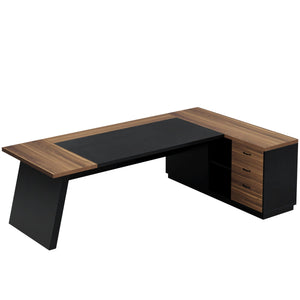
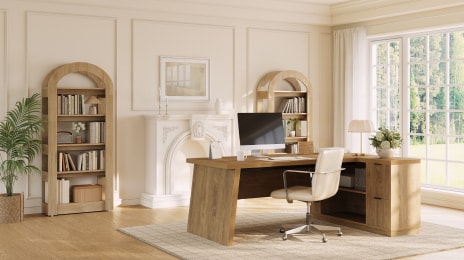
An L-shaped desk combines two work surfaces at a right angle, usually designed to sit into a corner or create a wraparound workstation. In practice, that means more usable surface area and a better chance to separate tasks instead of stacking everything into one line.
That separation is the real reason people choose this shape. One side can hold your primary setup, while the other can handle paperwork, a second monitor, a printer, or a gaming zone. When your day involves switching between tasks instead of staying in one narrow lane, an L-shaped desk usually feels more natural.

L-Shaped Desk vs Regular Desk: Quick Comparison
|
Factor |
L-Shaped Desk |
Regular Desk |
|
Best for |
Multitasking, dual monitors, corner setups |
Focused work, simple setups, smaller rooms |
|
Workflow |
Better when you switch between tasks and tools |
Better when everything stays in one main work area |
|
Surface use |
Easier to separate screens, notes, and active projects |
Easier to keep the setup centered and uncluttered |
|
Room feel |
More like a dedicated workstation |
Cleaner and easier to blend into the room |
|
Placement |
Best when a corner is truly open and usable |
Easier to place against a wall |
|
Flexibility |
Harder to move and rearrange later |
Easier to move, rotate, and repurpose |
|
Cost |
Usually higher |
Usually lower |
How to Tell Which Desk Fits Your Room Layout?
Choosing the right desk is less about how much surface you want and more about what you want the room to feel like.
For rooms that need to stay open, a regular desk usually does the job better. It reads lighter, fits more naturally along a wall, and does not ask the layout to revolve around it. That makes it a smart pick for bedrooms, guest rooms, or any space that has to do more than one thing.
An L desk is a stronger option when the room already has a clear corner that can support a more dedicated setup. In that kind of layout, the extra return can be genuinely useful, giving you separate areas for monitors, paperwork, and accessories instead of forcing everything onto one long surface.
Still, more desk does not automatically mean a better fit. Both desk styles can handle multiple monitors when sized correctly. The bigger difference is visual weight and flexibility: a straight desk tends to keep the room calmer, while an L-shaped desk makes a stronger statement and claims more of the layout.
Which Desk Shape Is Better for Ergonomics?
Desk shape is only part of ergonomics, but it does affect how comfortably your setup fits. OSHA recommends enough depth to keep your monitor at least 20 inches away, with 20 to 40 inches generally preferred. That is one reason an L-shaped desk can work well for larger monitors, dual screens, or setups with more gear: the extra depth and side surface give you more room to position everything comfortably.
Still, more surface does not automatically mean better ergonomics. If your setup is simple and stays directly in front of you, a regular desk can be just as comfortable and often easier to keep aligned. Once you add a second monitor, papers, audio gear, or other devices, an L-shaped desk can reduce crowding and awkward reaches. Under-desk clearance matters too, so the better choice is the one that gives you enough legroom below and enough working depth above.

What Size Desk Is Best for Dual Monitors?
Once the setup gets more specific, desk size matters more than desk shape. For dual monitors, the goal is simple: enough width to keep the main screen centered, enough depth to keep both screens at a comfortable distance, and enough leftover space for everything else. OSHA recommends a viewing distance of 20 to 40 inches, and multiple university ergonomics guides treat 24 inches of depth as the minimum baseline for a computer workstation.
- 48 inches wide: the compact minimum for two smaller monitors.
- 55 to 63 inches wide: the best range for most dual-monitor setups. This is the practical sweet spot if you want both screens to fit without crowding the center of the desk.
- 63 inches or more: the safer choice for two 27-inch monitors or a setup that also includes speakers, paperwork, or extra gear.
- 24 inches deep minimum: enough for a workable monitor distance in most setups.
- 30 inches deep: better if you use larger monitors or want the setup to feel less cramped.
In practical terms, 55 to 63 inches wide and at least 24 inches deep is the best answer for most people. Go larger when the monitors are bigger or the desk needs to support more than screens alone.
Usable Space and Storage
More desktop is not automatically more useful. What matters is whether the extra space stays active or turns into overflow. On an L-shaped desk, the return works best when it has a clear job, such as holding a second screen, a printer, a notebook area, or daily supplies. Without that purpose, it can easily become a parking lot for clutter.
A regular desk gives you less room, but often uses that room more efficiently. Everything stays within a tighter reach zone, which makes it easier to keep the main work surface clear. Storage matters just as much as shape here. If cables, papers, and accessories all have to live on top, any desk will feel crowded. A well-organized setup depends less on raw surface area and more on whether your everyday items actually have somewhere to go.
Setup and Moving
Regular desks are easier to live with when your space changes. They are simpler to assemble, easier to reposition, and less of a hassle when you move rooms or move homes.
An L-shaped desk asks for more commitment. You have to get the orientation right, fit it to the correct corner, and deal with a larger, more complex build. That trade-off makes sense in a dedicated office where the desk is meant to stay put. It is less appealing in spaces that need to stay flexible.

Price and Value: Is an L-Shaped Desk Worth It?
An L-shaped desk is worth the higher price only when the extra surface solves a real problem. If you use dual monitors, spread out paperwork, or switch between work and gaming, the added space can make your setup smoother and easier to manage. If your setup is minimal, that extra cost often buys surface area you will not use.
Value is not about getting the biggest desk for the money. It is about paying for space that improves how you work. When the second surface removes daily friction, an L-shaped desk can be worth it. When it does not, a regular desk usually offers better value.
Final Verdict
If your biggest constraint is room flexibility, choose a regular desk. If your biggest constraint is workflow complexity, choose an L-shaped desk. That is the clearest way to make the decision.
A regular desk is better when you want simplicity, easier placement, and a cleaner front-facing setup. An L-shaped desk is better when you need more depth, better zoning, and a workstation that supports multiple tools or tasks at once. The right answer is not about which desk looks more impressive. It is about which one makes your room easier to use every single day.
Read more: