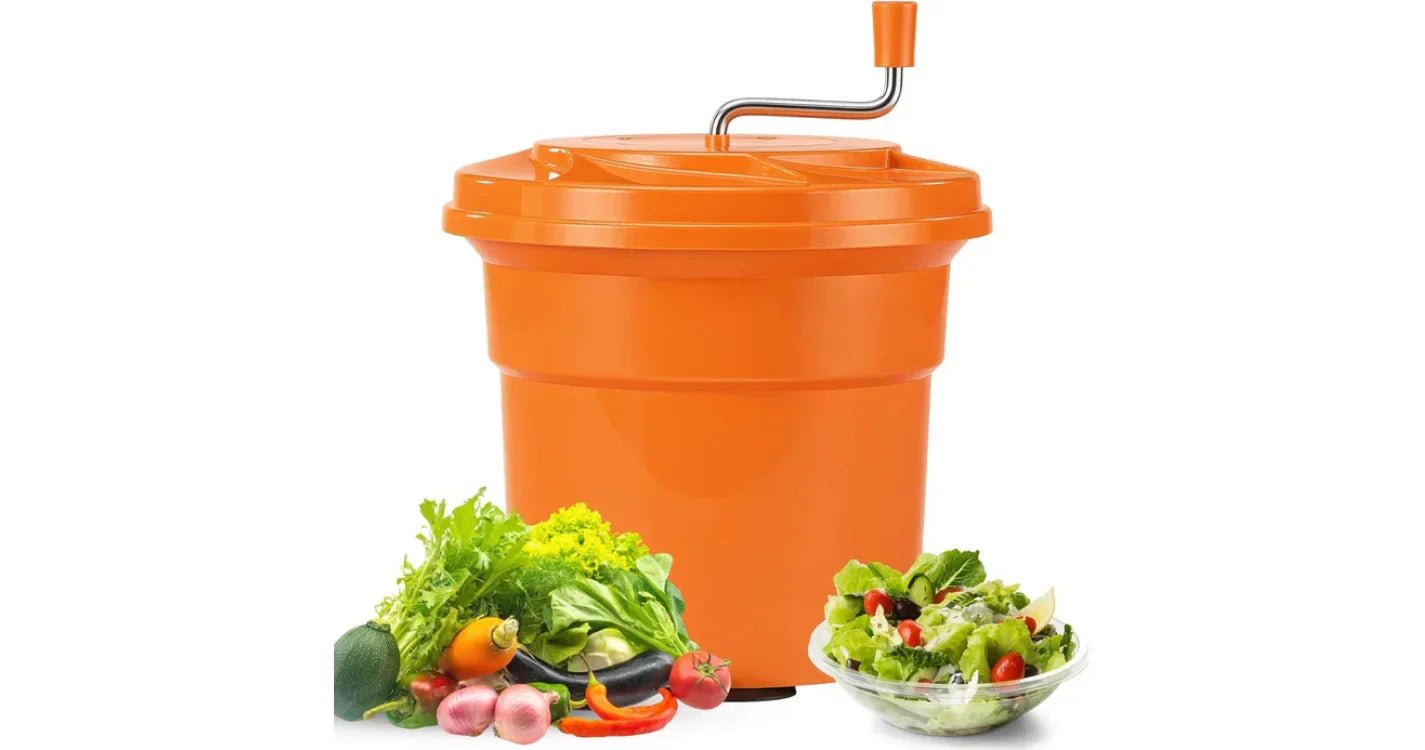















To use the Tribesigns manual commercial salad spinner, place it near a sink or floor drain, position the drain tube, load washed greens without overpacking, secure the lid, and turn the crank steadily.
With its large capacity, manual operation, and built-in drainage setup, it is made for faster lettuce and produce prep in restaurants, catering kitchens, salad bars, food trucks, and large family gatherings.
What This Commercial Salad Spinner Is Built For?
A manual commercial salad spinner is designed for one main job: drying washed produce in larger batches.
It does not replace washing. It removes the water left after washing.
That distinction matters.
If lettuce is still full of grit, spinning will not make it clean. If lettuce is clean but too wet, spinning helps it stay crisp and ready for salads, sandwiches, wraps, burgers, and prep containers.
This type of spinner is most useful when you need to process more than a small bowl of greens.
Good use cases include:
- Restaurants
- Cafes
- Catering kitchens
- Salad bars
- Food trucks
- Cafeterias
- Meal prep businesses
- Community kitchens
- Large family meals or events
The Tribesigns model is manual, so it does not need electricity. That makes it easy to place wherever the workflow makes sense, as long as you have a stable surface and a nearby drainage point.

Home Salad Spinner vs Manual Commercial Salad Spinner
|
Home Salad Spinner |
Tribesigns Manual Commercial Salad Spinner |
|
Best for small salads |
Best for large-batch prep |
|
Usually sits on a countertop |
Works best near a sink or floor drain |
|
Often pump, pull-cord, or small crank style |
Uses a manual crank for larger loads |
|
Bowl usually needs to be emptied by hand |
Drain tube helps direct water away |
|
Compact and easy to store |
Larger capacity for repeated prep |
If you only make one small salad at a time, a compact spinner may be enough. If you regularly prep multiple heads of lettuce, a commercial spinner saves time and keeps the work area cleaner.
Read more: How to Use a Home Salad Spinner
Tribesigns Manual Commercial Salad
The Tribesigns 6.6Gal manual commercial lettuce spinner is designed for large-batch produce prep, especially when a small home spinner is not enough.
It uses a manual crank system, so it does not need electricity. The large basket helps dry multiple heads of lettuce at once, while the 4.92FT drain tube directs water into a sink or floor drain during use.
Here are the key details:
|
Feature |
Details |
|
Capacity |
6.6 gallons |
|
Lettuce Capacity |
Approximately 8–9 heads of lettuce |
|
Operation |
Manual crank |
|
Drainage |
4.92FT / 1.5m drain tube |
|
Material |
Food-grade plastic body with stainless steel crank |
|
Color |
Orange-white |
|
Product Dimensions |
16.54" L x 16.54" D x 12.6" H |
|
Item Weight |
8.27 lbs |
This setup makes it useful for kitchens that need to wash and dry greens repeatedly without lifting and dumping a heavy bowl after every batch. The drain tube is especially helpful during continuous prep because it helps move water away from the work area and keeps the floor cleaner and drier.

Step 1: Set It Up Near a Sink or Floor Drain
Place the spinner on a stable, level surface near a sink or floor drain.
Before loading the greens, position the 4.92FT drain tube toward the drain. Make sure the tube is not bent, blocked, or pointing toward a walkway.
The anti-slip feet help keep the spinner steady during use, but the setup still matters. Avoid placing it near the edge of a table or prep counter.
Step 2: Wash and Prep the Greens First
Wash the greens before spinning. A salad spinner removes excess water; it does not replace proper washing.
Remove wilted or damaged leaves, trim root ends if needed, and separate large lettuce heads so water can reach between the layers.
Step 3: Load the Basket Without Overpacking
Place the washed greens into the basket loosely.
The Tribesigns 6.6Gal Manual Commercial Salad Spinner can handle large batches, but the basket should not be packed tight. Greens need room to move so water can spin off evenly.
For best results:
- Shake off heavy dripping water first
- Spread the greens evenly
- Avoid loading all the weight on one side
- Split the batch if the basket feels too full
Step 4: Secure the Lid and Crank Steadily
Place the lid on securely, then turn the crank at a steady pace.
Start smoothly instead of forcing the handle. If the spinner wobbles, slow down and check whether the basket is overloaded or uneven.
Use a firmer spin for romaine, iceberg, kale, and cabbage. Use a gentler spin for herbs, baby greens, berries, or delicate produce.
Step 5: Let the Drain Tube Carry Water Away
As the basket spins, water moves away from the greens and exits through the drain tube.
Keep an eye on the tube while spinning. It should stay pointed toward the sink or floor drain, with water flowing freely.
This built-in drainage setup helps reduce splashing, heavy lifting, and water collecting around the prep area.
Step 6: Check the Greens and Spin Again If Needed
Stop and check the greens after the first spin.
They should feel crisp and lightly dry, not completely dehydrated. If they still feel too wet, spin again for a shorter round.
Large romaine leaves, thick greens, or very wet batches may need a second spin. Delicate greens should be checked sooner to avoid bruising.
Step 7: Remove, Store, or Serve the Greens
Remove the greens from the basket and transfer them to a clean prep pan, salad bowl, or food-safe container.
Use them right away, or refrigerate them promptly if prepping ahead.
For storage, avoid pressing the greens down. Keeping them loose helps maintain their texture and freshness.
Manual, Pump, Pull-Cord, or Electric?
Each style has a place.
A pump spinner is easy for home kitchens. A pull-cord spinner is compact and simple. Electric models reduce hand effort, but they depend on power and may be more than some kitchens need.
A manual crank spinner is a practical choice for large batches because it gives you control, does not require an outlet, and is easy to operate in a busy prep area.
That is why many commercial salad spinners use a crank-style design.

How to Clean the Tribesigns Commercial Salad Spinner After Use
Clean the spinner after each use to keep it ready for the next batch.
- Remove leftover leaves or small produce pieces from the basket.
- Rinse the basket, lid, and body with clean water.
- Wash the removable parts with warm, soapy water.
- Rinse thoroughly so no soap residue remains.
- Flush the drain tube with clean water to remove small leaves or buildup.
- Wipe around the crank area, especially if water or produce debris splashed onto the lid.
- Let all parts air-dry completely before storing.
Do not leave dirty water sitting in the drain tube or store the spinner while it is still wet and closed. This helps prevent odor, residue buildup, and sanitation issues.
FAQ
How many heads of lettuce can the Tribesigns commercial salad spinner hold?
Tribesigns states that this 6.6-gallon manual lettuce spinner can spin approximately 8–9 heads of lettuce at once. For the best drying results, avoid packing the basket too tightly.
Can I use it for produce other than lettuce?
Yes. It can be used for leafy greens, herbs, cabbage, some fruits, and washed vegetables.
Use a gentler spin for delicate items such as herbs, berries, and baby greens.
How long should I crank it?
There is no fixed time for every batch.
Start with a steady spin, check the greens, and repeat briefly if they still feel too wet. Larger or thicker greens may need longer than delicate herbs.
Can I clean the spinner with soap?
Yes, you can clean the spinner parts with warm, soapy water.
Do not use soap to wash the produce itself. The FDA recommends washing produce with running water and does not recommend soap, detergent, or commercial produce wash.
Is this salad spinner suitable for home use?
Yes, if you prep large batches, cook for a big household, host often, or want a larger manual spinner.
If you only make one small salad at a time, a compact home spinner may be easier to store.