
Do TV Stands and Coffee Tables Need to Match?
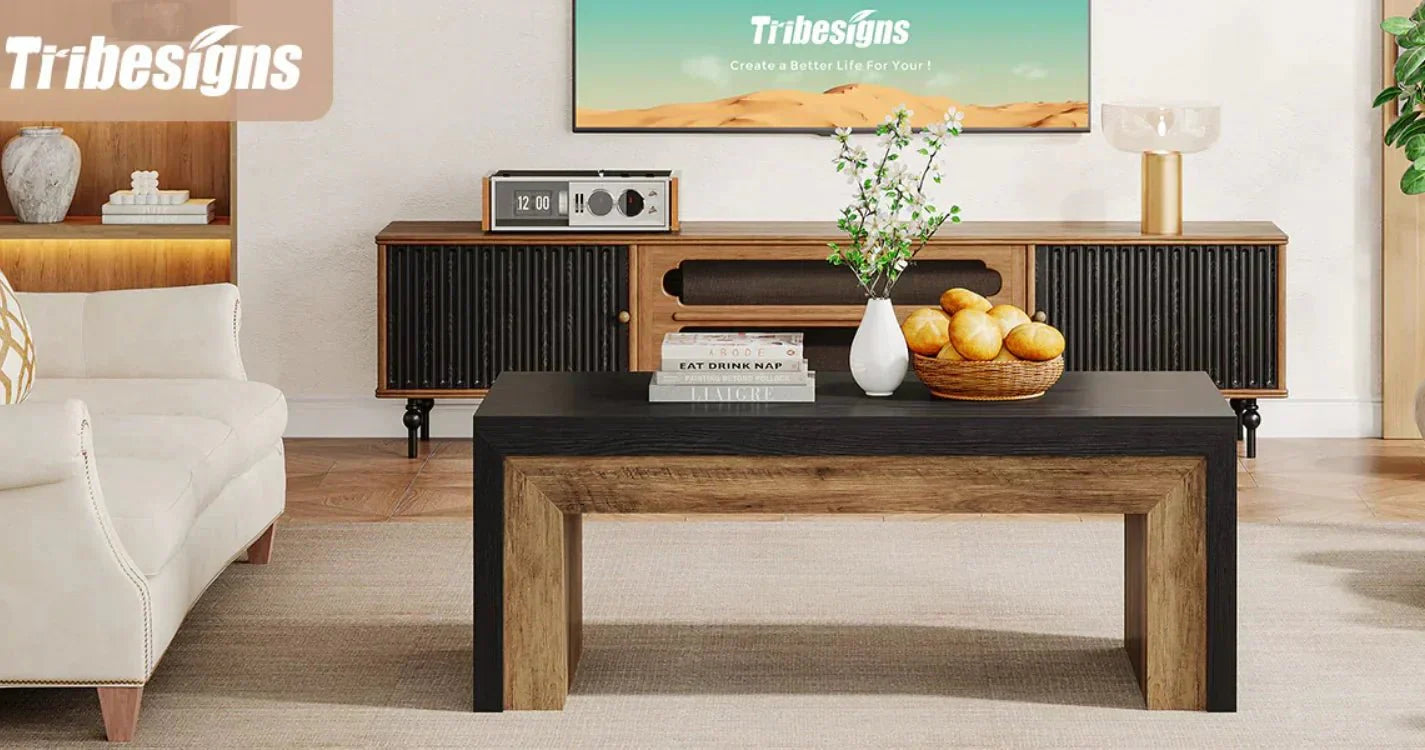
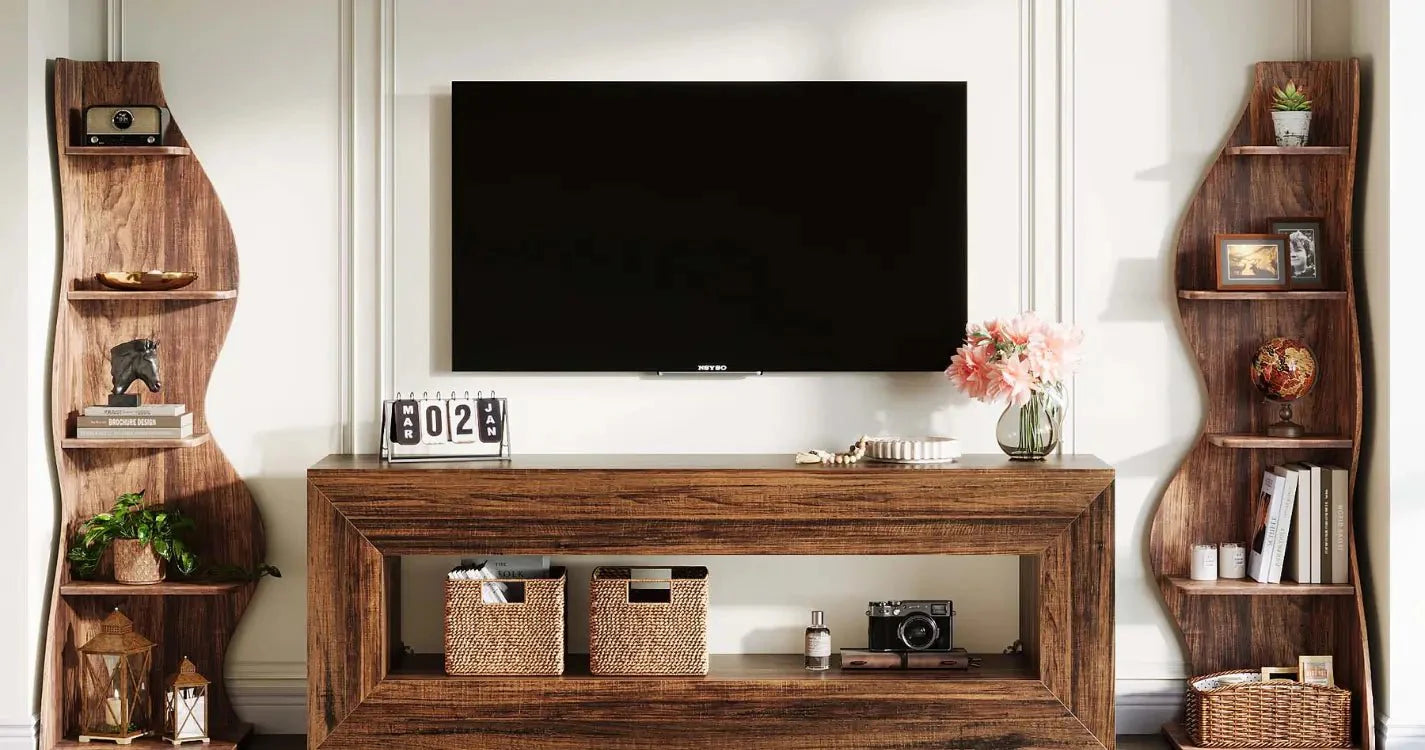
No, they don’t need to match—and in most cases, they shouldn’t.
Matching sets can feel safe, but they often make a living room look flat or overly staged. What works better is coordination:
- Same design direction, different pieces
- Shared elements (color, material, shape)
- Balanced proportions
Your TV stand and coffee table should feel like part of the same story—but not the same sentence.

Start With Size and Scale
If the proportions are off, nothing else will look right. Here are the core rules that work in most U.S. living rooms:
|
Element |
Rule of Thumb |
|
TV stand width |
Wider than your TV |
|
Coffee table length |
About 2/3 of your sofa |
|
Coffee table height |
Same or slightly lower than sofa seat |
|
Distance (sofa → table) |
~18 inches |
|
Distance (table → TV stand) |
24–30 inches |
Even perfectly matched styles won’t fix a layout that feels cramped or awkward. If you have a large TV (65"+), go slightly wider on the TV stand and avoid bulky coffee tables that crowd the space.
Read more: What Size TV Stand for a 75-Inch TV?
How to Match Interior Design Styles?
Identify your "anchor style" first, then riff on it. You don't need a strict theme, but you do need a vibe. If your TV stand is a sleek, mid-century piece with tapered legs, your coffee table should share that "lightness," even if it’s made of a different material.
Start with the overall style—but don’t go identical.
Instead of buying a full set, aim for style consistency:
- Modern + modern (clean lines, minimal hardware)
- Farmhouse + farmhouse (wood tones, rustic textures)
- Industrial + industrial (metal + wood mix)
But mix within that style:
- A sleek TV stand + a softer coffee table
- A minimal console + a slightly textured table
Coordinating Materials and Finishes
Choose one dominant material and one accent texture. If you have an engineered wood MDF media console in a rich walnut finish, you don’t need a walnut coffee table. Instead, try a black metal frame table with a glass top.
Mixing materials creates "texture friction"—the good kind. It prevents the room from looking like a single block of wood. If you’re worried about clashing, look at the hardware. Matching the brass legs of a coffee table to the brass pulls on your TV stand is a subtle way to create professional-level cohesion without being obvious.
- Repeat one material (wood, metal, glass)
- Mix two materials consistently across pieces
- Use similar finishes (matte vs glossy)
|
TV Stand |
Coffee Table |
|
Walnut wood |
Walnut + black metal |
|
White lacquer |
Glass + chrome |
|
Black metal + wood |
Solid wood |
What to avoid: Too many unrelated finishes (e.g., oak + marble + gold + glass all at once).
How to Match Colors?
Follow the 60-30-10 rule for wood and metal tones. Use one wood tone for about 60% of the room (usually the floor or the largest furniture piece), a second tone for 30%, and a bold accent for the final 10%.
If your TV stand is a dark espresso, avoid a slightly lighter "almost-match" brown coffee table—it will look like an accident. Instead, go for a clear contrast. A black or charcoal coffee table creates a sophisticated, intentional look against dark wood, while a creamy white table pops beautifully against mid-tone oaks.
In 2026, "Visual Lightness" is the leading trend. Pairing a slat-door light oak TV stand with a travertine or cream-toned stone coffee table creates a sophisticated "texture friction." The linear rhythm of the wood slats acts as a steady visual anchor, while the porous, matte surface of the stone provides a soft counterpoint. This works beautifully in sun-drenched rooms where natural light catches the shifting light and shadow throughout the day.

Balance Visual Weight and Shape
Opposites attract when it comes to silhouettes. If your TV stand is a solid, "heavy" block that goes all the way to the floor, choose a coffee table with legs. This allows light to pass underneath and prevents the center of the room from feeling cramped.
Conversely, if you have a floating TV stand (very popular for 2026’s "Visual Lightness" trend), you can afford a "heavier" coffee table, like a solid drum or a pedestal style.
-
Shape Play: A rectangular TV stand paired with an oval coffee table breaks up the "boxiness" of a room and improves flow, especially in high-traffic areas.
Small Living Room Arrangement Tips
Prioritize legroom and transparency. In a tight space, every inch of floor you can see makes the room feel larger.
- Acrylic or Glass: A "ghost" coffee table disappears visually, letting the TV stand be the focal point.
- Skinny Silhouettes: Look for "skinny" console-style TV stands that don't protrude more than 12–15 inches from the wall.
- Nesting Tables: These offer flexibility without the permanent footprint of a large central piece.
Family-Friendly Choices: Safety & Durability
Safety doesn't have to sacrifice style. If you have kids or pets, the "look" matters less than the "live-ability."
Rounded Edges: Swap the sharp-cornered rectangular table for a round or elliptical shape. It’s better for shins and toddlers.
Hidden Storage: Choose a media console with closed doors to hide gaming consoles and tangled wires.
Easy-Clean Surfaces: High-quality engineered wood or metal surfaces are much more forgiving of juice box rings than porous, unfinished natural stone.
Tribesigns offers options that bring balance and sophistication into any modern living room.
Explore more in our TV stand collection and coffee table collection to find the pair that’s right for your home.

FAQ
Can I Put a 65-inch TV on A 60-inch Stand?
Technically yes, but visually no. The TV will look top-heavy. Ideally, your stand should be at least 4–6 inches wider than the TV screen to provide a "visual anchor."
What Color Coffee Table Works Best with a White TV Stand?
Contrast is your best friend here to avoid a "clinical" look. A natural wood coffee table (like light oak or honey-toned ash) instantly warms up the crispness of a white stand. If you prefer a modern edge, a black metal or glass table creates a sharp, graphic look. Avoid an "almost-white" cream table, as it can make the TV stand look stark or the table look aged.
What Color Coffee Table Works Best with a Black TV Stand?
Balance the "heaviness" of a black stand with mid-tone woods or metallic finishes. A walnut or medium-oak coffee table provides a sophisticated, masculine vibe without making the room feel too dark. Alternatively, a gold or brass-framed table with a marble top creates a high-end "New Deco" contrast. The goal is to provide a "light and shadow reflection" so the black furniture doesn't absorb all the light in the room.
Are Lift-top Coffee Tables Still in Style?
Absolutely. They are the ultimate "work from home" hack. To keep it looking modern, look for lift-tops with hidden mechanisms that look like a standard sleek table when closed.
Is it Okay to Mix Wood Tones?
Yes! The trick is to keep the "undertone" the same. Don't mix a cool, greyish oak with a warm, reddish cherry. Keep them all warm or all cool.
Is a Matching Set a "Design Crime"?
Not at all, but it is a missed opportunity. If you have a matching set, break it up with a colorful rug or unique decorative trays to give the pieces their own identity.
Read more: Do End Tables Have to Match?