

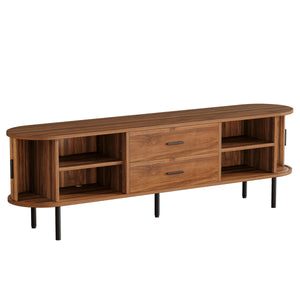










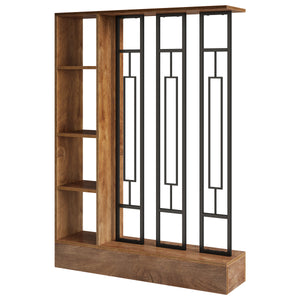


What Is a Floating TV Stand?
A floating TV stand is a wall-mounted media console that sits off the floor.
It is designed to keep the floor visible, which helps the room look cleaner and more open. In many homes, it is paired with a wall-mounted TV to create a more streamlined entertainment wall.
That look has become more popular for a reason. It works well with today’s larger screens and more design-conscious living rooms, especially when homeowners want the media area to feel less bulky and more intentional.

Floating TV Stand Pros and Cons
Pros
- Looks lighter and more modern
- Helps smaller rooms feel more open
- Easier to clean under
- Creates a built-in, polished effect
- Works especially well with wall-mounted TVs
Cons
- Requires stronger installation planning
- Less flexible if you move or rearrange often
- Usually offers less storage
- Cord planning matters more
- Can cost more once installation is included
What Is a Floor TV Stand?
A floor TV stand is a freestanding media cabinet that sits directly on the floor.
This is still the easier and more forgiving option for a lot of homes. It works well if you want storage, do not want to mount furniture to the wall, or expect to move within the next few years.
A floor stand also makes day-to-day life easier in ways people sometimes overlook. Devices are easier to access. Cord changes are usually simpler. And if your setup evolves over time, a freestanding piece gives you more room to adjust without reworking the wall.
That flexibility matters in the U.S. market, especially with so many renter households and households that change layouts over time.

Floor TV Stand Pros and Cons
Pros
- Easier to set up
- Better for renters
- Usually offers more storage
- Easier to move and reposition
- Better for larger device-heavy setups
Cons
- Can look bulkier
- Takes up more visual space
- Harder to clean under and around
- Still needs anti-tip safety in family homes
Floating vs. Floor TV Stand: The Differences That Matter Most
Space and Visual Weight
A floating TV stand usually makes a room feel lighter.
Because it leaves the floor visible, it can help a smaller living room feel less crowded. It is one of those design decisions that does not necessarily give you more square footage, but it often makes the room read as more open.
A floor TV stand takes up more visual space, especially if it is wide, deep, or storage-heavy. In return, it gives the room more substance and often feels more grounded.
Storage Capacity
This is where floor stands usually win.
If you need room for a cable box, gaming consoles, remotes, routers, board games, or extra living room storage, a floor stand is often the more practical option.
Floating stands can still offer useful storage, but they tend to be slimmer and more limited by wall-mounted design.
Installation and Wall Requirements
A floating stand is more demanding. You need the right wall conditions, the right hardware, and the right mounting method.
A floor stand is much simpler. You assemble it, place it, and adjust as needed. That does not mean it is always the safer choice by default. It just means the installation process is less complicated.
Mobility and Future Layout Changes
If you move often or like changing your furniture around, a floor stand is easier to live with.
You can shift it to another wall, move it to another room, or take it with you to a new place with far less hassle. A floating stand is better when you already know where the media wall belongs and want it to stay there.

Cable Management
Floating stands can look cleaner, but only if you plan the cords well.
That usually means thinking through outlet placement, wall access, and how the wires will run from the TV to the devices.
Floor stands usually make device access easier. If you swap out consoles, speakers, or streaming devices often, that convenience adds up.
Cleaning and Daily Maintenance
A floating stand is easier to clean under. That may sound minor, but it matters in real homes. Robot vacuums, pet hair, and dust all become easier to deal with when the floor stays open.
A floor stand gives you enclosed storage, but it also creates another large surface and footprint to clean around.
Safety for Kids and Pets
This part is worth taking seriously. The U.S. Consumer Product Safety Commission recommends anchoring TVs and furniture to the wall to help prevent tip-overs. If anchoring is not possible, the CPSC advises placing the TV on a sturdy, low base, pushing it back as far as possible, and keeping cables out of reach.
That means a floating setup can be very secure when installed properly, but a floor stand can also be a safe option when it is stable, low, and anchored as recommended.
So the better question is not “Which one is safer?” It is “Which one can be installed and used safely in this home?”
Budget and Long-term Cost
Floor stands are usually easier on the budget upfront.
Floating setups can cost more once you factor in mounting, wall work, and the extra time needed to get the look right. That does not make them overpriced. It just means the cleaner result often comes with a little more planning.
Which One Is Better for Different Homes and Setups?
|
Setup |
Better Choice |
Reason |
|
Small living room |
Floating TV stand |
Keeps the room looking lighter and more open |
|
Rental home |
Floor TV stand |
Easier to set up, move, and rearrange |
|
Long-term setup |
Floating TV stand |
Creates a cleaner, more built-in feel |
|
Family room with kids or pets |
Depends on installation |
The safer choice is the one that can be secured properly |
|
Gaming setup |
Floor TV stand |
Usually offers more storage and easier device access |
|
Open-concept living room |
Floating TV stand |
Helps the media wall look cleaner and less bulky |
|
Bedroom or secondary TV |
Floor TV stand |
More practical for simple, low-commitment setups |
What to Check Before You Buy?
Before choosing between a floating and floor TV stand, it helps to step back and look at how the setup will actually work in your home.
Wall
Start with the wall. A floating TV stand only makes sense if the wall can support it properly and the placement feels realistic for your room. If the wall setup is not ideal, a floor TV stand is usually the easier and more practical choice.
TV Size and Console Width
Tribesigns’s TV stand size guide shows wider media cabinets paired with larger televisions, such as 48-, 60-, 72-, and 84-inch cabinet widths used across common TV sizes. The point is not that there is only one correct match. The point is that the stand should feel visually wide enough to support the TV, not undersized beneath it.
Storage
Storage is another big factor. Some homes only need space for a streaming device and a soundbar, while others need room for game consoles, remotes, routers, chargers, and everyday living room clutter. The more equipment you need to manage, the more likely a floor TV stand will be the better fit.
Cables and Ventilation
It also helps to think through cables and ventilation before you buy. A clean-looking setup depends on where cords will go, how easy devices are to access, and whether enclosed storage still gives electronics enough breathing room.
Viewing Height
A clean setup still has to be comfortable. That a common recommendation is to place the center of the TV at seated eye level, often around 42 inches from the floor as a starting point, depending on the room and seating. That is especially helpful when planning a floating setup, because once you mount the TV and console, the proportions become more fixed.

FAQ
Which One is Better for a Minimalist Home Design?
A floating TV stand is usually the better fit for a minimalist home. It keeps the floor visible, reduces visual bulk, and gives the whole setup a cleaner, more streamlined look. If you want the media wall to feel lighter and less cluttered, this is usually the direction that makes the most sense.
Are Black Floating TV Stands and White Floating TV Stands Hard to Keep Clean?
Neither one is difficult to keep clean, but black usually shows dust and fingerprints faster, while white tends to hide dust a little better but can show scuffs more easily. If you want a lower-maintenance look, a matte finish is usually the safest choice.
Are Floating TV Stands in Style?
Yes, floating TV stands are still very much in style. They work especially well in modern, minimalist, and small-space interiors because they free up visible floor space and create a cleaner, more built-in look. They also pair naturally with wall-mounted TVs, which is one reason they continue to feel current rather than dated.
What Height Should a Floating TV Stand Be Mounted At?
Once the TV height is set, the stand usually ends up fairly low on the wall. In many living rooms, the top of a floating TV stand lands around 20 to 24 inches from the floor, but the final height should still work with your TV size, seating height, and the gap you want between the screen and the console. The goal is to keep the setup looking balanced while still feeling comfortable to watch every day.
Read more: