
What Is The Best Feng Shui Position For A Desk?
The U.S. home office furniture market is estimated at $6.94 billion in 2026 and projected to reach $9.67 billion by 2031, while the telework rate for private wage and salary workers was 20.8% in April 2025. People are still building real workspaces at home, so desk placement is not a niche question anymore.
The best feng shui desk placement is usually one where you can see the door, avoid sitting directly in line with it, and have a solid wall behind you. That combination creates a stronger sense of support and control in the room. Feng shui sources also tend to caution against sitting with your back to a window, since it can feel less grounded and less secure.
Even outside of feng shui, this makes practical sense. A workstation usually feels better when you are not constantly reacting to movement behind you, bright light at your back, or a doorway you cannot see. The room feels more settled, and so do you.

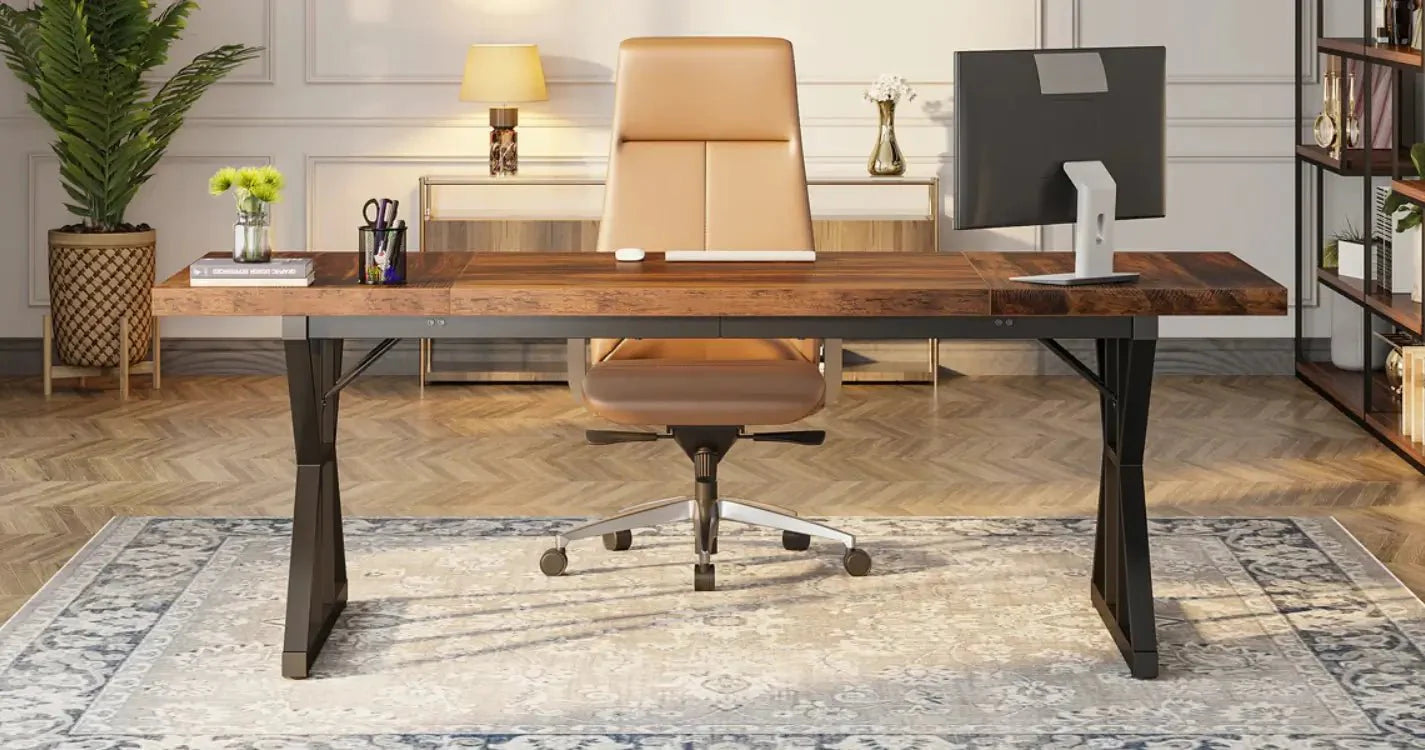
Tribesigns 55" Desk with Double Pedestal - Best Value
Is It Good Feng Shui To Put A Desk Next To A Window?
Yes, in many cases it is. A desk next to a window can be a very good setup because it brings in daylight and a sense of openness without putting the window directly in your line of sight. Feng shui guidance generally treats side-window placement more favorably than sitting with the window directly in front of you or directly behind you.
That balance matters because daylight is a real benefit. Research on office environments has found that access to daylight and views can improve satisfaction and cognitive performance while reducing eyestrain, especially when shading is handled well. So the goal is not to avoid the window. The goal is to use it in a way that supports both comfort and concentration.
Desk Facing A Window Vs. Desk Next To A Window Vs. Desk Perpendicular To A Window
This is where the decision becomes clearer.
|
Layout |
Feng Shui Feel |
Workday Reality |
Overall Take |
|
Desk facing the window |
Open, but less grounded |
Can be distracting and more likely to create glare |
Works in some rooms, but not usually the easiest choice |
|
Desk next to the window |
More balanced |
Good access to daylight with less direct distraction |
Often a strong option |
|
Desk perpendicular to the window |
Balanced and supported |
Usually best for glare control and screen comfort |
Often the best overall layout |
Desk Facing The Window
Facing the window can feel uplifting at first. You get a view, more daylight, and the room may feel less boxed in. But it can also make it harder to stay focused, especially if the view outside is active or the light changes throughout the day. Feng shui guidance also tends to see this as less stable than command position. OSHA workstation guidance adds another concern: bright windows directly in front of the screen can create glare and visual discomfort.

Desk Next To The Window
This is often the sweet spot. You still get daylight, but it is not pulling your attention straight ahead all day. The window becomes part of the room rather than the center of your workstation. In feng shui terms, this tends to feel more balanced than sitting directly in front of the glass. In practical terms, it is also easier to manage light with blinds, drapes, or a small adjustment in monitor angle.
Desk Perpendicular To The Window
For many home offices, this is the layout worth trying first. When the computer desk sits perpendicular to the window, the screen is more likely to land at right angles to the light source, which is exactly what OSHA recommends for glare control. This setup also keeps the window to the side, which usually feels calmer than sitting with it directly behind you or directly in front of you.
If you want the short version, this is it: perpendicular to the window often gives you the best mix of feng shui balance, natural light, and everyday usability.

Where The Door Should Be In Relation To Your Desk?
The door still matters, even in a window-focused room. The strongest layout is usually one where you can see the door without sitting directly in line with it. If the desk points straight at the door, the setup can feel too exposed. If your back faces the door, it can feel distracting and less supported. Feng shui guidance consistently favors a position where the doorway is visible, but not confronting you head-on.
If your room is fixed and you cannot move the desk into command position, a mirror is one common workaround in feng shui. The point is not decoration for its own sake. It is restoring awareness of the entry to the room.
How To Make A Window Desk Setup Work In Real Life?
A good window desk layout still needs a few practical adjustments.
Start with the monitor. OSHA recommends placing the face of the display screen at right angles to windows and light sources. That alone solves a lot of common comfort issues. Then add blinds or drapes so you can control light through the day. OSHA notes that blinds and drapes help reduce glare, and it even points out that different blind types work better depending on window orientation.
It also helps to leave a little breathing room between the desk and the glass instead of pushing everything tightly against the window. That gives you more flexibility with cables, monitor arms, and lighting, and it often makes the workstation feel less cramped. If the room still feels overly exposed, a plant, low shelf, or storage piece can soften the edge without blocking all the light. The same general idea shows up in feng shui guidance too: keep the energy open, but not overexposed.
Which Computer Desk Type Works Best Near A Window?
Some desk styles are easier to place near a window than others.
Straight Desk
A straight desk is usually the easiest option for a side-window or perpendicular-to-window layout. It keeps the setup clean, leaves more flexibility around the room, and works especially well in smaller home offices.
Tribesigns offers a wide range of straight desks, from compact writing desks to larger computer desks, which makes this format especially easy to adapt to window-side layouts.
L-Shaped Desk
An L-shaped desk can work beautifully near a window, especially in a corner office or a room with more than one wall of natural light. The main thing is to make sure your primary seated position still feels supported. You do not want the best part of the desk layout to leave you with your back to the door or the window.
Tribesigns’ L-shaped desk collection includes reversible and corner-friendly designs that make this kind of setup easier to tailor to the room.
Adjustable Standing Desk
A standing desk near a window can be a great setup, but it needs careful light control because your eye level changes as you move. That means glare can show up differently than it does in a seated setup.
Tribesigns’ adjustable desk lineup is smaller, but it still offers options that fit compact home office layouts well.

Final Verdict
The best feng shui desk placement is usually not about putting the desk as close to the window as possible. It is about getting the relationship right.
For most home offices, the strongest setup is a desk that lets you see the door, gives you a sense of support behind you, and keeps the window to the side. When the room allows it, a desk perpendicular to the window is often the most balanced choice because it works well for feng shui, light control, and long hours at the screen.
That is the layout we would start with first. It tends to look good, feel good, and keep working long after the room is finished.
More Feng Shui tips for home decor: