
Round vs Rectangular Coffee Table: Key Differences
A round coffee table usually creates a softer, more relaxed feel. It can make a compact room feel easier to navigate because there are no protruding corners to dodge. That makes it a strong pick for apartments, square-shaped living rooms, and homes with active kids or pets.

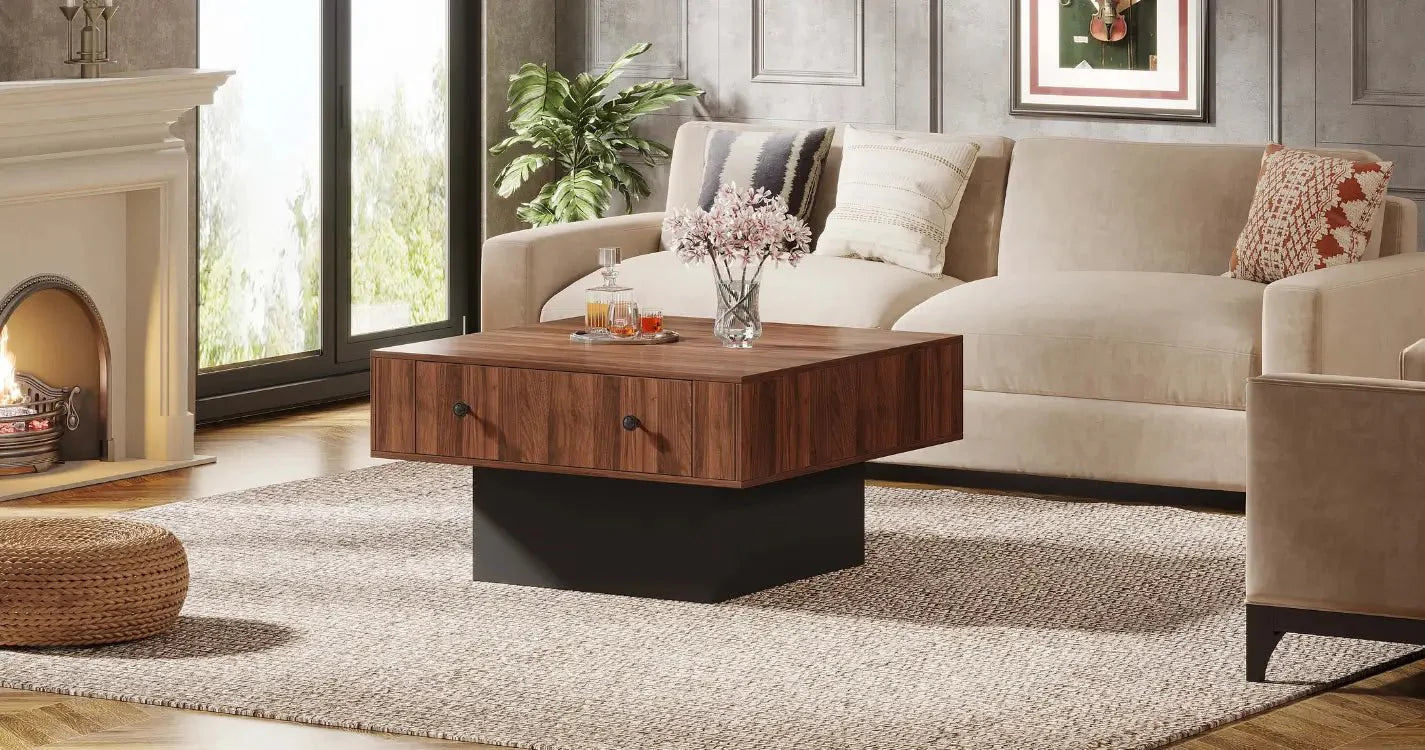
A rectangular coffee table feels more structured and more traditional in many living rooms. It usually gives you a bigger functional surface and a more proportional look in front of a standard three-seat sofa or longer sectional.
|
Feature |
Round Coffee Table |
Rectangular Coffee Table |
|
Best for |
Small living rooms, square layouts, family spaces |
Long sofas, larger rooms, traditional seating areas |
|
Traffic flow |
Easier to move around |
More structured, needs more clearance |
|
Safety |
No sharp corners |
Less forgiving in tight spaces |
|
Surface area |
More limited |
More usable tabletop space |
|
Works well with |
Compact sectionals, conversation layouts, small apartments |
Standard sofas, long couches, larger sectionals |
|
Visual effect |
Soft, relaxed, organic |
Grounded, clean, architectural |
|
Storage options |
Usually fewer |
More common in lift-top and storage designs |
Why Does a Round Coffee Table Work So Well in Some Spaces?
Round coffee tables have an easy rhythm to them.
Nothing juts into the walkway. No hard corners interrupt the room. Movement feels a little softer, a little more natural.
That is often exactly what a smaller living room needs.
A Strong Choice For Compact Rooms
In a tight space, sharp corners can feel surprisingly intrusive.
A round table softens that pressure. Even when the footprint is similar, the room often feels more open because the eye reads the shape differently and the body moves around it more comfortably.
For apartments, condos, or living rooms with limited clearance, that difference matters.
Better For Homes With Kids Or Pets
There is a practical side to the appeal, too.
Round edges are easier to live with when children are weaving through the room or pets treat the coffee table like part of the race track. The softer profile does not just look gentler—it tends to be gentler in everyday life.
A More Natural Fit For Casual Seating Layouts
Sectionals, chaise sofas, and conversation-style arrangements often benefit from a shape that feels accessible from multiple angles.
A round table can make the center of the room feel shared rather than rigid. Reaching a drink or a book from different seats is simply easier when no one is fighting the corners.
A Softer Visual Language
Rooms filled with straight lines can start to feel a bit strict.
A round coffee table breaks that up beautifully. When the sofa, rug, media console, and shelving are all rectangular, one curved piece in the center can make the whole room feel more layered and inviting.
Not trendy for the sake of trend—just more relaxed.
When A Rectangular Coffee Table Makes More Sense?
Some rooms want structure.
A rectangular coffee table brings that in naturally. It follows the line of the sofa, anchors the seating area, and gives the center of the room a stronger sense of purpose.
That is especially useful when the table needs to do more than just look good.

Ideal For Long Sofas
A long couch paired with a tiny table almost always feels off.
The proportions are the issue. A rectangular coffee table usually echoes the length of the sofa better, which makes the seating area feel coherent and properly scaled.
This is one of the clearest reasons to choose a rectangular shape.
Better When You Need Real Surface Space
Not every coffee table is just a decorative landing spot for candles and art books.
Sometimes it needs to hold drinks for guests, a stack of mail, the remote, a tray, your laptop, and the half-finished cup of coffee from this morning. Rectangular tables are generally better at that kind of daily utility.
More edge, more usable top, more room to spread out.
A Natural Match For Larger Living Rooms
In open or elongated spaces, a round coffee table can occasionally feel a bit undersized—even when the diameter is technically correct.
Rectangular tables often fill the center more effectively. They help define the seating zone, particularly when paired with a standard rug and a front-facing sofa setup.
The Practical Favorite For Storage
If hidden storage is on the wish list, rectangular designs have a clear advantage.
Drawers, lower shelves, lift-top mechanisms, and mixed-use surfaces are simply more common in this shape. For living rooms that need to work hard, that matters just as much as the silhouette.
Size Matters More Than Shape
Even the right shape can feel wrong when the coffee table size is off.
A coffee table that is too large clogs the room. Too small, and it drifts visually—more afterthought than anchor.
Here are the guidelines worth following:
- Leave 12 to 18 inches between the sofa and the coffee table
- Keep about 30 inches of clearance from the table to surrounding furniture when possible
- Aim for a table that is roughly two-thirds the length of the sofa
- The ideal height is usually the same height as the sofa seat or 1–2 inches lower
Those rules apply whether the table is round, rectangular, oval, or somewhere in between.
A simple example
If your sofa is 90 inches long, a coffee table around 60 inches is often a strong starting point.
For a smaller apartment sofa, a compact round table may feel better than trying to squeeze in a long rectangle that interrupts movement.
Scale has a quiet power. Get that right, and the room starts to make sense.

Best Coffee Table Shape By Sofa Type
Standard Three-Seat Sofa
A rectangular coffee table is often the easiest fit here.
The proportions feel familiar, balanced, and functional. For a smaller room, a rounded rectangular or oval version can soften the look without losing usable surface area.
L-Shaped Sectional
This one depends on the footprint.
In a tighter layout, round tables usually improve flow and make the center easier to access. In a larger seating area, a rectangular table can look beautifully grounded.
Sofa With Chaise
Chaise layouts often pair well with round or oval coffee tables.
The softer shape keeps the center of the room from feeling awkward or blocked, especially when different seats need equal reach.
Apartment Living Room
A round coffee table often feels easier to live with in an apartment.
That said, a compact rectangular table with storage may be the better answer when every piece of furniture needs to work harder.
Read more: What Color Coffee Table Goes Best with a Gray Couch?
When Neither Shape Feels Quite Right
Sometimes the smartest choice lives between the two.
Oval Coffee Tables
Oval coffee tables offer one of the best compromises.
They bring the softer movement of a round table but keep more of the usable surface area you get with a rectangular one. In many living rooms—especially with sectionals—they are the quiet hero.
Rounded-Corner Rectangular Tables
For those who want a more linear silhouette without harsh edges, this shape strikes a lovely balance. It feels clean and structured, but less severe.
Nesting Coffee Tables
A small living room with changing needs can benefit from nesting tables more than from one oversized centerpiece.
Pulled apart when guests arrive. Tucked together when floor space matters.
Flexible pieces often solve what shape alone cannot.

Common Mistakes to Avoid
One common mistake is choosing based on looks alone. A beautiful table can still be wrong for the room if it interrupts movement or feels out of scale.
Another is ignoring the sofa length. A tiny round coffee table in front of a long sofa can feel underpowered, while an oversized rectangular table can make a small room frustrating to walk through.
A third mistake is forgetting how you actually use the space. If your coffee table mostly holds decor, your needs are different from someone who eats, works, or hosts around it. The right shape is not just about style. It is about daily life.
Final Verdict
Coffee tables help the room breathe. It supports daily rituals. It affects how relaxed, easy, and finished the space feels. When the choice feels close, measure first. The right dimensions usually reveal the right shape.
FAQs
Is A Round Or Rectangular Coffee Table Better For A Small Living Room?
In many small living rooms, a round coffee table is the better choice because it is easier to move around and does not have sharp corners. Several retailer guides specifically recommend round tables for smaller spaces.
What Shape Coffee Table Works Best With A Sectional?
It depends on the sectional. A round or oval table often works well with compact sectionals or chaise layouts, while a rectangular table can suit a long sectional with more room to spare.
How Much Space Should Be Between A Sofa And A Coffee Table?
A common guideline is 12 to 18 inches between the sofa and the coffee table.
Should A Coffee Table Be Lower Than The Sofa?
Usually, yes. A coffee table should be about the same height as the sofa seat or around 1 to 2 inches lower. Standard heights are often in the 16 to 18 inch range.
Can A Round Coffee Table Work With A Long Couch?
Yes, but it depends on scale. A round coffee table can work with a long couch if the room is tight or you want softer flow, but in many cases a rectangular or oval table will feel more proportional.