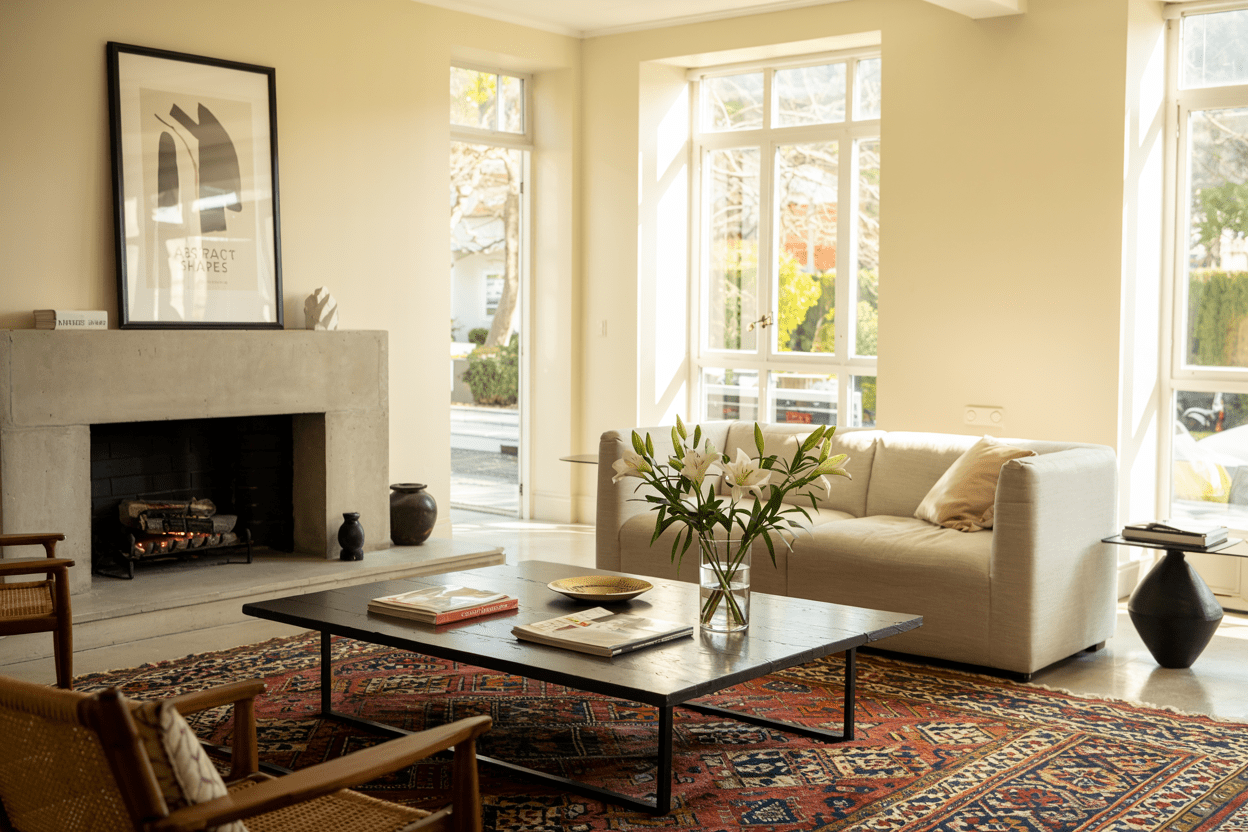

Creating a living room that’s both functional and visually pleasing is harder than it seems. I used to struggle with finding the perfect layout—either the space felt cramped, or there wasn’t enough seating for guests. Over time (and after many trial-and-error rearrangements), I learned that thoughtful planning makes all the difference. In this guide, I’ll walk you through practical steps based on real-life experiences to help you arrange your living room furniture like a pro.
Table of Contents
- 1. Understand the Purpose of the Room
- 2. Measure the Room and Create a Floor Plan
- 3. Choose a Focal Point
- 4. Anchor the Room with Key Furniture
- 5. Maintain Good Traffic Flow
- 6. Add Secondary Furniture Thoughtfully
- 7. Use Rugs to Define the Space
- 8. Consider Lighting Layout
- 9. Final Touches: Accessories and Styling
- 10. Common Mistakes to Avoid
- 11. Conclusion
Understand the Purpose of the Room
Before you even think about moving furniture, ask yourself: How will I use this space?
In my case, I wanted a cozy environment for movie nights, plus enough space for friends to hang out. That meant prioritizing seating and media setup. Your goal might be different—maybe a reading nook, play area for kids, or a work-from-home corner.

Measure the Room and Create a Floor Plan
This is the step most people skip—but trust me, it saves a lot of headache. Measure your living room’s dimensions and sketch it out on graph paper or use a free digital tool like Planner 5D or Roomstyler.
Mark doors, windows, radiators, and any built-ins. This gives you a clear view of what fits—and what doesn’t.
Real experience: I once bought a sectional that technically fit, but blocked half the window. A quick sketch beforehand would’ve saved me from a return.

5 Can't-Miss Living Room Layouts That Always Work
Stop stressing over your furniture arrangement! Let's steal some tricks from the pros. These five classic layouts are your shortcut to a living room that feels both stylish and totally livable.
1. Symmetry is Your Secret Weapon.
Want a room that just feels right? Go symmetrical. This trick creates instant balance, no matter your room's size or shape. Face two sofas toward each other with a table in the middle. Or, flank your main sofa with a pair of matching armchairs. Your eyes will love the orderly, calm vibe it creates.
2. Go "Floating" to Free Up Your Walls.
Not enough wall space? No problem. If your room has lots of windows, pull your furniture away from the walls. "Float" your sofa and chairs a few feet out to create a cozy conversation island in the middle of the room. This layout makes the space feel more intimate and open at the same time. You can then mount your TV on whatever wall makes sense.
3. Tame the "Awkward L-Shape."
That tricky L-shaped combo of a living and dining area can be a headache. Where do you put everything? Here's the simple fix: use your two main walls. Run your sofa along the longest wall you have. Then, position your TV on the wall directly across from it. This setup clearly defines your living zone and makes the awkward shape work for you.
4. Zone In On Odd Corners & Nooks.
Got a narrow room, weird angles, or a fireplace that's off-center? The key is to create your own zones. Define a specific area by laying down a large area rug and arranging your furniture on top of it. Anchor the whole spot with a killer statement piece—think a dramatic floor lamp or a bold bookshelf—that draws the eye and makes the weirdness feel intentional.
5. Master the Long & Narrow Room.
Working with a rectangle? You've got two long walls to play with. The go-to move is simple: tuck your sofa against one long wall and put your TV directly across from it on the opposite wall. This creates a clear path and makes the room feel wider, whether your TV is mounted up or sitting on a cool console.
Choose a Focal Point
Every living room needs a star—something your furniture arrangement revolves around. This could be a:
- TV
- Fireplace
- Large window with a view
- Gallery wall or piece of art
If you have multiple options, choose the one that best supports your room’s main purpose. In my living room, the fireplace won over the TV because it created a more relaxed vibe.

Anchor the Room with Key Furniture
Start with your biggest piece—usually a sofa or sectional. Position it facing your focal point, and make sure it balances the space. If you have additional large pieces like a media console, sideboard, or large armchair, add them next.
Avoid pushing everything against the walls (unless your room is tiny). “Floating” furniture can actually make a space feel more open and cozy.

Maintain Good Traffic Flow
A beautiful room means nothing if people can’t walk through it comfortably. Follow these simple rules:
- Leave at least 24–36 inches of space for walkways
- Avoid blocking entryways or paths between furniture
- Group seating in a way that feels natural and conversational
Pro tip: I once had two chairs angled perfectly… for watching TV. But no one could get to the sofa without a weird shuffle. Lesson learned!

Add Secondary Furniture Thoughtfully
Now it’s time for coffee tables, side tables, and maybe a console behind your sofa.
- Coffee tables should be about 18 inches from seating
- Side tables should be no taller than armrest height
- Leave enough room to walk between pieces
Choose pieces that add storage or versatility. For example, my ottoman doubles as a table and extra seating.

Use Rugs to Define the Space
A rug isn’t just for decoration—it grounds your furniture and makes the space feel cohesive. Choose a size that allows at least the front legs of all major furniture pieces to rest on it.
Mistake I made: My first rug was too small. It made the whole room feel disjointed. Upgrading to a larger rug was a game-changer.
For open-concept layouts, rugs help define the living zone from dining or kitchen areas.

Consider Lighting Layout
Layered lighting = a warm, inviting space.
Include at least three types of lighting:
- Ambient: Overhead ceiling lights
- Task: Table or floor lamps
- Accent: Sconces or spotlights for art or shelves
Position lighting where it's actually needed—beside a reading chair or near a console. I also recommend smart bulbs so you can change brightness and color temperature based on the mood.

Final Touches: Accessories and Styling
Now comes the fun part—styling!
- Add pillows and throws that mix textures and colors
- Style your coffee table with a tray, books, or a small plant
- Hang artwork at eye level (about 57–60 inches from the floor)
- Place plants in empty corners to bring life into the room
This is where your personality really comes through.

How to Arrange Your Living Room Furniture with a TV
Figuring out how to layout your living room when the TV is a main focus can be tricky. Let's break it down into a few simple, pro-approved steps to get you a setup that's both comfortable and stylish.
Step 1: Claim the Perfect Spot for Your TV
Your first move is to find your TV's forever home. Two big factors will make or break your viewing experience:
- Kill the Glare: Scan the room for spots hit with direct sunlight or a harsh reflection from a lamp. Your screen should be crystal clear, so choose a wall or corner that stays relatively dark.
- Avoid the Foot Traffic: Nothing ruins a big game or movie moment like a constant parade of people blocking the screen. Tuck your TV away from the main walkways through your living room.
Step 2: Lock In Your Seating's "Sweet Spot"
Once you know where the TV is going, it's time to face it. Arrange your main seating—your sofa and primary chairs—to point directly at the screen. You should be able to plop down on your couch and have a perfect, comfortable view without craning your neck. This creates a natural and intentional "media zone."
Step 3: Navigate the Fireplace Question (Carefully!)
So, you're thinking about mounting the TV above the fireplace? It's a popular move, especially in smaller spaces, because it saves precious floor space.
But here's the deal: it can be a real pain in the neck—literally! If your fireplace mantle is high, staring up at the screen for a two-hour movie can leave you sore. If you go for it, we highly recommend a tilting mount to angle the screen downward for a more comfortable viewing experience.
Step 4: Build Out Your Conversation Area
A great living room works for both movie nights and casual chats. Even with the TV as the focal point, you want a space that encourages conversation.
After you've positioned your main sofa at the TV, try placing a pair of armchairs or a loveseat perpendicular to it. This creates a cozy "U-shape" or "L-shape" that still has a clear view of the screen but also lets people talk face-to-face easily. Anchor the whole arrangement with a large area rug to tie the "media zone" together.
Common Mistakes to Avoid
- Pushing everything against the wall – makes the room feel cold and disconnected
- Wrong scale furniture – too big makes it crowded, too small feels awkward
- Over-decorating – less is often more. Let the space breathe.
Conclusion
Once you have a plan for your living room furniture layout and inspiration from various living room furniture layout ideas, it's time to bring your vision to life with pieces that are built to last. No matter your style, Tribesigns offers stylish, functional, and affordable solutions to anchor your space.
Discover Tribesigns—Your best place to buy furniture.
Related read: