Table of Contents
- Consider Your Seating Arrangement
- Room Size and Traffic Flow
- Matching Shape with Style
- Practical Tips Before Buying
- Final Thoughts
When I first started decorating my living room, I didn’t think twice about the shape of the coffee table. I figured I’d just find something that looked nice. But after swapping out two different tables within a year, I learned the hard way — shape really matters.
The coffee table is more than a surface to put your coffee mug on. It plays a key role in how your living room feels and functions. It can enhance your seating layout or disrupt the flow completely. Whether you're aiming for cozy, elegant, or modern, the shape helps you get there.

Consider Your Seating Arrangement
Your seating setup should guide your choice more than anything. Here’s what I’ve learned:
-
Rectangular or Oval Tables
Perfect if you have a long sofa or a sectional. I had an L-shaped couch, and a rectangular table helped anchor the space nicely. Oval is a great alternative if you want softer edges and better flow. -
Square or Round Tables
If your setup is more balanced — say, a sofa with two accent chairs facing each other — a square or round table keeps everything symmetrical. I tried a round table in a small apartment and loved how it encouraged conversation. -
Modular or Abstract Tables
These are great for unconventional spaces. My friend uses a set of nested tables in her tiny studio — she can move them around depending on whether she’s working, eating, or hosting.
Room Size and Traffic Flow
Even the best-looking table will feel wrong if it disrupts movement in the room. I learned to follow the “18-inch rule” — leave about 18 inches between your coffee table and the seating around it. That gives enough legroom but keeps everything accessible.
-
Small Rooms:
Round or oval shapes are your best friends. Fewer sharp edges = safer and more fluid movement. I once stubbed my toe way too many times on a square table in a cramped room. -
Large Rooms:
You’ve got more flexibility. Rectangular tables can help fill the space without feeling lost. If you’ve got the room, even a bold geometric design can add some flair.
Read more: Coffee table size guide.
Matching Shape with Style
The shape you choose also says something about your personal style. Here's a breakdown based on my experiences and style observations:
- Rectangular: Classic and reliable. You’ll see them in everything from traditional homes to industrial lofts. Great if you want something timeless.

- Round: Inviting and friendly. Round coffee tables naturally soften the space. I loved how a round table made my room feel more relaxed and social.

- Square: Clean and modern. They work best in more structured layouts. A square marble-top table I had once looked so chic, but it didn’t suit my uneven seating arrangement.

- Oval: Understated elegance. They combine the best of rectangular and round — structured but with gentle lines.

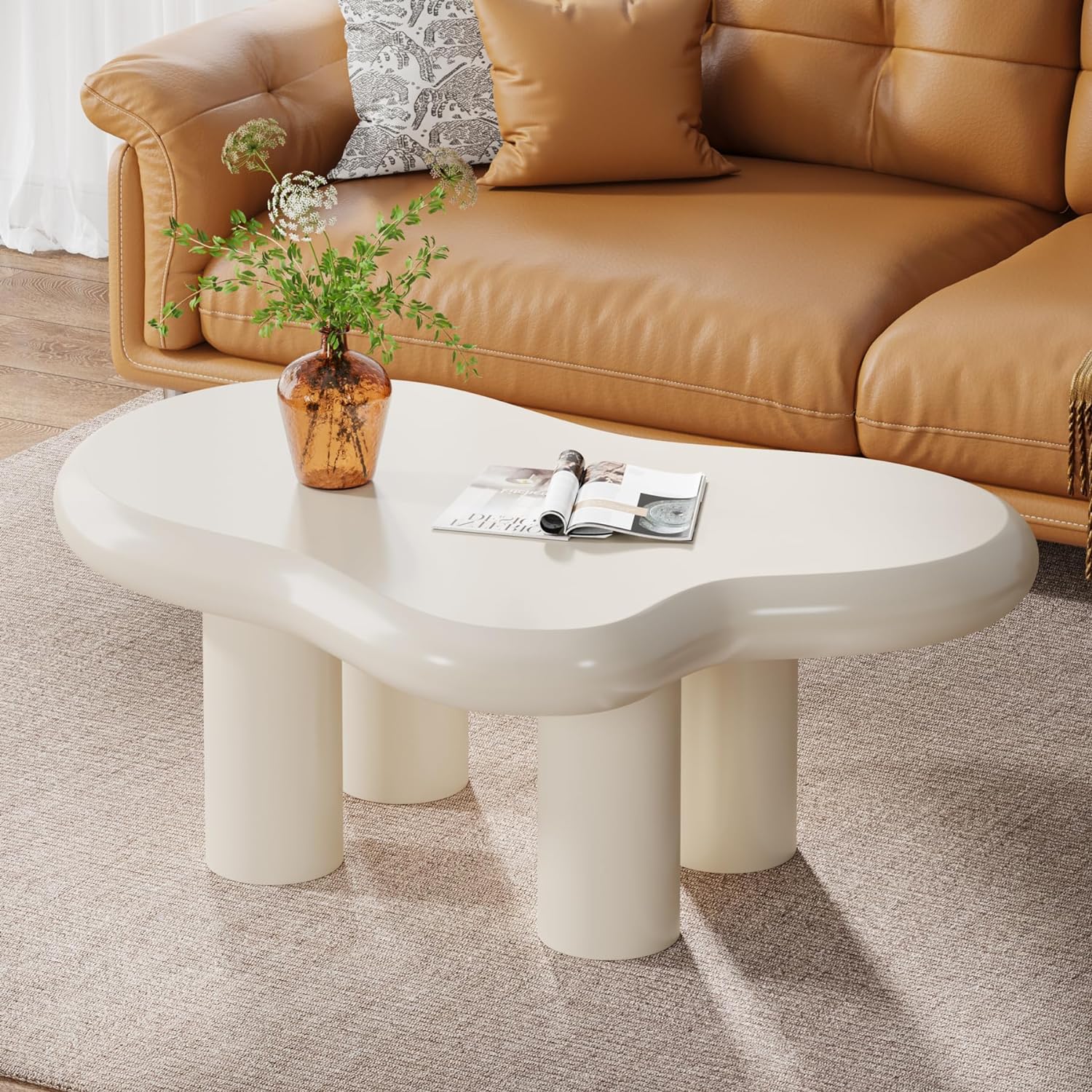
- Abstract/Geometric: Want a statement piece? Go for an irregular shape. Just make sure it doesn’t compromise function.
Practical Tips Before Buying
- Use Tape or Paper to Visualize: Cut out the table’s shape with paper or use painter’s tape on the floor. I did this with my second table and instantly knew the original one I wanted was too big.
- Think About Function: Do you use the table to eat? Do you need storage? I always keep coasters, magazines, and remotes on mine, so I needed something with a shelf or drawers.
- Material & Visual Weight: Glass and metal feel lighter than chunky wood. So even if the size is the same, the room feels more open with certain materials.
FAQ
1. What Shape Coffee Table Makes a Room Look Bigger?
For maximizing perceived space, prioritize round coffee tables and oval coffee tables. Their curved edges improve traffic flow and eliminate sharp corners, making movement around the table feel effortless. This design occupies less visual space, opening up the room's footprint.
For an even greater feeling of airiness, choose a glass-top table (in any shape). The transparent surface allows an uninterrupted view of your flooring and the room beyond, making the entire area feel more expansive. In very compact spaces, a nesting table set or a slim-profile folding table offers flexibility, allowing you to remove or stow surfaces when not in use to reclaim valuable floor space.
2. Is a Round or Rectangular Coffee Table Better?
The best choice depends entirely on your room's layout and your lifestyle needs.
Choose a Round Coffee Table if you:
- Have a smaller or square-shaped living area.
- Prioritize safety and easy movement (ideal for households with children, as there are no sharp corners).
- Want to facilitate conversation in a seating arrangement where people face each other directly.
- Aim for a softer, more organic aesthetic.
Choose a Rectangular Coffee Table if you:
- Have a larger room or a long sofa,
- Need ample surface area for drinks, books, and decor.
- Value built-in storage like drawers or shelves, a common feature in rectangular designs.
- Prefer a traditional, anchored look that parallels the lines of your sofa and walls.
For a dynamic and modern look, many interior designers now mix shapes, such as pairing a round coffee table with a rectangular sofa.
3. What is the Most Popular Coffee Table Shape?
The rectangular coffee table remains the most popular and widely sold shape in the American market. Its enduring appeal stems from its functional harmony with the standard, linear design of most sofas and sectionals. A rectangular table provides a generous, accessible surface that aligns seamlessly with the seating, creating a balanced and intentional layout. It also efficiently fills the space in front of a typical media console or fireplace.
However, round, oval, and organic free-form shapes are rapidly gaining popularity. This trend is driven by the desire for softer interiors, better space management in urban apartments, and a move away from rigid, formal living room setups.
4. What is the Best Shape Coffee Table for a Small Living Room?
For a small living room, a round or oval coffee table is almost always the optimal choice. Its curved perimeter creates a more efficient traffic path, preventing the "stubbed toe" effect and making the room feel navigable. Without corners jutting into the walkway, it conserves both physical and visual space, enhancing the sense of openness.
Final Thoughts
Choosing a coffee table shape isn't just about looks — it's about living well in your space. Whether you're dealing with a small apartment or a big open-concept living room, think about how your furniture interacts.
Take the time to test out ideas, visualize your setup, and trust your gut. And remember: sometimes the best choice is the one that feels right when you’re actually living with it.
Related read: