
Table of Contents
- Understand the Basics of Feng Shui
- Choose the Right Bed Placement (Command Position)
- Invest in a Solid Headboard and Quality Mattress
- Avoid Clutter Under the Bed
- Use Balanced Nightstands
- Incorporate Natural Materials and Earth Tones
- Avoid Electronics and Mirrors Facing the Bed
- Maximize Soft Lighting and Air Flow
- Mind the Feng Shui Bagua Map
- Personal Touches with Positive Energy
What Is Feng Shui?
Feng Shui, an ancient Chinese art of spatial arrangement, teaches us how to harmonize our environment to support health, energy, and success. I didn’t believe it until I moved into a new apartment and felt completely drained every morning—until I rearranged my bedroom using Feng Shui principles. Suddenly, I started sleeping better and waking up refreshed.
The bedroom, being our most intimate and restful space, is the most important room to optimize. It should support Qi, or energy flow, and create a calming Yin environment to promote deep rest.
Below we will discuss how to arrange our bedroom according to Feng Shui customs.
Choose the Right Bed Placement (Command Position)
Face the door without lining up with it. Place the bed so you can see the door from the pillow, but don’t sit in the “door’s path.” A diagonal setup creates control without direct exposure—classic “command position” in Feng Shui.
Keep a solid wall behind your head. Anchor the headboard to a sturdy wall. Skip shared walls with a bathroom if you can; solid backing calms the nervous system and aligns with the Feng Shui idea of having “mountain support.”
Avoid beams overhead. Don’t sleep under a ceiling beam; traditional Feng Shui views beams as creating oppressive, “cutting” energy. If moving the bed isn’t possible, soften the line with a canopy or a dropped/false ceiling.
The Spruce
Stay out from under windows, but control light smartly. A bed under a window can feel exposed. More importantly, exterior light at night correlates with worse sleep and metabolic changes. Use blackout shades or layered curtains and position the bed a bit away from the glass.
Respect noise paths. Street-facing doors and windows funnel sound. WHO guidance links nighttime noise to sleep disturbance; bedrooms benefit when you position the bed on an interior wall and close to the room’s quietest corner. Aim to cut peaks above ~45 dBA at night.
Balance both sides of the bed. Leave space for two nightstands. Pairs signal harmony in Feng Shui and make US bedrooms function better (even lighting, even storage).
Be selective with mirrors and screens. Don’t aim a mirror—or a glossy TV—directly at the bed. Tradition says reflections bounce energy; modern sleep hygiene says reflective screens invite late-night light exposure.

Invest in a Solid Headboard and Quality Mattress
A solid headboard, preferably made of wood or upholstered, provides psychological and energetic support. Also, invest in a new, high-quality mattress. Avoid used ones, as they can carry residual energy.

Avoid Clutter Under the Bed
Keep under-bed space clear. Feng Shui favors flow; sleep science also warns that clutter and dust under the bed can undermine rest and trigger allergies. Use sealed storage elsewhere and vacuum under the frame.

Use Balanced Nightstands
Symmetry symbolizes harmony. Having matching nightstands with soft lighting and minimal clutter on both sides of the bed supports balance, especially in relationships.

Incorporate Natural Materials and Earth Tones
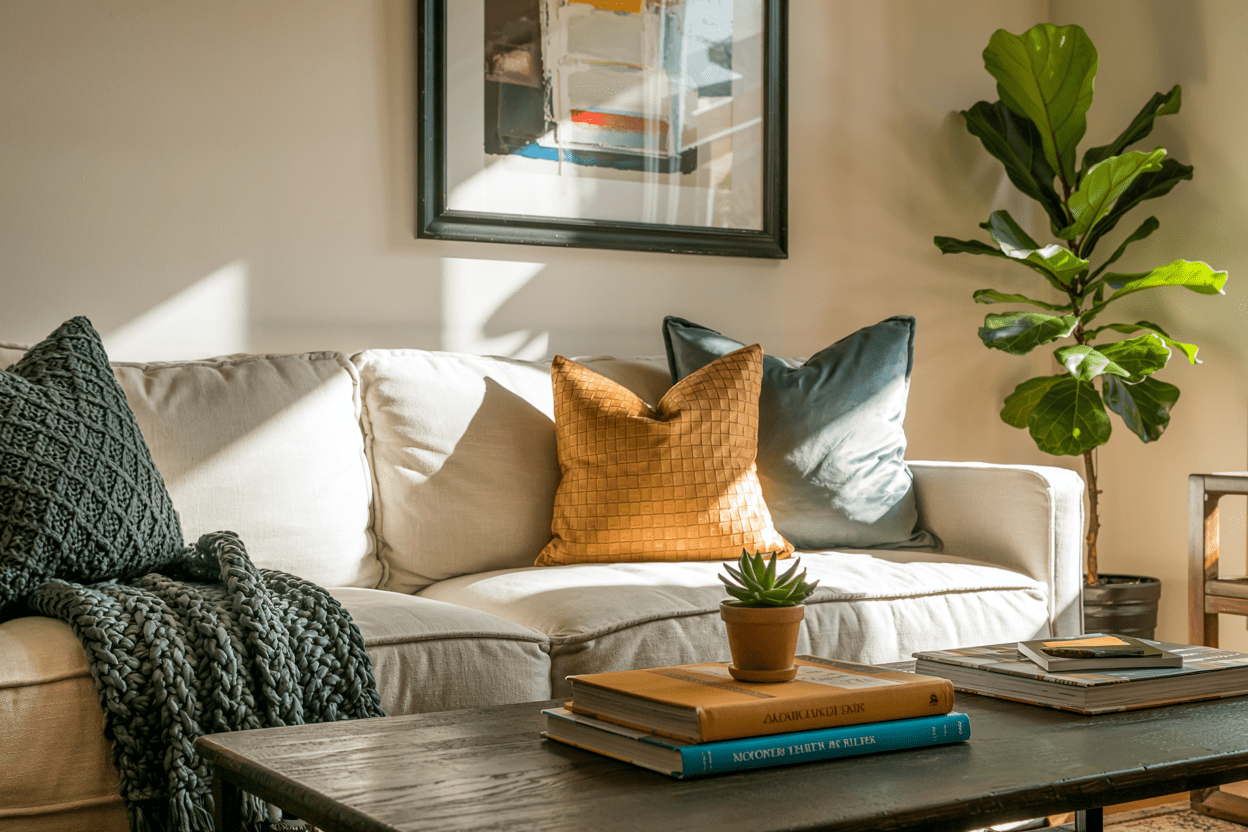
Use natural materials like wood, cotton, and stone. Choose earth tones like beige, soft green, or pale blue to promote a grounded and soothing atmosphere.

Avoid Electronics and Mirrors Facing the Bed
The real culprits are blue light, alerts, and battery heat. Dim or remove screens at night, enable Do Not Disturb, and charge phones on a hard surface away from the bed—never under a pillow. From a Feng Shui perspective, mirrors and glossy TVs “bounce” energy toward the sleeper, which can feel restless. Aim neither directly at the bed. Place the TV in a cabinet or use a fabric panel; relocate mirrors or cover them after dark. Choose matte finishes, keep pathways clear, and let the headboard face a solid wall. This layout calms the room, protects sleep hygiene, and honors Feng Shui principles.

Maximize Soft Lighting and Air Flow
Layer your lighting: use bedside lamps, dimmers, or wall sconces. Prioritize fresh air—open windows when possible or add air-purifying plants like the snake plant or peace lily.
Fresh air helps, but cross-breezes or traffic noise can wake you. If the only good wall is near a window, use heavy drapery, seal gaps, and crack the window only as needed for air quality.

Mind the Feng Shui Bagua Map
The Bagua Map is an energy map that divides your room into zones representing different life areas. For example, the far right corner from the entrance is your relationship area.
Prosperity
Reputation
Marriage
Ancestors
Center
Creativity
Self-Cultivation
Life Path
People &
Travels
Personal Touches with Positive Energy
Decorate with items that reflect peace, connection, and joy. Avoid lonely imagery or overly aggressive artwork. Choose soft landscapes or symbolic art that supports your intentions.

Conclusion
Feng Shui isn’t superstition—it’s a practice of intentional living. Even small changes can create big shifts. Start with one or two tips, and observe how your energy, sleep, and mindset evolve.
Have a Feng Shui story or tip of your own? Share it in the comments below!