









Introduction
The best shoe rack or shoe cabinet depends on how you use your entryway. For quick access, an open shoe rack works best. For a cleaner look, a closed shoe cabinet hides clutter. Small spaces need slim or vertical storage, while large families usually need a tall cabinet with more capacity.
This guide compares the most practical shoe storage options by space, capacity, and style, so you can find a solution that keeps your entryway organized without making it feel crowded.

Factors to Consider When Choosing a Shoe Rack
When I first started searching for a shoe rack, I didn’t realize how many factors played a role in choosing the perfect one. Here are the most important considerations:
1. Size and Capacity
Before you even think about style or material, the most critical question is: How many shoes do you need to store? If you’re living alone and only need to store a few pairs, a small rack will suffice. But if you’re like me and have a growing collection of shoes for different occasions, you’ll need a larger unit with multiple tiers.
2. Material
The shoe rack material you choose will affect both the look and longevity of your shoe rack. I’ve personally used both wooden and metal racks. The wooden ones are great for a more traditional or warm look, but they can be bulky. Metal racks are more durable and usually easier to assemble, which was perfect for my busy schedule.
3. Design
You may not realize it, but the design of your shoe rack plays a huge role in your space’s aesthetic. If you have a sleek, modern home, a bulky, traditional rack will stick out like a sore thumb. I’ve gone for a minimalist metal rack that fits seamlessly into my entryway, which is both functional and stylish.
4. Durability and Stability
If you’re storing heavy boots or lots of shoes on a single rack, make sure it’s sturdy enough to support the weight. I learned this the hard way after buying a cheap plastic rack that collapsed under my collection of hiking boots.
5. Ease of Assembly
A good shoe rack should be practical before and after it arrives. Choose one with labeled parts, clear instructions, and included hardware, especially if you are buying a taller or larger-capacity cabinet.
Need help with setup? Our Tribesigns shoe rack setup guide walks you through the assembly process step by step.
6. Portability
Some people, like myself, move around often. In these cases, it’s worth considering a portable shoe rack. A lightweight, movable option can easily be transferred from one room to another, or even packed for moving.
Best Shoe Racks and Cabinets by Need
There is no single best shoe rack for every home. The right choice depends on space, capacity, and whether you want shoes visible or hidden.
|
Need |
Best Choice |
|
Small entryway |
Slim or vertical shoe cabinet |
|
Large family |
Tall multi-tier shoe cabinet |
|
Daily shoes |
Open shoe rack |
|
Clean entryway |
Closed shoe cabinet |
|
Boots and mixed shoes |
Adjustable-shelf cabinet |
|
Extra storage |
Cabinet with drawer or side hooks |
Related reading: 6 Basic Tips to Choose a Shoe Storage Unit for Small Spaces
Best for Small Entryways
For narrow hallways, apartments, or compact entryways, a slim shoe cabinet usually works better than a wide rack. It uses vertical space, keeps shoes organized, and helps the entryway feel less crowded.
Look for shallow depth, closed doors, or a taller design if floor space is limited.

Best for Large Families
Large families need capacity first. Instead of placing several small racks around the entryway, a tall multi-tier shoe cabinet keeps everything in one cleaner-looking setup.
Tribesigns’ shoe storage collection already lets shoppers browse by capacity, including under 20 pairs, 20–29 pairs, 30–39 pairs, and over 40 pairs, which is useful for matching the cabinet size to the household.

Best for Everyday Shoes
An open shoe rack is the easiest choice for shoes you wear every day, such as sneakers, flats, sandals, or work shoes. It keeps pairs visible, easy to reach, and better ventilated.
The trade-off is simple: open racks are convenient, but they do not hide clutter. They work best when you only keep daily shoes near the door.

Best for a Clean Entryway
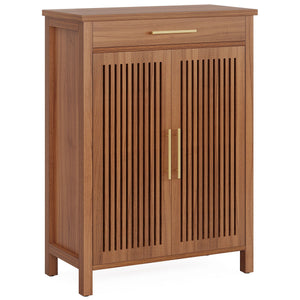
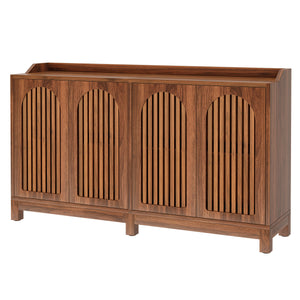
Choose a closed shoe cabinet if you want the entryway to look more finished. Doors or drawers hide mismatched shoes and make the space feel more like part of the home, not just a drop zone.
This is a better choice for front doors, hallways, and open-concept homes where the shoe storage is always visible.

Best for Boots
Boots, high-tops, heels, and kids’ shoes do not all fit the same shelf height. That is why adjustable shelves are worth looking for.
A cabinet with removable or adjustable shelves gives you more flexibility and helps prevent taller shoes from getting bent or squeezed.
Best for Extra Entryway Function
For busy entryways, storage should do more than hold shoes. A cabinet with a drawer can store keys, wallets, shoe care items, or small accessories. Side hooks are useful for bags, hats, umbrellas, or dog leashes.
Tribesigns has options like a 20-pair shoe cabinet with drawer and adjustable shelves and a 24-pair shoe rack with side hooks, both of which fit this more functional entryway setup.

Common Mistakes to Avoid
As someone who’s been through the trials and errors of shoe rack shopping, here are some mistakes I suggest you avoid:
- Overloading the Rack: It may seem tempting to fit as many shoes as possible, but overloading your rack can make it unstable. Always stick to the recommended capacity.
- Choosing the Wrong Size: Measure your space before buying! I once bought a rack that was too large for my hallway and had to return it.
- Not Considering the Environment: If your home is in a humid area, wood may not be the best option. Metal or plastic might fare better.
- Not Checking the Weight Capacity: A rack that looks sturdy may not be able to hold heavier shoes like boots. Always check the product specs!
Conclusion
Choosing the right shoe rack can make all the difference in how you organize your space. Whether you have a small apartment, a large family, or a minimalist design, there’s a perfect shoe rack out there for you. Keep in mind the factors that matter most—size, material, durability, and design—and you’ll have a functional, stylish, and organized entryway in no time.
So go ahead, take that first step towards a clutter-free home, and find the best shoe rack for your needs today!
Continue reading: